Premier League
How Tottenham and West Ham’s final three fixtures stack up in the relegation fight
Spurs sit one point above West Ham with three games left; fixtures and timing could decide survival.


With three matches remaining, Tottenham occupy 17th on 37 points, a single point clear of 18th-placed West Ham on 36. Spurs have turned a corner in recent weeks, recording two wins on the spin, but there is no margin for error under former Brighton & Hove Albion and Marseille boss Roberto De Zerbi.
The tight finish intensifies on gameweek 36. West Ham take the field first on Sunday before Tottenham play on Monday night, leaving the Lilywhites to react to the earlier result and whatever pressure it creates.
Tottenham (17th, 37 points)
Leeds (H) – May 11, 8 p.m. BST / 3 p.m. ET
Chelsea (A) – May 19, 8.15 p.m. BST / 3.15 p.m. ET
Everton (H) – May 24, 4 p.m. BST / 11 a.m. ET
West Ham (18th, 36 points)
Arsenal (H) – May 10, 4.30 p.m. BST / 11.30 a.m. ET
Newcastle (A) – May 17, 5.30 p.m. BST / 12.30 p.m. ET
Leeds (H) – May 24, 4 p.m. BST / 11 a.m. ET
Tottenham supporters are reminded of past seasons when they have backed Arsenal to disrupt title races, and there is a clear incentive for Spurs fans to support the Gunners on Sunday. A victory for Mikel Arteta’s side would significantly ease Spurs’ task ahead of a home match with Leeds that could arrive against a side with little left to play for.
For West Ham, a positive result on Sunday could have wider consequences. A result for West Ham could hand Manchester City the title, despite their slip-up at Everton, which in turn would make Tottenham’s pursuit of safety considerably more difficult.
Spurs then travel to Stamford Bridge in midweek after Chelsea’s FA Cup final with Manchester City, a fixture that will bring memories of the “Battle of the Bridge,” when Chelsea recovered from 2–0 down to earn the point that sealed the title for Leicester City a decade ago.


Analytics & Stats
Manchester United end Michael Carrick’s brief reign after another turbulent spell
United have sacked Michael Carrick after a brief spell that faded, leaving more chaos than control behind.
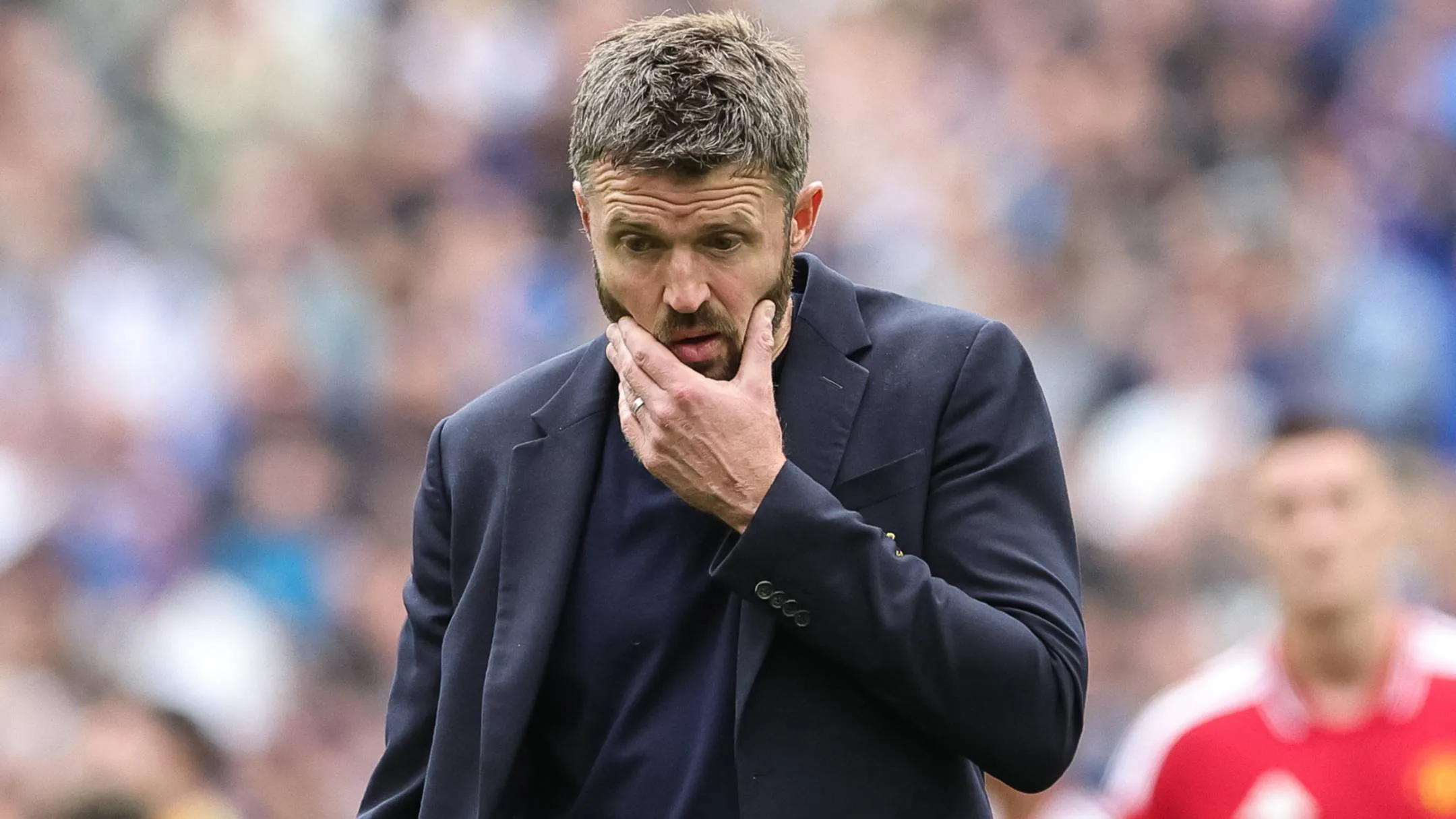
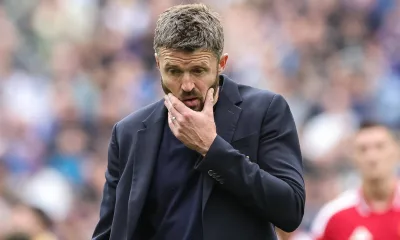
Manchester United have dismissed Michael Carrick, ending a stay that never settled into anything resembling control. The club said the decision was taken after concluding that “the club has come to the extremely difficult conclusion that a change is necessary in order to achieve our ambitions.”
Carrick had been handed three more matches in a last attempt to justify the two-year deal awarded in the summer. What followed only reinforced the sense of drift. United lost, won and drew across three wildly different games, each one adding to the disorder around the team rather than easing it.
There was promise before collapse against Chelsea, a recovery from a dreadful first half to beat a Roma side that then went further in the second period, and then 98 chaotic minutes against Aston Villa on Sunday. Across all three, Carrick’s influence appeared minimal. Lisandro Martínez’s head loss, favourable penalty calls and Zion Suzuki’s weaknesses in the air loomed larger than the manager charged with restoring order.
United are now expected to move towards U.S. men’s national team manager Mauricio Pochettino, with formal steps already underway to appoint the Argentine.
Carrick had been brought in to steady the club after Ruben Amorim’s departure in January, much as United once turned to Ole Gunnar Solskjær after José Mourinho. His strongest spell came in the second half of last season, when a return to 4-2-3-1, players in preferred positions and a smaller set of regular starters helped stabilise performances. The calmer tone around him also contrasted sharply with Amorim’s approach. As Carrick said of the word “philosophy”: “I hate that word.”
Yet the effect faded over the summer. Bruno Fernandes summed up the initial idea by saying, “Michael came in with the right ideas of giving the players responsibility, but also some freedom to take the responsibility on the pitch for the decisions that are needed,” but that freedom soon tightened. Fernandes even pushed back against instructions to “half-press” against Como.
By the end, Carrick had become more observer than architect. Even the fans’ support during the slide into the relegation zone hinted at how little he could alter. Starting Diogo Dalot at left back may have been exposed against Aston Villa, but the wider issue remained the same: if the club do not recruit better, no manager can conjure solutions from nowhere. In the end, Carrick paid for the moment when his magic ran out.
Manchester United
Manchester United step up Pochettino push as Carrick exit nears
United are close to a managerial change, with Pochettino now the leading candidate to replace Carrick.
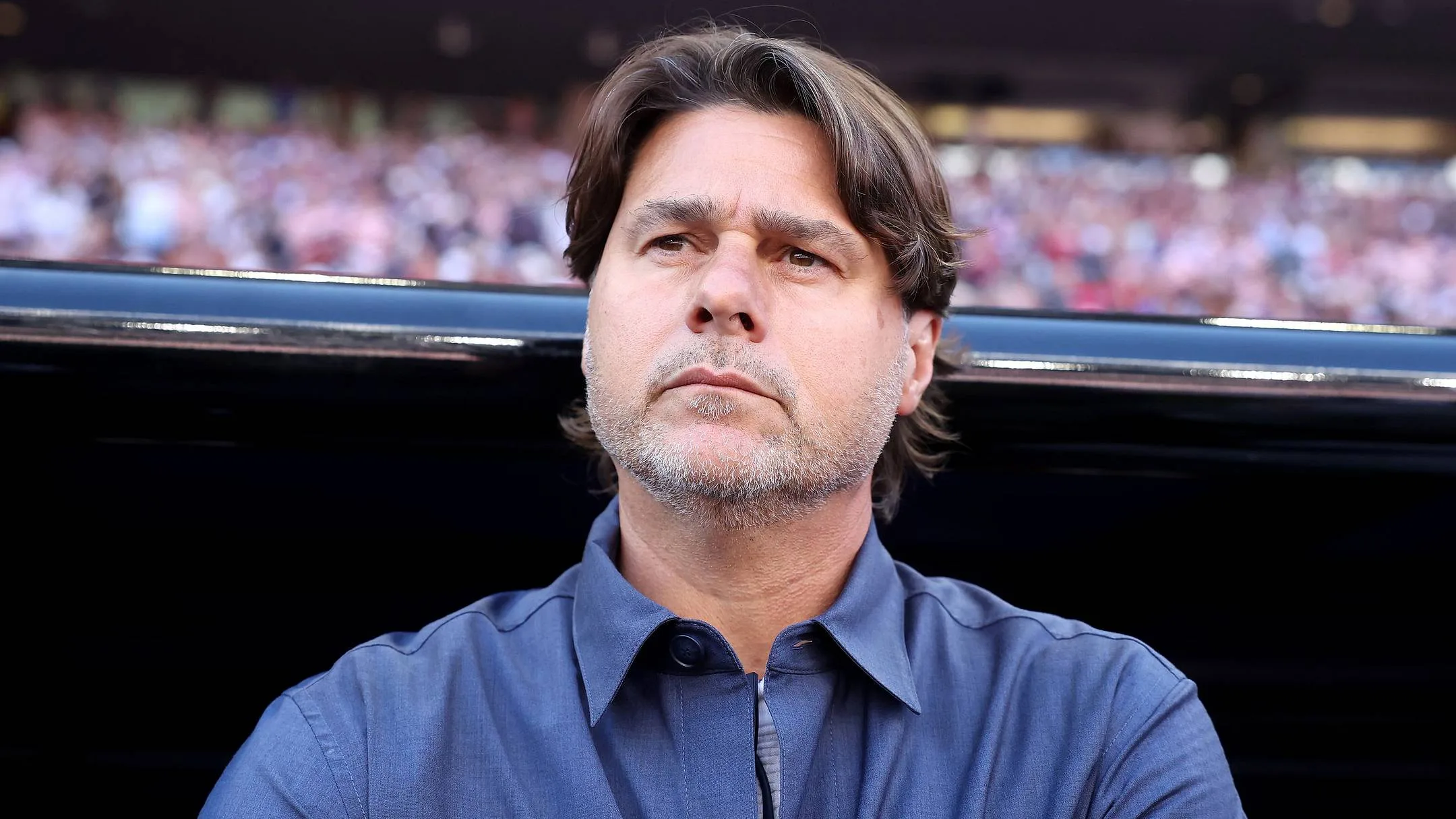
Manchester United have reportedly moved quickly to advance their pursuit of Mauricio Pochettino, with negotiations said to be under way over bringing the current U.S. men’s national team manager back to the Premier League.
Reports on Monday indicated United were preparing to dismiss Michael Carrick after the club dropped into the Premier League relegation zone for the first time in 40 years. Carrick has still been overseeing training during the early part of the international break, but the expectation is that a new timeline is in place and that club director Jason Wilcox and CEO Omar Berrada will make the decision on Thursday.
Pochettino emerged as the leading candidate almost immediately once Carrick’s position came under threat. The main obstacle now appears to be financial, with United needing to activate the buyout clause in Pochettino’s U.S. contract. He signed a fresh four-year deal after the 2026 World Cup, and the reported buyout is valued at $10 million (£7.4 million).
The overall cost could be higher still, with the package potentially rising to around $12 million if Pochettino’s coaching staff are included in the move.
There may, however, be limited resistance from the American side. Reports suggest U.S. Soccer have already started planning for a future without him, while United are said to be “comfortable” with Pochettino staying in charge of the USMNT through the November window.
For United, the sequence is now clear: a managerial change appears close, and the club are working through the final steps needed to bring Pochettino into the role.
Manchester United
The financial damage Manchester United could face if relegation became reality
United’s league position raises the stakes, with relegation threatening revenue, sponsors and matchday income.
Relegation has long felt unthinkable for Manchester United, but that possibility is no longer easy to dismiss. At the second international break of 2026-27, the club sit 18th and the numbers around them make for grim reading. They could even have been bottom had Crystal Palace not upset Liverpool and Patrick Dorgu not struck a 96th-minute equaliser against Aston Villa. Through 10 matches, every other side in the division has won at least twice as many games as the Red Devils.
Opta’s supercomputer still does not fancy United to go down, yet a 21.57% chance is uncomfortably close to the danger zone faced by Nottingham Forest, Fulham and Ipswich Town. That alone has sharpened the debate over what relegation would do to a club of this scale.
BBC Sport analysis last season estimated that a possible Tottenham Hotspur relegation, which was ultimately avoided, would have cost £261 million ($346.6 million) in revenue for the following campaign. United are a larger commercial force, but they also have more to lose if the drop affects every income stream at once.
Parachute payments would soften the immediate blow, with clubs relegated this season due around three years of support worth roughly £110 million ($146.1 million). Yet United’s operating costs were above £700 million ($929.6 million) last season, so the gap between top-flight and Championship income would still be severe.
Commercially, the damage could be wide-ranging. adidas reportedly pay around £90 million ($119.5 million) a year, although that could be halved if the club are not in the Premier League and reduced further if they are also outside the Champions League. The same report suggested the figure could fall to £35 million ($46.5 million), while the contract, worth up to £900 million ($1.2 billion) across 10 years until 2035, could also be cancelled at one year’s notice.
United’s front-of-shirt deal with Qualcomm, carrying the Snapdragon brand, runs to 2029 and is not said to include the same performance penalties. Commercial income would not vanish overnight, having totalled £317.3 million ($420.1 million) in 2025-26, but the club’s pull would inevitably weaken.
Broadcasting is another major concern. Premier League clubs in 2024-25 received £29.8 million ($39.6 million) from the U.K. pot, £59.2 million ($78.6 million) internationally and £7.9 million ($10.5 million) centrally, while Championship clubs received around £11 million ($14.6 million). Those on parachute payments would not get the full amount, leaving broadcasting revenue at about £4 million ($5.3 million).
Matchday income would also be tested. If United were no longer hosting Premier League opponents, demand from less committed supporters would likely fall, forcing prices down. Relegation for a club of this size has never happened in the Premier League era, and that is what makes the prospect so hard to measure.

Manchester United end Michael Carrick’s brief reign after another turbulent spell

Manchester United step up Pochettino push as Carrick exit nears