International
When World Cup Glory and the Ballon d’Or Came in the Same Year
Seven men have combined World Cup victory with a Ballon d’Or in the same year, across decades. True.


The World Cup has often strengthened a player’s case for the Ballon d’Or. Across successive tournaments, a handful of individuals converted international triumph into the sport’s highest individual prize in the same year.
Bobby Charlton received the Ballon d’Or on Dec. 27 following England’s 1966 World Cup success. A decade after Stanley Matthews won the inaugural prize, Charlton’s performances for England were decisive, including a semi-final in which he struck a brace against Eusébio’s Portugal. The deciding vote was cast by the Portuguese journalist Fernando Couto e Santos from Mundo Desportivo.
Paolo Rossi’s Italy story spans two tournaments. Three goals at the 1978 World Cup earned him a place in FIFA’s Team of the Tournament, but Italy finished fourth and he placed fifth in that year’s Ballon d’Or. Four years later Rossi scored six goals across the final three matches in Spain, including the opener in a 3–1 victory over West Germany in the final. Marco Tardelli and Alessandro Altobelli also scored in that final.
Lothar Matthäus powered West Germany’s 1990 charge. Already established through success with Bayern Munich and then Inter, he scored four times at the tournament, including a decisive penalty against Czechoslovakia, and finished runner-up for the competition’s Golden Ball to Salvatore Schillaci. Matthäus prevailed in the Ballon d’Or vote over Schillaci and Andreas Brehme.
Zinedine Zidane arrived at the 1998 World Cup after claiming the Serie A title with Juventus, was sent off in the group stage against Saudi Arabia, then delivered two first-half headers to defeat Brazil in the final as France won. Zidane collected both Player of the Match and the Ballon d’Or.
Ronaldo’s 2002 World Cup haul — four group goals, a last-16 strike against Belgium, the semi winner against Türkiye and a two-goal final against Germany — was followed by a move to Real Madrid and Ballon d’Or success later that year.
Fabio Cannavaro, one of only three defenders to win the Ballon d’Or, led Italy’s resilient defence in 2006 after Juventus’s 2005–06 title was later revoked. Italy kept multiple clean sheets en route to a final settled on penalties after Zinedine Zidane’s sending off; Cannavaro joined FIFA’s All-Star Team and won the Ballon d’Or.
The vote’s switch to a seasonal cycle and the winter scheduling of the 2022 World Cup in Qatar meant Lionel Messi did not receive his record-extending eighth Ballon d’Or until late 2023. Messi scored five goals leading up to the final, recovered from an opening defeat to Saudi Arabia, then scored twice in the 3–3 final with France and helped Argentina to victory on penalties under Lionel Scaloni before his retirement.

International
Five notable talking points from the 2026 Ballon d’Or vote
Ballon d’Or results brought surprises, with Fernandes, Ruiz, Olise and Simón all prompting debate.
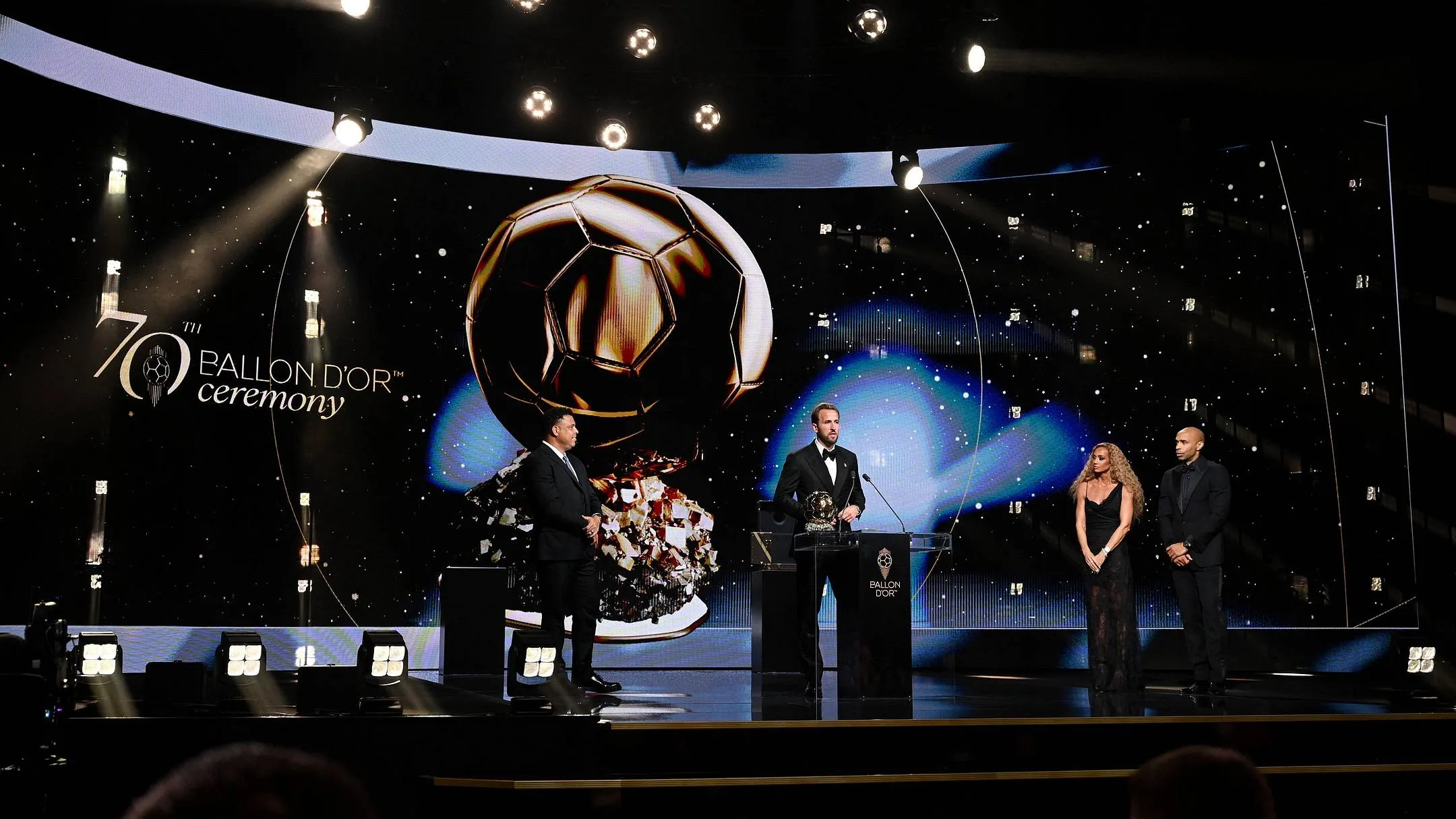
The 2026 Ballon d’Or has been settled, with Harry Kane finishing on top after a voting year that produced several eye-catching results.
The headline names at the summit were expected to draw attention, but the real intrigue came further down the list. Some finishes felt harsh, others reflected the weight of trophies, and a few placements invited closer scrutiny.
Bruno Fernandes was the most striking example. No one is suggesting he should have won the award outright, yet placing him 27th, only one spot ahead of Al Qadsiah’s Julián Quiñones, was a major surprise. The Manchester United captain may have been affected by a recent dip, even though the judging period was meant to end on July 19. Over the 2025-26 season, he set a Premier League record for assists in a single campaign and was named the division’s Player of the Year, but he still finished behind five other Premier League players. A place inside the top 15 would have looked far more reasonable.
Fabián Ruiz also caused debate. His case was built on medals, not volume. A regular for the Paris Saint-Germain team that kept the Champions League and won Ligue 1, he also added the World Cup with Spain. That is a strong résumé, yet 10th still feels generous when weighed against his workload. He played only 20 Ligue 1 matches, started 13 of them, and finished the season with three goals and six assists across 2,634 minutes for club and country.
Michael Olise, one place above Fabián, had a compelling claim to a far higher finish. In 52 matches for Bayern Munich, he produced 22 goals and 31 assists, then added seven assists at the World Cup, a tournament record. Those numbers were exceptional, even if they were compared with Kane’s even stronger output.
Unai Simón’s victory among goalkeepers was shaped heavily by Spain’s World Cup success. He conceded just one goal in the tournament, but over the full campaign he allowed 54 in 37 La Liga appearances for an Athletic Club side that finished 12th. His 64.9% save rate was bettered by 16 goalkeepers in Spain’s top flight alone.
The Kopa Trophy, meanwhile, went to the expected winner. Lamine Yamal finished third in Ballon d’Or voting and retained the youth award, which underlines how established he already is in the game.
International
Messi’s 2024 and 2025 prospects: who has progressed, and who has not
Messi’s 2024 and 2025 adidas picks have produced clear successes, setbacks and unfinished stories.
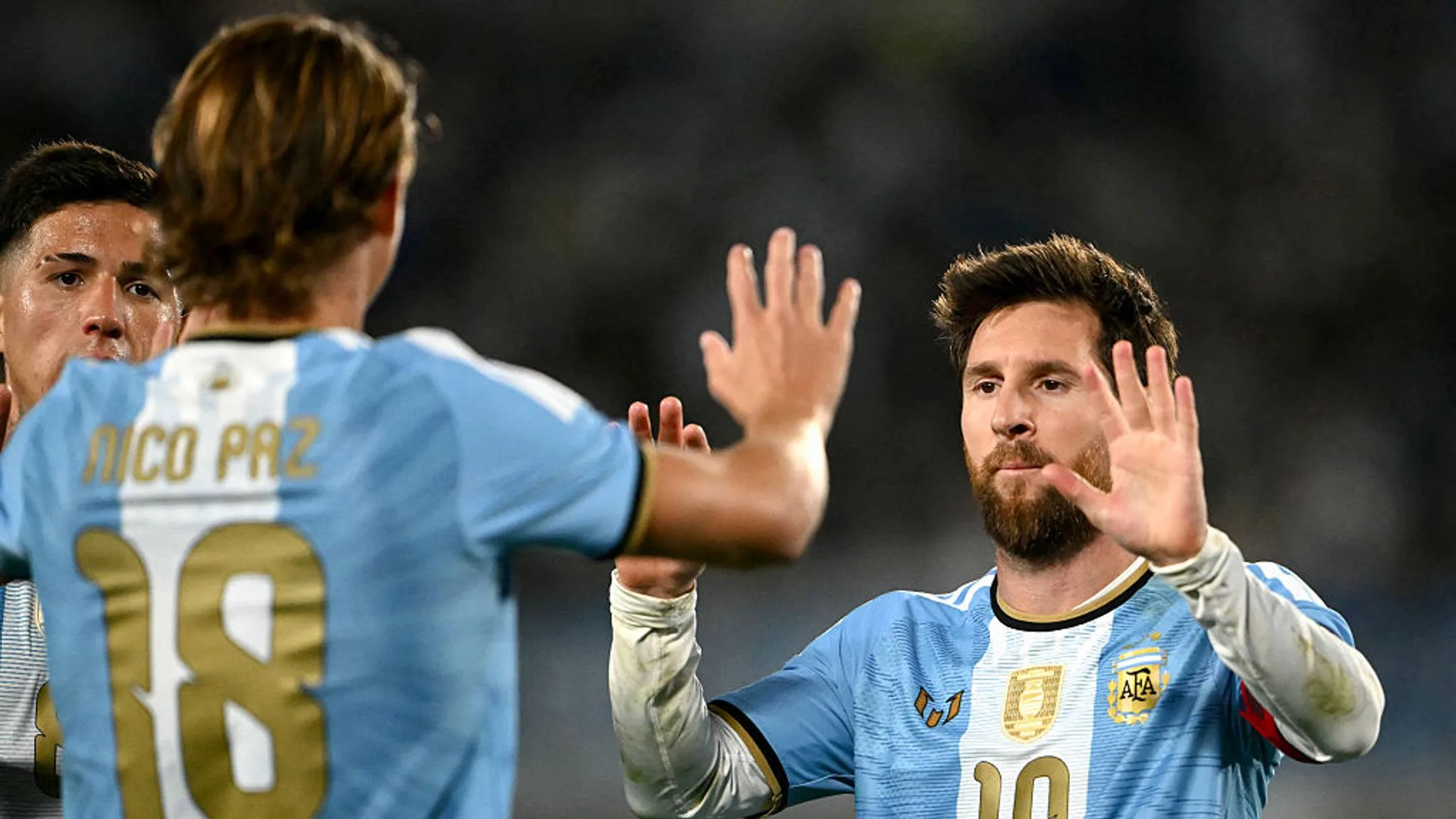
Lionel Messi’s latest adidas-backed list of rising players offers a useful checkpoint on how modern talent develops. The campaign includes Kees Smit, while the previous two editions, released in 2024 and 2025, give a wider picture of where Messi’s earlier selections now stand.
Some have moved forward quickly. Kenan Yıldız had already built a reputation when he earned Messi’s backing, and he has since become a key figure for Juventus, taking the club’s No. 10 shirt and establishing himself as one of the more advanced young forwards on the list. Vicky López has also added to an already strong résumé at Barcelona Femení, where she has won 16 major honours and collected both the TuttoSport ‘Golden Girl’ award in 2024 and the Kopa Trophy a year later.
Jaedyn Shaw continues to carry her reputation across club and country. After debuting in the NWSL as a 17-year-old, she now has 30 USWNT caps and 10 goals, while 2026 has brought another productive spell in the NWSL. Antonio Nusa has responded well to his move to RB Leipzig, where Martin Demichelis called him “one of the best wingers in the world”. Assan Ouédraogo has also started to emerge after a quiet opening season in Saxony.
Elsewhere, the picture is less settled. Joel Ndala has struggled to turn early promise into sustained progress and is now at Cercle Brugge. Claudio Echeverri, still on Manchester City’s books, is spending the 2026-27 campaign with Benfica after loan spells at Bayer Leverkusen and Girona. Eliesse Ben Seghir, Rodrigo Mora, Lily Yohannes and Mika Godts have all shown flashes, but each is still at a different stage of development.
There are also cautionary cases. Kendry Páez has not yet made a senior Chelsea appearance, while Mohamed Kader Meïté has yet to fully deliver at Al Hilal. Brajan Gruda, meanwhile, is on loan at RB Leipzig from Brighton & Hove Albion, where he recently scored a decisive Champions League goal. Messi’s list, in short, has produced both clear successes and unfinished stories.
International
Solbakken says Haaland issue reflects punishing calendar, not alarm
Solbakken blamed a brutal schedule after Haaland was withdrawn early in Norway’s win over Portugal.
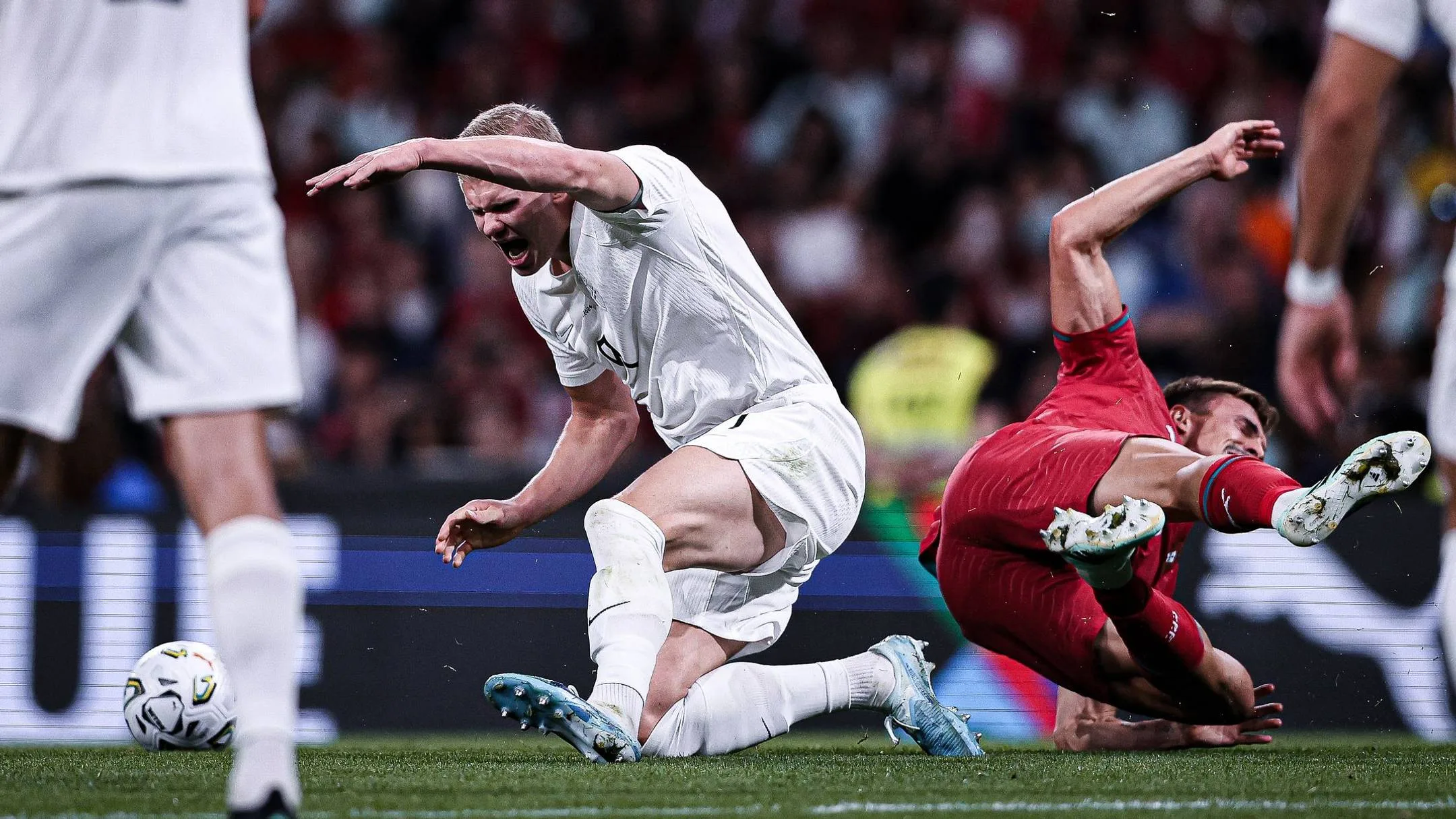
Norway manager Ståle Solbakken has moved to ease concern over Erling Haaland after the forward was withdrawn early, framing the decision as the result of exhaustion rather than anything more serious. He pointed to what he called a relentless workload, saying it is all part of an increasingly punishing football calendar.
“There are many players who are really exhausted,” Solbakken explained. “[Sander] Berge and [Martin] Ødegaard are practically scraping rock bottom. Erling was digging deep for a long time. I think he took a real beating and served as an excellent target man. We were hoping for 60, and he managed 65. That’s a lot of positives.”
Going into the match against Portugal in Porto, Haaland already knew he might not complete the full game. There was some thought given to protecting him for the second half, but that plan was quickly ruled out.
“He put in a good 60 minutes today,” Solbakken reasoned. “He played two full 90-minute matches against Denmark and Portugal. He was tired against Wales. That’s why we had a heart-to-heart yesterday. We went through the various possibilities.
“He could perhaps have played the last 45 minutes against Portugal. That was a topic of discussion. But he has a really bad feeling about that kind of thing. He’s had experiences where he was brought on in the League Cup, and it didn’t go particularly well. I’m very pleased that he managed to dig deep and deliver a good 60 minutes.”
With Norway’s internationals complete and Manchester City not back in action until Sunday’s trip to Anfield, Haaland now has a brief break. Norwegian outlet Dagbladet reported that he travelled from Portugal to Málaga for some warm weather after the fixture.
Solbakken was blunt about the broader strain on players, especially those in the Champions League and those with limited rest after major summer tournaments. “It’s a grueling schedule,” he lamented. “For those playing in the Champions League who’ve had little time off, it’s more brutal than for the others. Especially for the players who didn’t get a summer break because of the World Cup and going deep into the tournament. We did that.
“Having so little vacation and then heading straight into high-intensity leagues—and then you have this international break on top of that—it’s not about making excuses. It’s just insane. Especially for the smaller nations.”
Haaland remains near the top of the minutes table despite the heavy load, sitting third on 2,789 minutes. He is, as the draft notes, a victim of his own success: too important to leave out, and now feeling the strain that comes with that demand.