Football Development
Premier League to vote on three financial measures as controversy over ‘salary cap’ grows
Clubs to vote on TBA, SCR and SSR; debate focuses on proposed ‘salary cap’ and legal threats ahead.


Premier League clubs will hold three separate votes on Friday to decide proposed financial measures that have already generated intense debate. The proposals concern top-to-bottom anchoring (TBA), squad-cost rules (SCR) and sustainability and system resilience (SSR).
TBA, often called ‘anchoring’, would tie maximum club spending to the revenues earned by the division’s bottom club. Under current proposals, clubs could spend no more than five times the broadcast income and prize money of the team finishing bottom. With Southampton finishing last in 2024–25, the anchoring cap for the present campaign would have been about £546 million. Accounting for expected TV-rights revenue increases, that figure was projected to rise to roughly £600 million for 2025–26.
Put plainly, the rule would limit total spending on player wages and transfer amortisation, including agent fees, to that cap regardless of a club’s individual income, a change many have described as a ‘salary cap’. It would replace the existing Profit and Sustainability Rules under which clubs limit losses to a maximum of £105 million over three years.
The proposed SCR mirror UEFA squad-cost rules but would be less strict. UEFA allows up to 70 per cent of income (including player-sale profits over three years) to be used on wages and related costs; the Premier League draft would permit 85 per cent of income.
SSR aims to ensure clubs can meet financial commitments both in-season and over the longer term through three separate tests assessing short- and long-term financial health.
Only a minority of clubs would breach a hypothetical £600 million anchoring cap; according to reporting, four clubs exceed that revenue level. The clubs most likely to face future strain are the traditional ‘Big Six’ and others who already spend a high share of revenue on wages and amortisation, with names cited including Aston Villa, Newcastle United, Everton and Bournemouth.
There has been strong opposition from the Professional Footballers’ Association and major agencies. The PFA chief has described legal battles as “inevitable” and CAA Base, CAA Stellar and Wasserman have threatened to sue. Any change requires a 14-club majority, and voting intentions are divided: the two Manchester clubs and Arsenal oppose anchoring, while Liverpool, Everton and Aston Villa are expected to support it.





Football Development
Why Manchester United’s JJ Gabriel Will Wait for First-Team Football
Carrick says JJ Gabriel is too young for Premier League squads this season despite senior praise too
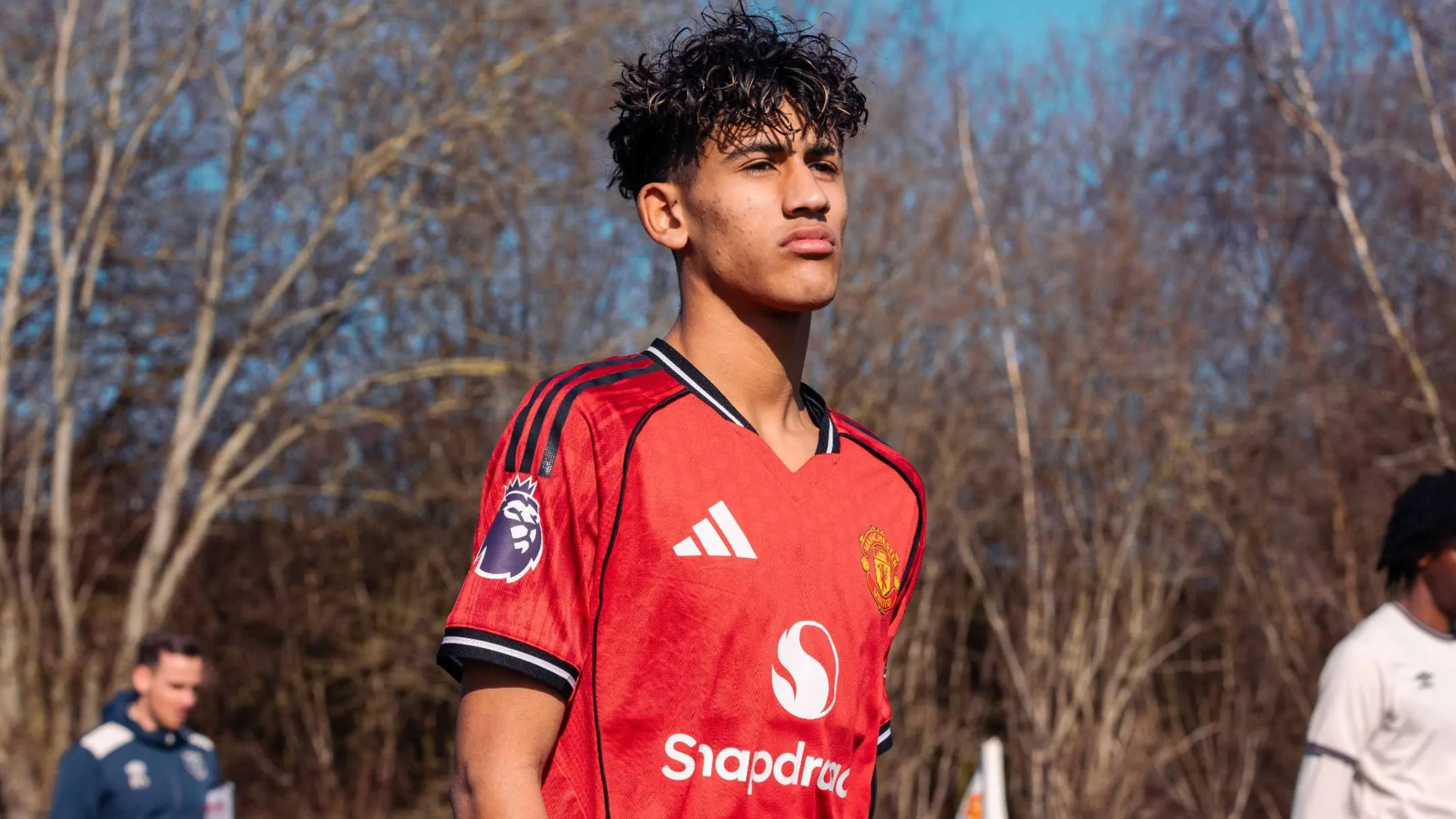
Manchester United’s teenage prospect JJ Gabriel will not be available for Premier League selection this season because of age restrictions, manager Michael Carrick confirmed.
Born on Oct. 6, 2010, Gabriel began this school year as a 14-year-old and remains in Year 10. Carrick was clear on the limitations: “He is not allowed,” Carrick shrugged. “Too young.” Despite that, the 15-year-old GCSE student has generated significant attention after repeated involvement in senior training sessions.
Carrick has praised Gabriel’s progress while stressing careful management. “JJ’s doing really well,” he told assembled media. “We’ve got some really good players in the academy and we try and get the younger players up [with the main group] as much as we can.” He added: “We’re always trying to give them that exposure,” and described Gabriel as “a big talent, it is pretty obvious and he has had a good season for U18s. We think an awful lot of him.” On timing and welfare he emphasised: “But patience is important in managing everything that comes with that and developing him and picking the right moment to step up, to leave them in a certain place. He’s trained well and it is good to have young players up.”
The situation mirrors recent cases in the Premier League. Arsenal’s Max Dowman was in Year 10 last season and could not be rushed into a senior squad despite calls for his involvement. Ethan Nwaneri managed a brief appearance aged 15 years and 181 days in 2022, but that fleeting cameo was followed by a long wait; he did not receive another Premier League minute for 17 months and only began to feature regularly after he turned 18. Dowman’s pathway was further delayed by a serious ankle injury sustained in a youth match.
Manchester United figures have publicly praised Gabriel, contributing to the buzz around his development. “He’s good, really good,” Mbeumo gushed during an interview with French streamer Zack Nani this week.
Football Development
JJ Gabriel pressing for a Manchester United debut after explosive U18 season
JJ Gabriel, 15, has 20 goals for United U18s and is pressing for a first-team debut this season.

Fifteen-year-old JJ Gabriel has emerged as the outstanding figure in Manchester United’s U18 side and is making a sustained case for first-team consideration.
Gabriel first caught attention as a 14-year-old when he scored twice on his U18 Premier League debut in a 13–1 win over Leeds United last April. Now 15, he waited until the 2025/26 season for his first U18 start but has since produced a remarkable return: 18 goals in 19 league appearances from a No. 10 role and a further two in three FA Youth Cup matches.
His form has come in waves of dominance. A hat-trick in a 7–0 win over Liverpool in late November began a run that saw United take nine victories from 10 U18 Premier League matches. From the start of February alone, Gabriel has scored eight times in five outings, each a United win.
The teenager’s goals on Saturday in a 5–2 victory over Nottingham Forest underlined his growing influence. He scored two spectacular strikes; the first was United’s second, a 20-yard right-footed effort that dipped and hit the net after beating two defenders. Four minutes later he collected a partially cleared corner, used strength and skill to evade an oncoming opponent, and rifled a powerful shot into the opposite top corner. Forest goalkeeper Ally Graham produced an outstanding earlier save that prevented what could have been a third goal.
Gabriel has been repeatedly asked to join first-team training this season but is yet to appear for United’s U21s. Few players bypass that age group entirely, even when their rise is rapid. The article recalls other early breakthroughs at senior level, noting Lamine Yamal, Ethan Nwaneri and Max Dowman’s appearances at 15 and the quicker progress made by the likes of Marcus Rashford, Kobbie Mainoo and Alejandro Garnacho at 18.
Historical context is instructive. The club’s youngest senior player remains David Gaskell, 16 years and 19 days, while Angel Gomes is the youngest Premier League-era debutant at 16 years and 263 days. If Gabriel plays for United before Oct. 30 this year, he would set a new record.
Chelsea
Rosenior points to dressing-room unity after Chelsea’s centre-circle huddles
Rosenior hailed team unity after Chelsea’s pre-kickoff huddles and João Pedro’s hat trick. This week
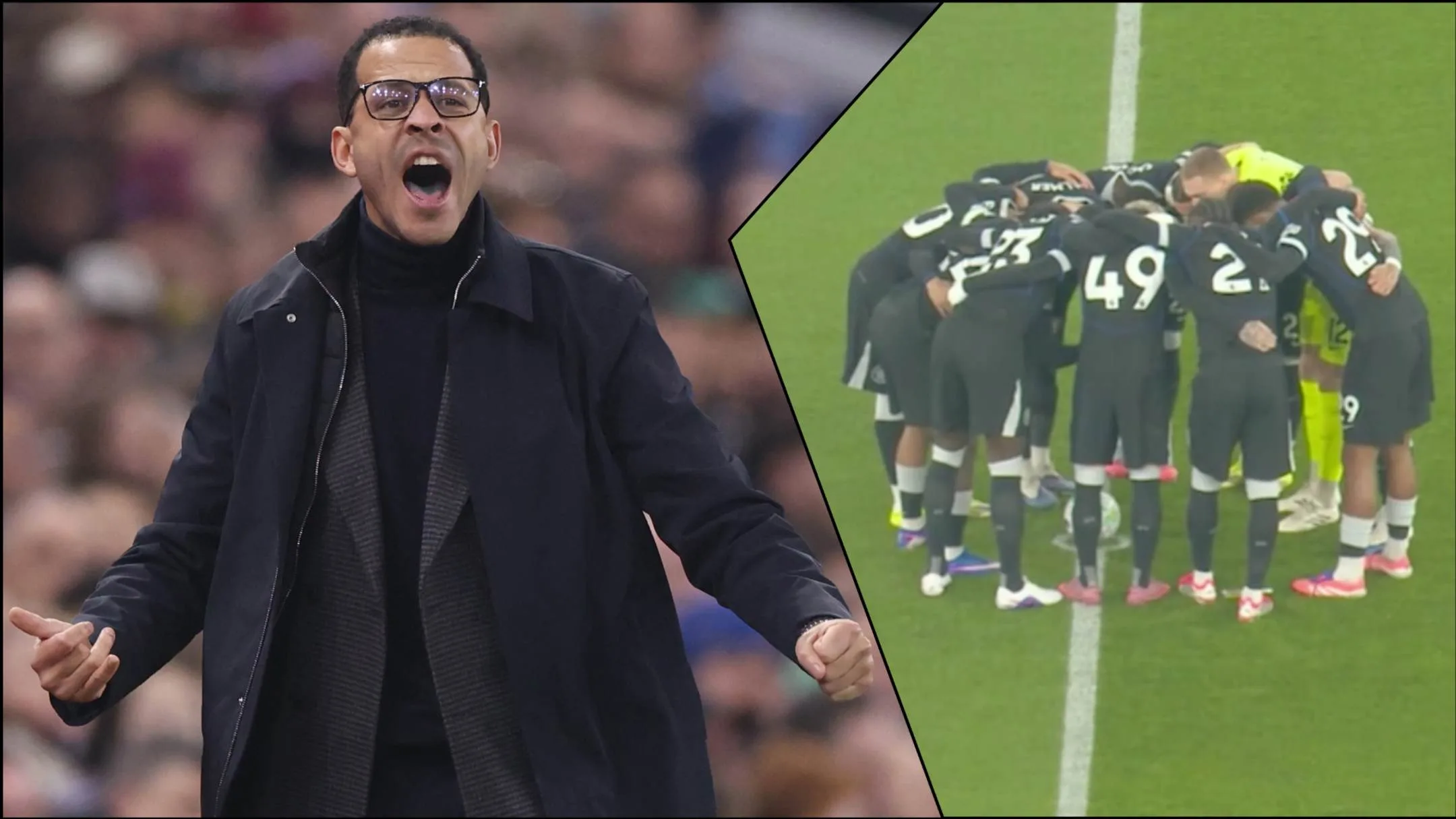
Chelsea’s 4–1 victory at Villa Park on Wednesday is bound to be remembered for João Pedro’s first Premier League hat trick, but the posturing before both kickoffs drew as much attention as the goals.
Seconds after Chelsea started the match, Douglas Luiz put Aston Villa ahead inside 125 seconds with a well-taken opener. The visitors levelled through João Pedro in the 35th minute, and he then put his side ahead in the sixth minute of stoppage time.
Before the opening whistle the Chelsea players gathered in a tight huddle around the ball at the centre circle, and they repeated the ritual before the second-half restart. Amadou Onana and Ollie Watkins appeared impatient as Chelsea’s players stayed clustered around the ball. The Villa Park crowd reacted first with confusion and then with loud boos as the second half began.
For Chelsea’s manager the scene was a welcome sign rather than a provocation. “That comes from unity,” Rosenior told BBC’s Match of the Day after Chelsea climbed up to fifth place, three points behind Aston Villa. “That comes from the players. It doesn’t come from me. As their manager, it makes me really proud to see.
“They’ve taken a lot of message on board from not just myself, but from the staff. Willie Isa is a top man and he’s from rugby, he’s from New Zealand, and he’s spoken a lot about our togetherness and the players have taken it on board.”
Willie Isa was appointed as the club’s player support and development officer in February 2025, a month after his professional retirement. Isa spent a decade and a half at club level and made more than 300 appearances before representing his nation, but those appearances came in rugby league rather than soccer.
Isa’s former head coach at Wigan Warrior, Matt Peet, was confident about the appointment. “He is a cultural architect,” Peet told The Athletic upon Isa’s appointment. “He will make the environment better and all the individuals around the environment better. Ignore the different shape of the ball that he is associated with, Willie’s skill set is all about high-performing teams, leadership and dealing with people. ]