Manchester United
Fernandes rested at Carrington days before Liverpool; internationals given precautionary break
Fernandes and other internationals were rested at Carrington ahead of Liverpool on Thursday sources.


Manchester United captain Bruno Fernandes was absent from Thursday’s training as a precaution, sources reported, with the decision coming three days before the club’s match with Liverpool. Per Manchester Evening News, Amorim allowed his returning skipper to skip his first session back from international duty to avoid overload.
The same approach was applied to the Brazilian duo of Casemiro and Matheus Cunha. Both had been involved in Brazil’s defeat to Japan in Tokyo 48 hours earlier, a match described in reports as featuring a humiliating second-half collapse, and they were afforded the same rest at Carrington.
Amad Diallo also missed the session after a strong showing for Ivory Coast against Kenya in Abidjan on Tuesday. He laid on an assist and converted a sumptuous free-kick in a 3–0 win, according to coverage of the international fixtures.
MEN revealed that while these players were permitted to rest, some still attended Carrington to make an appearance without taking part on the pitch. The club’s management treated the absences as load management rather than disciplinary or medical issues.
Fernandes has spent the entire season operating as one of two central midfielders in Amorim’s much-debated 3-4-2-1 system. Typically at his best as an attacking midfielder with fewer defensive responsibilities, the natural playmaker has signalled some frustration about his role. “Everyone has their preferences,” he pointedly noted earlier this month. “But we have to adapt to the coach’s ideas.”
Despite any personal frustration that may exist over playing position, there is no suggestion that he will cause his manager any grief. The club appears focused on managing minutes for key internationals as it prepares for the significant domestic fixture against Liverpool.

Chelsea
Carrick’s immediate challenges as pressure builds at Old Trafford
Carrick stays in post, but Fernandes, left-back concerns and academy calls all demand answers.
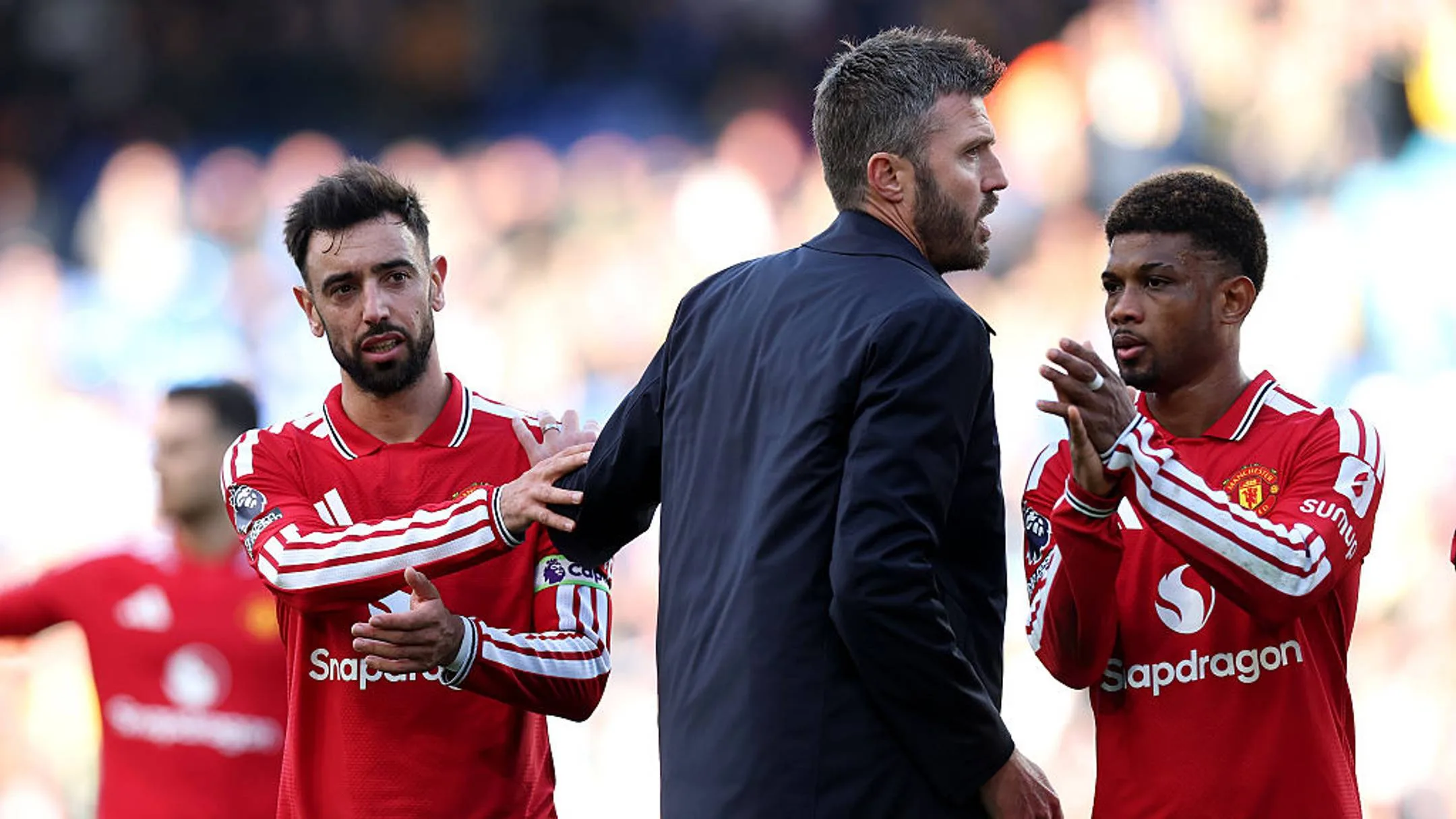
Michael Carrick is still in charge at Manchester United after a difficult week that left many expecting INEOS to act. That decision did not arrive, which means the manager heads into a major meeting with Chelsea under intense scrutiny.
Chelsea have had their own swing in fortunes. They followed a first Premier League clean sheet since January against Everton with a home league defeat to Tottenham Hotspur, only the second such result for a Chelsea manager since 1990, before also losing in the cup to Liverpool. Their clearest path to silverware has now gone.
Yet the attention on Carrick is much sharper. He may only have one more opportunity to prove his case before his position becomes untenable.
One of the key issues is Bruno Fernandes. Carrick felt he had to leave out his captain for Bournemouth’s visit to Old Trafford after Fernandes criticised his gameplan in the aftermath of the 4-1 defeat at Como. That public criticism cut deep, especially because Carrick had helped unlock the version of Fernandes who set the Premier League’s single-season assist record and won the PFA Player of the Year award last season. Under Carrick, Fernandes was restored as a playmaker and United functioned as a better collective.
Even so, United cannot rely on Fernandes alone. The team’s poor start has gone hand in hand with the midfielder’s struggles, but the Bournemouth defeat showed that dropping him was not a long-term answer.
Carrick also has a left-back problem that appears to have been worsened by decisions made in the summer. United looked for cover for Luke Shaw late in the window, but that chase ended once it became clear that Lewis Hall would not leave Newcastle United. With Shaw already missing multiple games through setbacks, the manager has been forced to improvise.
Diogo Dalot was used there last Sunday, with Mason Mount drifting infield, but the shape lacked balance and urgency. Marcus Rashford could be used to add thrust, while another option would be to alter the setup at right back. Carrick could also lean on the academy, with Shea Lacey making back-to-back substitute appearances and Harry Amass, Jack Fletcher, Jariyah Shah and Jim Thwaites in first-team training. Amass, who has already made two senior appearances this season, looks the likeliest candidate if a left-back change is made.
Leeds United
Why a Dominic Calvert-Lewin move for Manchester United would turn heads
Manchester United’s Dominic Calvert-Lewin links raise history, need and serious footballing questions.
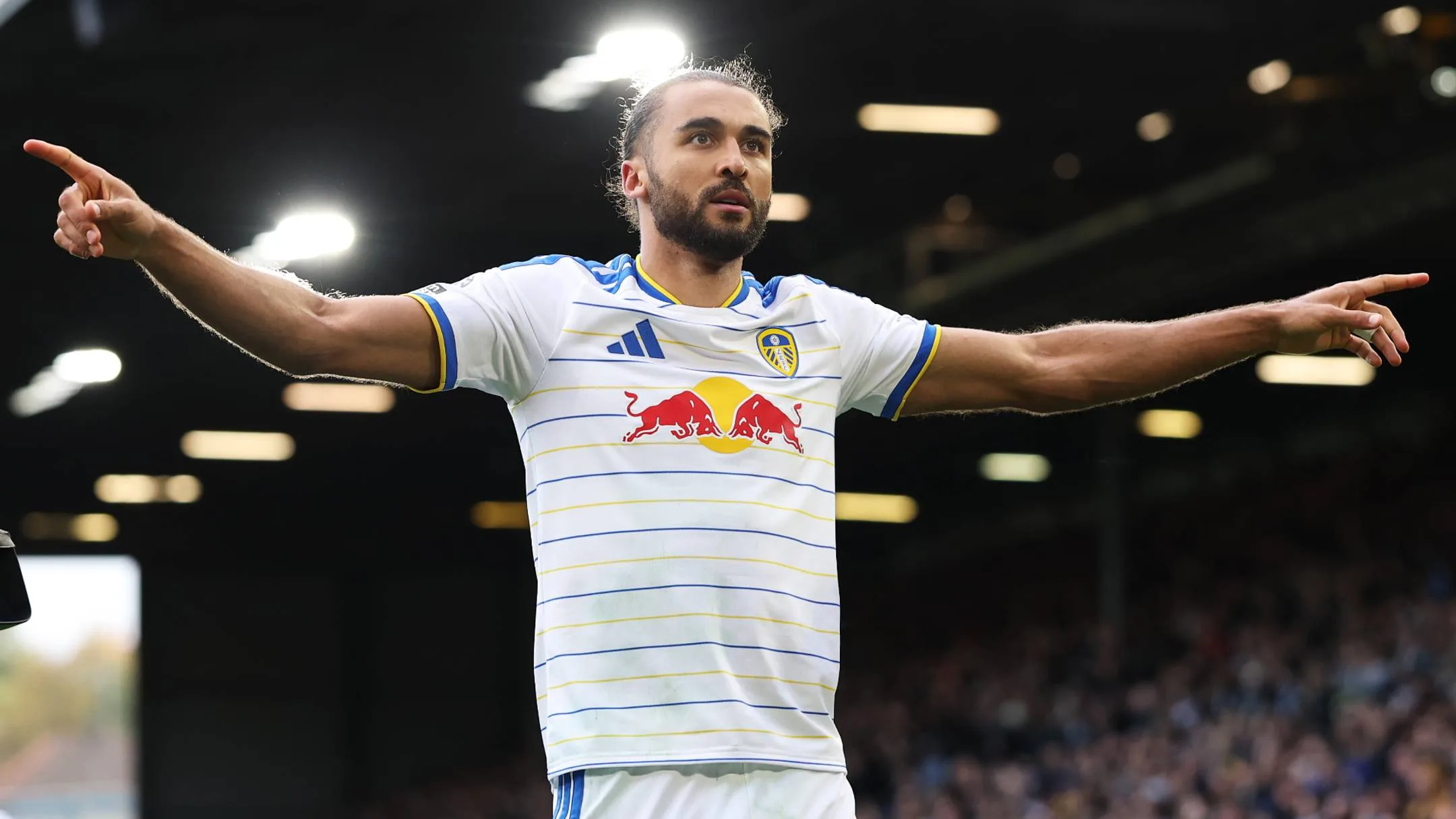
Manchester United are being linked with a move for Leeds United striker Dominic Calvert-Lewin, and the suggestion alone is enough to prompt questions. Even with the restraints of the January window and a tight budget, United have other attacking options to weigh up. Yet the possibility of taking Leeds’ No. 9 is the one that stands out for all the wrong and right reasons.
The Athletic report that Calvert-Lewin is under consideration in Manchester. A direct move from Leeds to United remains highly unusual, with the club last paying money for a player directly from Leeds when Alan Smith made that divisive switch in 2004. This would be another transfer loaded with history.
From a footballing perspective, there is an obvious case to be made. United need goals, with newly promoted Ipswich Town having outscored them in the Premier League this season, and they also need a central reference point in attack. Calvert-Lewin has 17 Premier League goals since the start of last season, a return no United player can better.
Bryan Mbeumo can threaten through the middle, particularly in a counter-attacking set-up, but he does not provide the same focal point as a natural striker such as Šeško, or Calvert-Lewin. Leeds’ forward also offers a strong aerial presence and gives his side a reliable outlet.
United already put plenty of crosses into the box, but without Šeško on the pitch there is often nobody to meet them, especially since Casemiro’s summer exit. Calvert-Lewin would change that immediately.
“Dominic is like a good wine, getting better by the year,” Leeds boss Daniel Farke gushed just last month. “Physically, he’s on a top level and his pace is more than good enough I would say.”
But the fit is not straightforward. Farke’s claim that Calvert-Lewin is “a very complete striker,” is harder to support. His game is highly specific, suited to Leeds’ approach, where he can poach in the box or attack a ball played through the air. He is less likely to bring others into play.
No outfield player with more than one Premier League start this season has a lower pass completion rate than Calvert-Lewin. That may be a compromise United would accept, but convincing Leeds would be another matter entirely. The Athletic describe them as “fiercely protective” of their top scorer and rate any deal as “remote.”
It would also place Calvert-Lewin among a very small group of players to cross this rivalry. In the Premier League era, only three outfielders have gone from Elland Road to Old Trafford. United’s interest is all the more striking because Calvert-Lewin was available on a free transfer just over a year ago, when the club instead chose to spend up to £73.7 million ($99 million) on Šeško while keeping Zirkzee.
Analytics & Stats
United’s Transfer Market Failures Exposed by Fresh Study
A new study shows Manchester United have lost $452 million on signings over five years.
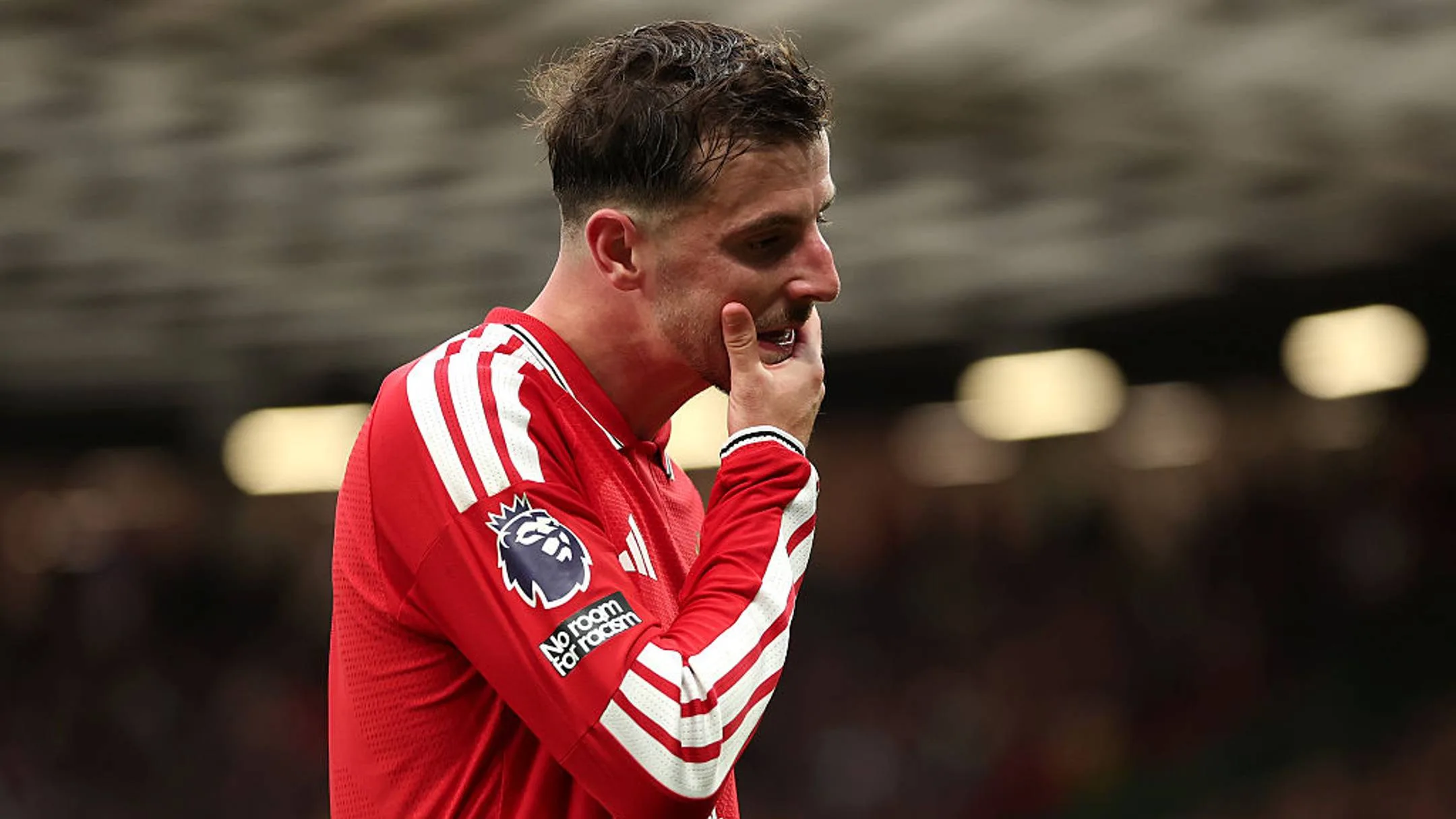
Manchester United’s difficulties on the pitch have been well documented, but a new statistical study has underlined a separate problem: a transfer strategy that has drained value at an alarming rate.
The CIES Football Observatory has ranked clubs around the world by the “appreciation or depreciation in value of non-academy players signed over the past five years.” The method combines fees paid and received for players who have left, while current players are measured against their present market value. Only clubs with spending and income above $56 million since 2022 were included, with add-ons counted whether or not they have already been paid.
On that basis, United sit as the European club to lose the most on signings over the past five years. Their total depreciation stands at $452 million, a figure surpassed only by Al Hilal (-$560 million) across the global list.
Of United’s overall loss, $208 million relates to players who have already left on permanent deals, including Sancho, Højlund and Antony. A further $244.5 million has been lost on players still at the club. That total is far above any other European side.
Tottenham Hotspur are the nearest continental comparison, having lost $210 million, less than half of United’s figure. By contrast, local rivals Manchester City are among the biggest winners, ranking fifth with almost $500 million added in value over the same period.
Eintracht Frankfurt (+$588 million), Real Madrid (+$587 million), Paris Saint-Germain (+$547 million) and Benfica (+$545 million) sit above City. Chelsea also post a positive return at $200 million, while Arsenal (+$123 million) and Liverpool (+$14.5 million) have seen their signings increase in value overall.
United, however, have not dramatically altered course. Their spending has become less erratic over the last two seasons, but they still spent more than $400 million on new arrivals, and none apart from the cost-effective Senne Lammens have yet justified their price tag.
Their approach of strengthening one area at a time has also hurt results and, in turn, the value of the current squad. They focused on attack with Benjamin Šeško, Bryan Mbeumo and Matheus Cunha in 2025, then turned to midfield last summer with Youri Tielemans, Andrey Santos and Carlos Baleba. The defence, presumably, will be next.