Newcastle United
How Quickly They Fell: The Earliest Managerial Departures in Premier League Starts
Earliest Premier League sackings, ordered by season and games played at the campaign start. 2025/26.

New campaigns bring hope but sometimes clubs act swiftly when early results or boardroom disputes threaten momentum. The following cases record the earliest managerial departures in Premier League history, ranked by games played at the opening of a season.
Watford, 2018–19 — Games lasted: 4, Date sacked: September 4
Gracia began 2018–19 with four wins from four and a third-place position. The side finished the season in 11th after being seventh as late as Gameweek 34 and suffered a joint-biggest FA Cup final defeat to Manchester City. The club dismissed him four games into the next season after Watford had taken just one point. Still, he lasted longer than most.
Bournemouth, 2021–22 — Games lasted: 4, Date sacked: August 30
Parker had secured promotion to the Premier League three times as a manager but struggled to establish a top-flight methodology. His tenure ended after a 9–0 defeat at Anfield, the joint-heaviest loss in Premier League history.
Newcastle United, 2004–05 — Games lasted: 4, Date sacked: August 30
Sir Bobby Robson was dismissed 16 days into the season amid reported player discontent. Former chairman Freddy Shepherd likened sacking Robson to “shooting Bambi.”
Manchester City, 1993–94 — Games lasted: 4, Date sacked: August 26
Player-manager Reid was dismissed 12 days into the campaign after City earned a single point from their first four fixtures, and the fast start by champions Manchester United across town convinced the club to act.
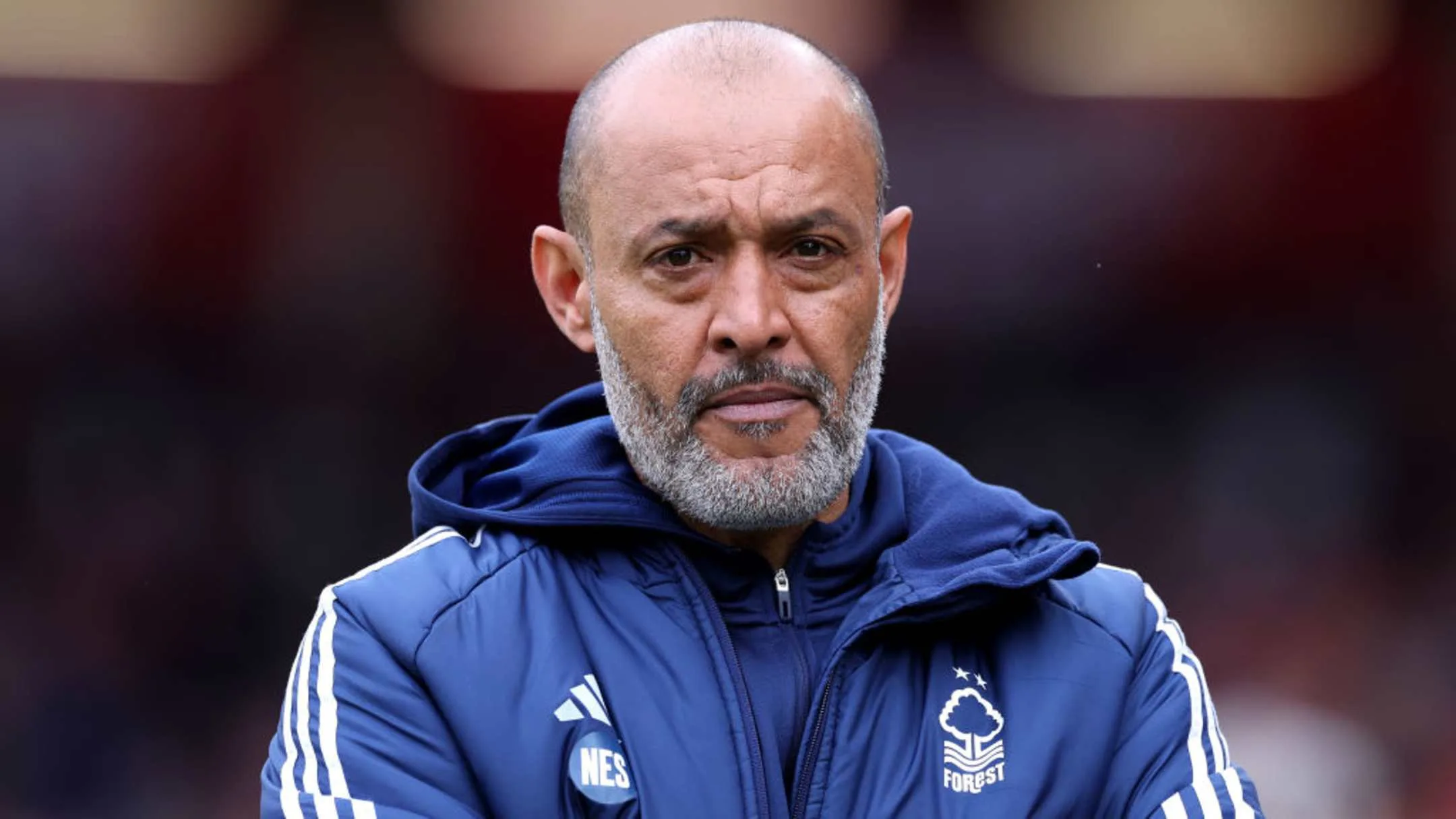
Nottingham Forest, 2025–26 — Games lasted: 4, Date sacked: September 9
Nuno, who returned European football to the City Ground for the first time in almost 30 years and led Forest to a seventh-place finish in 2024–25, left after a summer of unrest following Evangelos Marinakis’s appointment of Edu Gaspar as Global Head of Football. The manager and the new executive reportedly fell out and were not on speaking terms. The club went on to appoint Ange Postecoglou.
Earlier and shorter spells include Tottenham Hotspur in 1998–99, Newcastle United in 2008–09 and 1997–98, and West Ham United in 2008–09, where managers left within the first three games of those campaigns. “And even Christian Gross…”, the draft of that era summed up the uncertainty in north London.

Chelsea
Four Premier League managers under pressure in a season of churn
Premier League pressure mounts as four managers face scrutiny after a turbulent start to 2026/27.
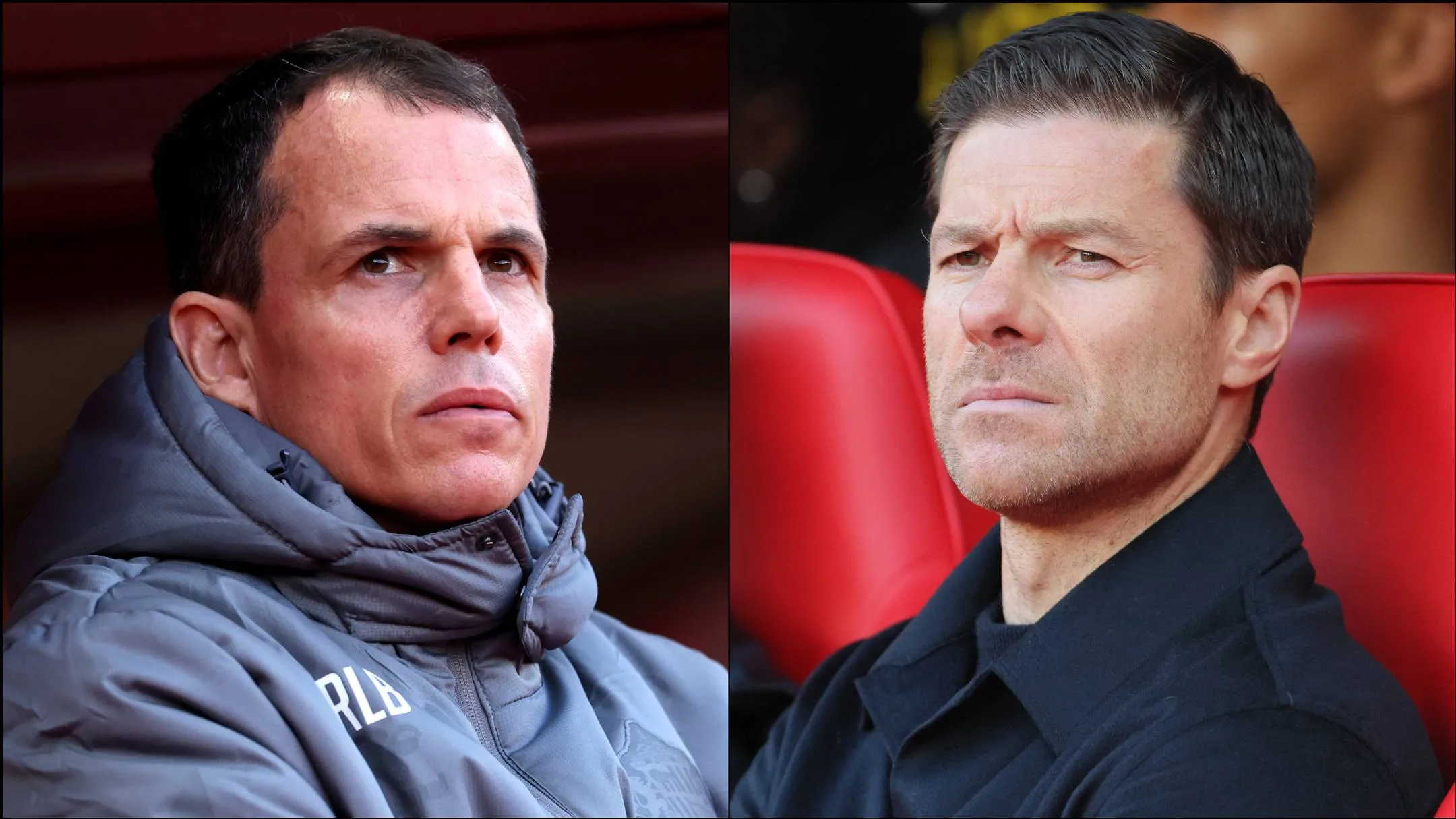
“You’re not really a manager until you’ve been sacked.”
That old line has become a grim feature of modern football, and the Premier League has spent the past three decades proving the point. Sir Alex Ferguson, whose success remains unmatched in the competition’s history, once suggested the appetite for managerial churn reflects a reality TV culture of voting people out.
Today, the sense of instability is never far away. There is always a hand near the red button, with managers moving constantly through the dugouts while the question remains unchanged: who goes next?
For Chelsea, the volatility has become especially familiar. BlueCo have already shown a level of impatience that surpassed even the reputation built during Roman Abramovich’s time, when three different managers were never required in one season. Yet that is exactly what happened in BlueCo’s first campaign of ownership in 2022-23.
The 2025-26 season brought another unsettled spell, with Enzo Maresca’s abrupt New Year’s Day departure followed by the short tenure of Liam Rosenior. Calum McFarlane, who twice stepped in as interim boss last term, summed up the reality bluntly: “This is not an easy job.”
Xabi Alonso has since found that out for himself. After an encouraging start filled with goals, Chelsea’s dependence on João Pedro for attacking ideas and Moisés Caicedo for defensive stability has become hard to ignore. When both were injured, Alonso’s lack of influence from the touchline was laid bare. The situation has not yet reached the point of a dismissal, but even Alonso admitted, “a fragile moment.”
Régis Le Bris should have had the strongest possible backing after guiding Sunderland to their first European season in 52 years. Yet the demands of continental football have begun to weigh on league results. Four straight defeats in the autumn, followed by a convincing loss to newly promoted Coventry City, have increased the scrutiny. Le Bris has always valued “being hard to beat”, but Sunderland have found that toughness difficult to turn into wins with a blunt attack.
Oliver Glasner also felt the pressure after one win from the club’s first nine Premier League matches. His response was emphatic: “It’s now time that we change things,” he said, “and that’s what I will do.” The next game brought a 3-1 victory over Manchester City, only for Bournemouth to end the brief lift immediately after. Glasner still believes, “I think we can have a turnaround,” while adding, “and if not, the sixth manager will come in.”
At Newcastle United, ownership representatives arriving at St James’ Park at the end of November only sharpened attention on Matthias Jaissle. Appointed hurriedly in the summer after Eddie Howe’s unexpected exit, Jaissle had lost five of his previous seven matches, including two defeats in five days against the same threadbare Everton side.
Arsenal
Guimarães Fades as Arsenal’s Mental Test Breaks Down at Newcastle
Guimarães returned to Newcastle under pressure, and Arsenal lost control as emotions overtook the game.
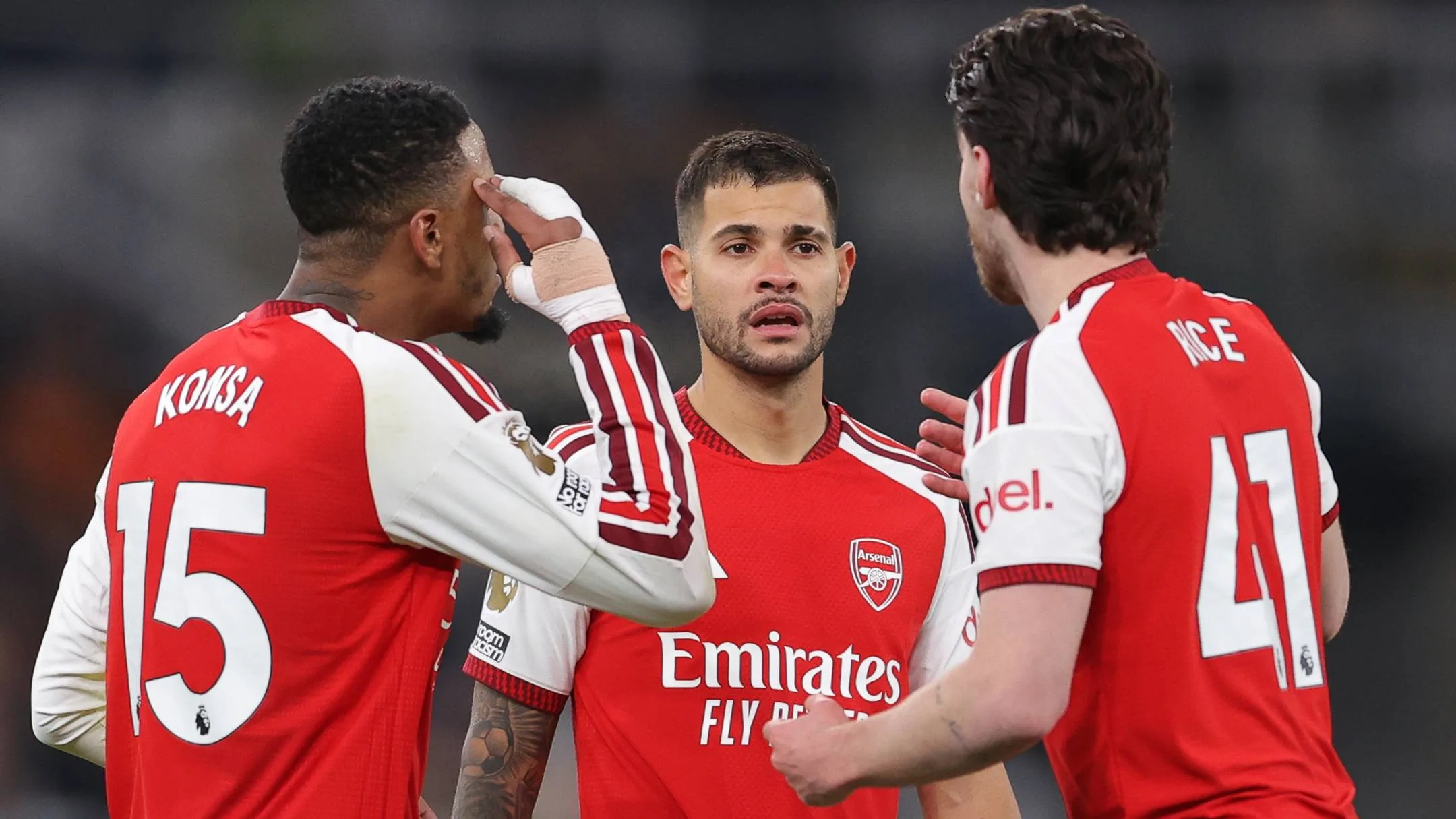
Bruno Guimarães returned to Newcastle with a heavy burden on his shoulders and found no shortage of resistance. After moving to Arsenal in a summer transfer that divided opinion, the Brazilian was greeted by a hostile crowd and spent much of his 70 minutes trying to survive the moment rather than shape it.
The Arsenal midfielder had been told to prepare himself emotionally, with Mikel Arteta again underlining the importance of “emotional dominance.” But the challenge did not go as planned. Guimarães, who once described Newcastle as a place where he “never felt so loved like the way I was at Newcastle,” was booed and chased through a match that became increasingly uncomfortable for the visitors.
His early work was cautious. Across the first 25 minutes, he barely risked a pass forward, apparently hoping to keep the noise to a minimum by limiting his involvement. That restraint gradually eased, and he started to move with more freedom before the interval, including one burst forward and an attempt to challenge a cross from Declan Rice that drifted just wide. Even then, Arteta was not satisfied and was seen berating him for drifting out of position.
The second half told a harsher story. David Raya’s injury early after the restart drained Arsenal’s momentum, and the visitors never recovered. Martin Ødegaard’s loose touch and an error from Eberechi Eze opened the door for Newcastle, who moved in front through Malick Thiaw after a corner.
Guimarães’ influence disappeared almost completely after the break. In his 25 second-half minutes he managed only five touches, while Ødegaard had three as Arsenal were overrun. Newcastle scored twice, forced off Arsenal’s goalkeeper and came close to a third before the visitors registered a shot after the interval. Matthias Jaissle said Arsenal were “shaking” in those closing stages.
Yet Newcastle were not fully in control either. The home crowd grew restless during a flat first half, and the energy of the comeback left them exposed while protecting a 2–1 lead. In a match defined by nerves, neither side handled the emotional demands cleanly.
Arsenal
Arsenal Held After Newcastle Fightback in Tyneside See-Saw
Arsenal led at the break, but Newcastle hit back after halftime and shared the points on Tyneside.
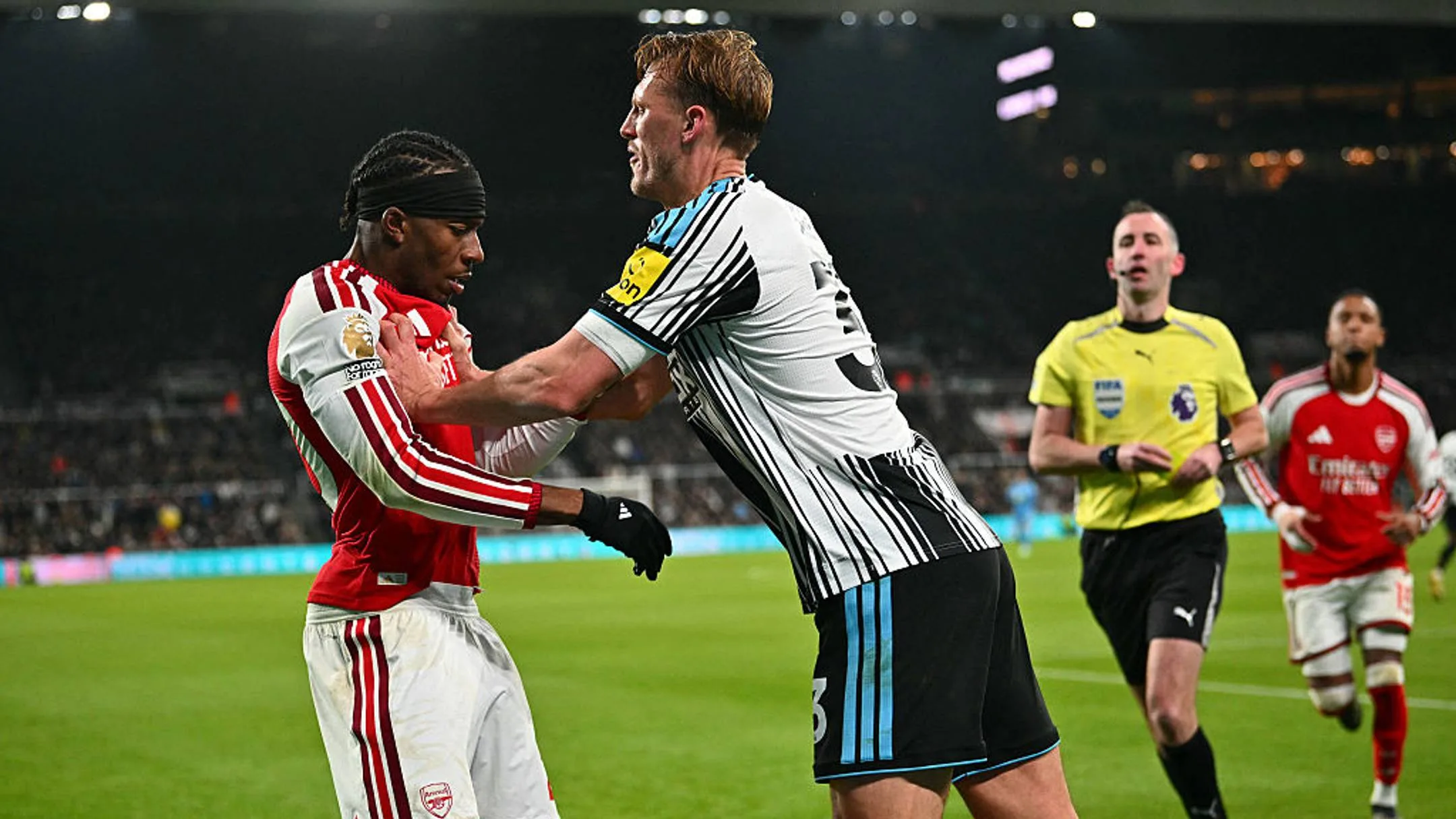
Arsenal left Tyneside with only a point after a match that swung sharply from control to chaos. For much of the first half, the visitors looked in command and were rewarded when Eberechi Eze finished off excellent work from Kai Havertz to put them ahead.
That lead should have been more comfortable. Arsenal were the better side, created the cleaner openings and went in at the break with the sense that a bigger margin was there for the taking. Newcastle, meanwhile, headed down the tunnel to a hostile response and needed a lift after the interval.
They got it. Jaissle’s triple substitution changed the feel of the contest almost immediately, adding speed and energy to the home side. Within 17 minutes of the restart, Newcastle had turned the game around. Harvey Barnes levelled after a Martin Ødegaard error, then Malick Thiaw bundled home from a messy set-piece sequence to make it 2-1.
Arsenal were rattled, and the momentum shift was severe, but they did not disappear from the match. They steadied, rebuilt their rhythm and produced a fine move that ended with Noni Madueke scoring a deserved equaliser. The closing stages remained lively, though neither side found a fifth goal.
The point means Arsenal avoid defeat in a game that briefly threatened to unravel completely, although concern now turns to David Raya, who was forced off injured. Arsenal had gone into the fixture with a chance to move eight points clear at the top after Manchester City dropped points at lunchtime, with Brighton & Hove Albion due to play Hull City on Sunday.
There was also a reminder of how quickly a match can change. Arsenal had been in control, then suddenly found themselves under pressure, before finally recovering enough to leave with something to show for their efforts.