Man City
Manchester Derby: City’s Injury Crisis and Who Will Be Missing
City enter the derby short at centre back and missing several squad members through injury. in 2026.

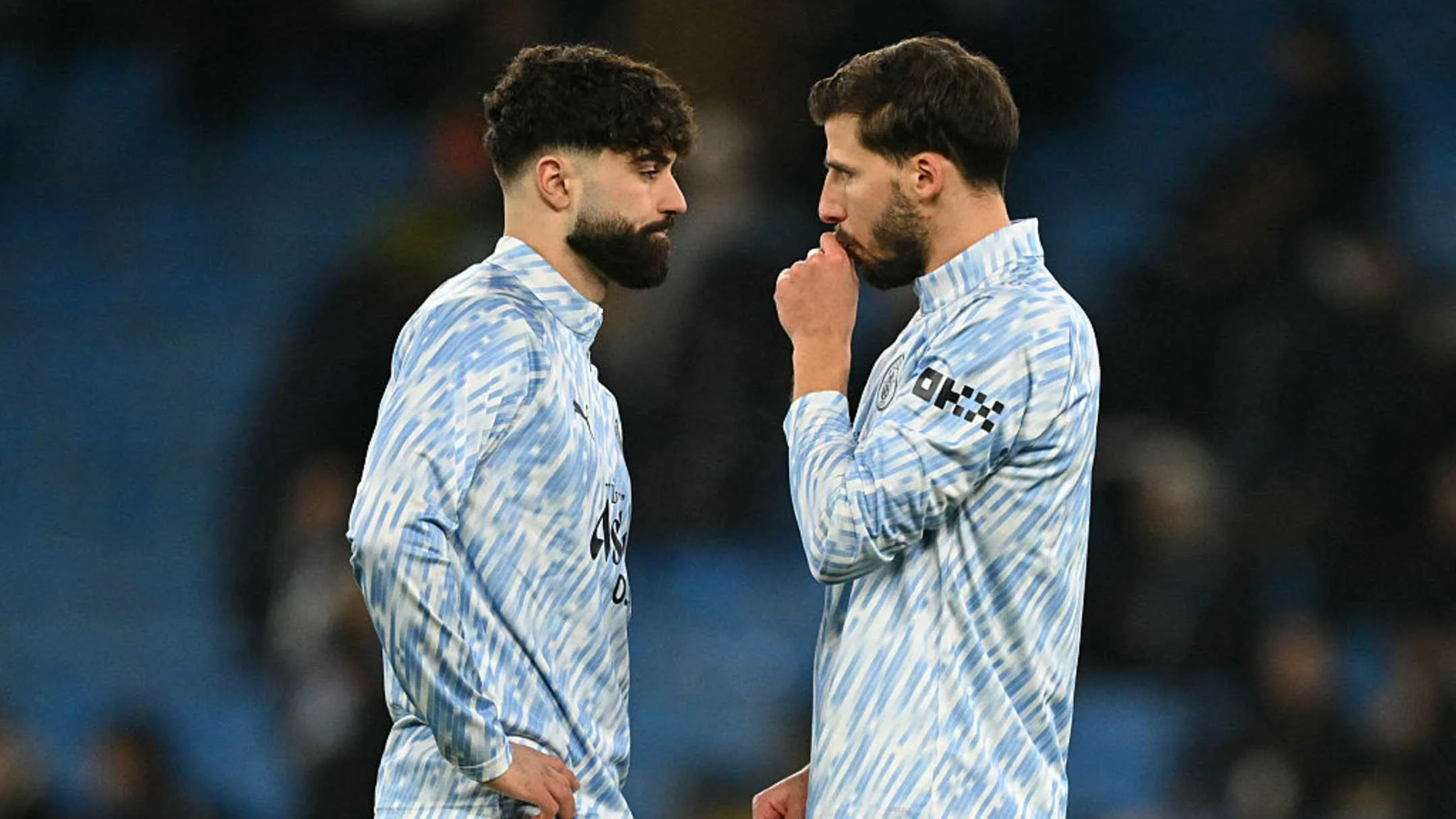
Manchester City head into Saturday’s Manchester Derby still searching for their first Premier League win of 2026 and carrying a substantial injury list that will shape selection at the Theatre of Dreams.
Defensive absences have been most disruptive. The hamstring problem Dias picked up at the start of the year will rule him out for a few more weeks. Guardiola suggested the Portuguese international will be “back soon” in his pre-match press conference, but the manager had earlier projected Dias to miss up to six weeks after the extent of the setback became clear following the 1–1 draw with Chelsea on Jan. 4.
That same Chelsea match also left Gvardiol with a fractured leg. Guardiola confirmed the Croatian international “won’t be back anytime soon,” and Gvardiol is now set to miss much of the remainder of the season.
Guardiola has been forced to rely on unexpected options at centre back, even handing a teenager who spent the first half of the season on loan at Watford a start alongside Abdukodir Khusanov. Retaining Max Alleyne in the XI would be a bold call, yet the manager’s choices may be limited while the defensive injury situation remains unchanged.
Midfield concerns persist as well. González, who joined the club a year ago and had shown signs of settling into the base of City’s midfield, has been sidelined in recent outings with a minor bone injury sustained against Brighton & Hove Albion on Jan. 7. He is “seemingly back in contention” for the derby, with Guardiola saying Friday’s training session will determine if he can play. City have Rodri available if González is not declared fit.
Off the pitch, City have agreed a deal to sign Crystal Palace defender Marc Guéhi on Friday as they plan for life after John Stones. Stones has not featured since the start of December because of a thigh injury and is poised to move on when his contract expires at season’s end.
Other absentees include Marmoush, who has been playing for Egypt at the Africa Cup of Nations after scoring twice but whose side were eliminated by Senegal in the semi-finals; a young Norwegian winger sidelined with a hamstring issue; and Savinho, whose New Year’s Day knock at Sunderland will keep him out of action for a “long time.”




Analytics & Stats
Opta Supercomputer Lays Out 2025–26 Premier League Forecast as Arsenal Lead the Way
Opta’s supercomputer predicts Arsenal favourites and projects points, qualification and relegations.
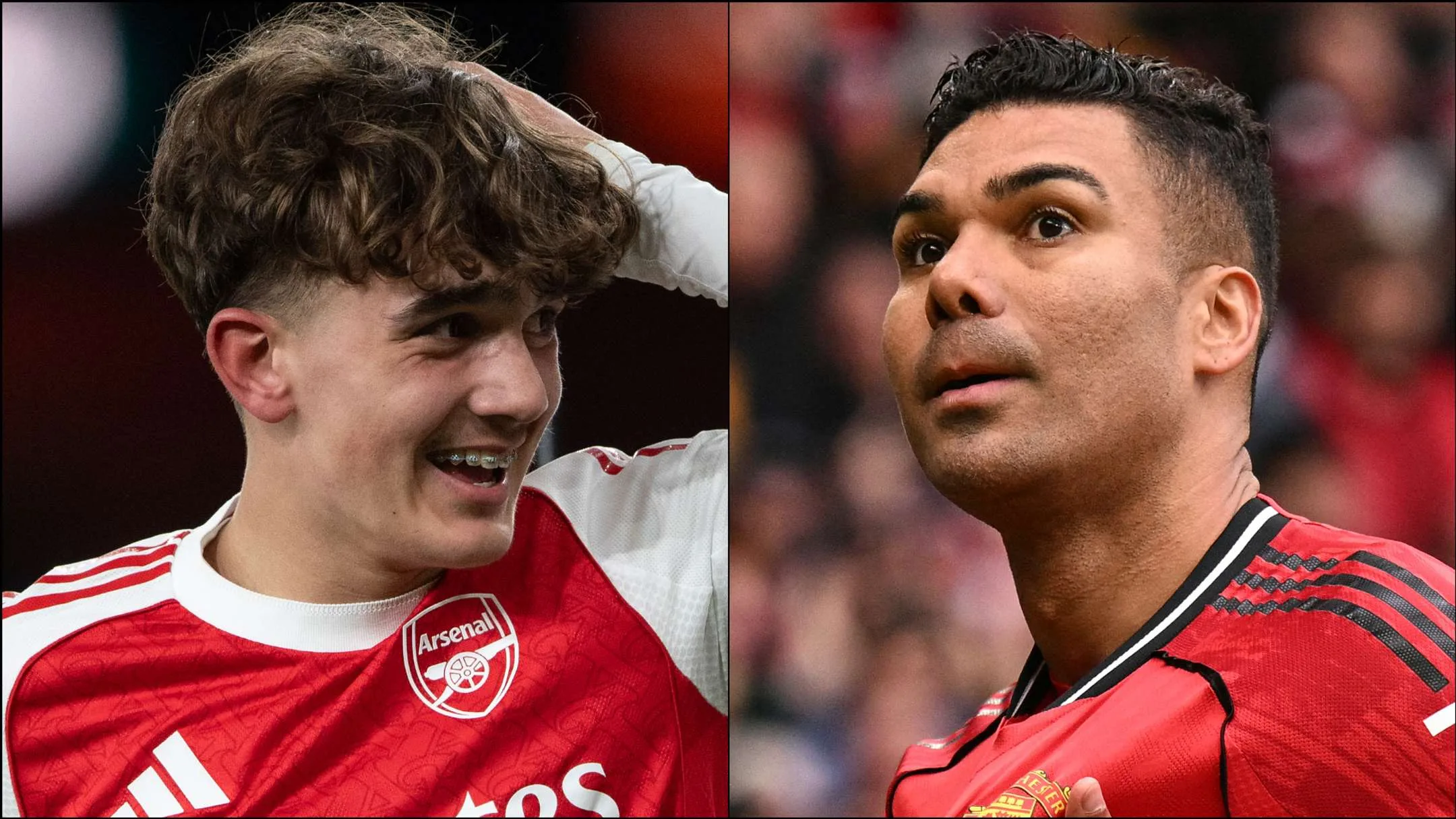
Opta’s supercomputer has produced a clear statistical view of the 2025–26 Premier League table, heavily favouring Arsenal while mapping out qualification and relegation probabilities. The model gives Arsenal 84.61 predicted points and a 97.46% chance of the title from their current 70 points. Manchester City sit on 61 points with a prediction of 74.70 and a 2.54% title chance.
The weekend’s results felt significant. Arsenal pulled further clear of Manchester City after a dramatic 2–0 victory over Everton inspired by the record-breaking feats of Max Dowman. City were held to a 1–1 draw against West Ham after Pep Guardiola warned that a slip up would be catastrophic. “Now it’s West Ham that defines the Premier League,” he declared. “Now we go there knowing that if we drop points, it will be over.” After the draw Guardiola insisted: “It’s not over.” The supercomputer remains unconvinced that City can close the gap.
Manchester United have opened up breathing room in the race for Champions League qualification. United sit on 54 points with a predicted 66.03 and a 78.07% chance of qualifying after a convincing 3–1 win over Aston Villa. “We are in a good position at the moment,” Michael Carrick admitted, “but still a lot to play for.”
The model projects Aston Villa, Liverpool and Chelsea to contest the remaining top-six positions, with Liverpool on 49 points and a predicted 61.80 (34.09% chance), and Chelsea on 48 points and a predicted 60.52 (23.21% chance). Dominik Szoboszlai captured the mood after Liverpool’s 1–1 draw with Tottenham: “We have to wake up because if we carry on like this, we should be happy with the Conference League.”
At the bottom, the supercomputer gives Burnley and Wolves near-certain relegation, while Leeds, Tottenham, Nottingham Forest and West Ham occupy the zone of greatest uncertainty. Tottenham headed into the weekend one point above the relegation zone and ended it level with Leeds, Forest and West Ham; the mood in north London has lifted after they ended their losing run.
The Opta projection frames the current landscape: Arsenal clear favourites, City still dangerous, United pushing for the top three, and a congested battle for European places and survival.
Man City
City Held 1-1 by West Ham as Silva Scores and Donnarumma Error Costs Lead
Silva gave City the lead and Donnarumma’s corner error allowed Mavropanos to level the score. Later.
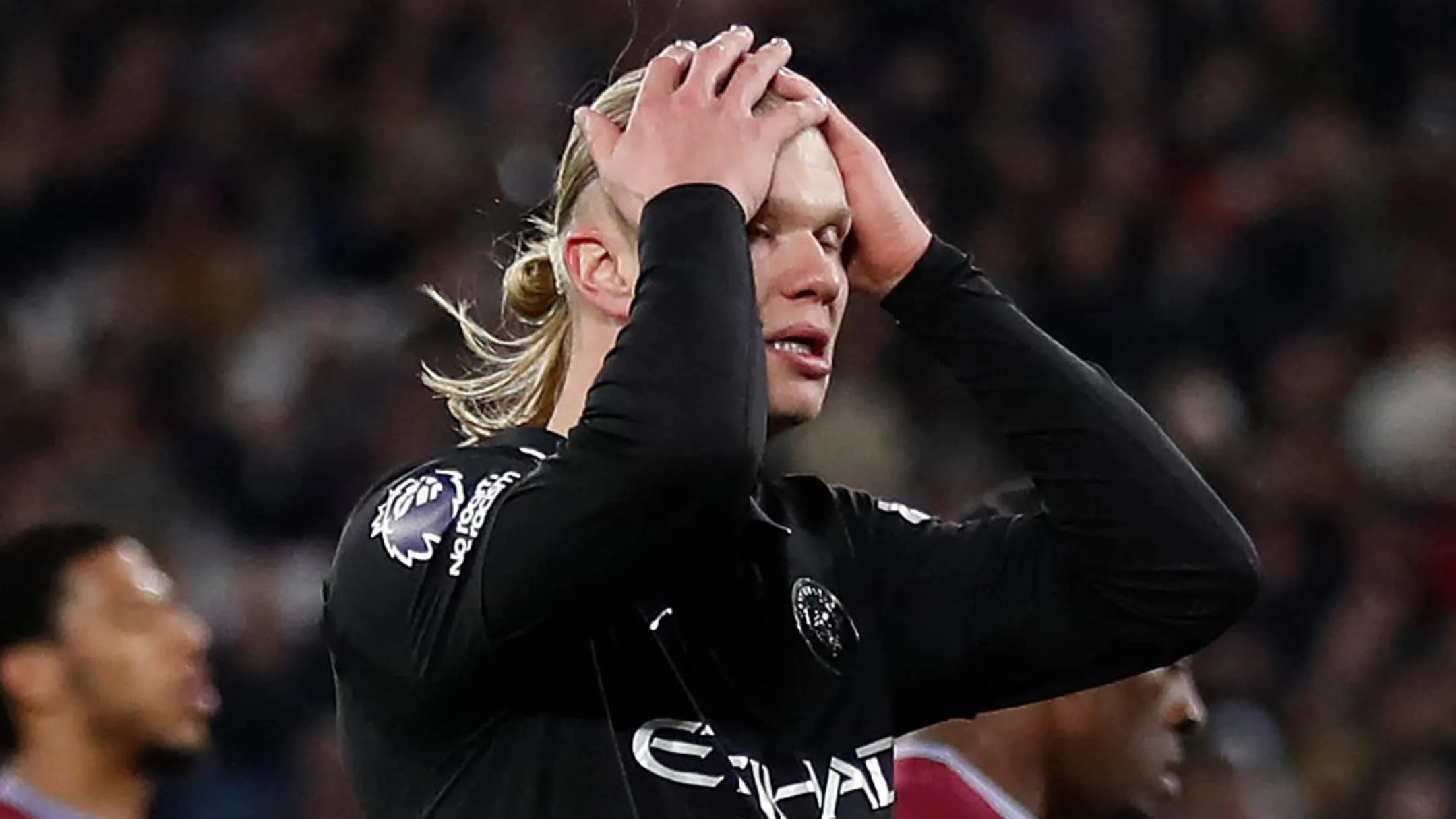
Manchester City were held to a 1-1 draw by West Ham United on Saturday, a result that followed Wednesday’s defeat by Real Madrid in the first leg of the Champions League round of 16.
Bernardo Silva opened the scoring in the 31st minute. He made an overlapping run around Omar Marmoush, who fed him a diagonal ball towards the corner of West Ham’s box. Silva chipped the ball past the fingertips of Mads Hermansen to put City ahead.
The lead lasted four minutes. Gianluigi Donnarumma misread the flight of West Ham’s corner kick and the floating ball found the head of Konstantinos Mavropanos to level the score.
City pressed late but could not find a winner. In the final 10 minutes the visitors produced nine shots and four corner kicks. City are now nine points behind league leaders Arsenal and are deeper in trouble after earlier dropping points to Nottingham Forest.
Erling Haaland remains without a goal since Feb. 11 across all competitions. He spent much of the match surrounded by maroon shirts and appeared largely peripheral for the first 70 minutes. City took 15 corner kicks, many aimed at the 6’5 forward on the goal line, but Haaland created one real chance and had a single shot on frame, becoming more involved only in the final 20 minutes.
Player ratings
GK: Gianluigi Donnarumma — 6.3: Completely misread the flight of the ball on West Ham’s only corner kick, resulting in Mavropano’s equalizer.
RB: Matheus Nunes — 7.0
CB: Abdukodir Khusanov — 7.7
CB: Marc Guéhi — 7.8
LB: Rayan Aït-Nouri — 8.0
DM: Rodri — 7.8
RW: Antoine Semenyo — 6.2
AM: Bernardo Silva — 7.7
LW: Nico O’Reilly — 7.2
ST: Erling Haaland — 6.6
ST: Omar Marmoush — 7.4
Subs used: Jérémy Doku (60’ for Aït-Nouri) — 6.6; Rayan Cherki (60’ for Marmoush) — 6.8; Phil Foden (75’ for Semenyo) — 6.1; Tijjani Reijnders (75’ for Silva) — 6.9.
Subs not used: James Trafford (GK), Nathan Aké, Rúben Dias, Rúben Dias, Mateo Kovačić, Nico González.
Match statistics (West Ham v Man City): Possession 29% v 71%, xG 0.54 v 2.06, Total shots 1 v 24, Shots on target 1 v 6, Big chances 1 v 1, Passing accuracy 75% v 91%, Fouls committed 14 v 5.
Arsenal
Fixture runs could define the title race as Arsenal and Man City prepare to resume
After a 1-1 draw with West Ham, Man City have dropped points twice and trail Arsenal by nine points.
The Premier League title race took another twist after Manchester City were held to a 1-1 draw by 17th place West Ham United. The result left the title chasers, who still have a game in hand, having dropped points in their last two matches and vulnerable to Mikel Arteta’s side moving further clear.
Arsenal (70 points) and Man City (61 points) now face a sequence of fixtures that could determine the outcome of the campaign.
Arsenal fixtures:
Bournemouth (H) – April 11
Man City (A) – April 19
Newcastle (H) – April 25
Fulham (H) – May 2
Brentford (H) – May 9
Man City fixtures:
Chelsea (A) – April 12
Arsenal (H) – April 19
Burnley (A) – April 26
Everton (A) – May 2
West Ham (A) – May 9
Both clubs pause Premier League action for the March international break because of the Carabao Cup final. The sides meet at Wembley Stadium on Sunday, March 22, before domestic fixtures resume.
When league play restarts Arsenal will host Bournemouth at the Emirates. The two met earlier this season in a narrow 3-2 result in Bournemouth’s favour, and Arsenal will seek a more convincing display on home soil.
City travel to Stamford Bridge next, a difficult test despite Chelsea’s recent struggles. The return to league duty includes the pivotal meeting between the two leaders on April 19, with City holding the home advantage. That fixture could be decisive, particularly if the Sky Blues are affected by European commitments after failing to overturn a three-goal deficit to Real Madrid in the Champions League round of 16.
After the head-to-head, Arsenal welcome Newcastle United, a side that has troubled the north Londoners at times under Eddie Howe. Man City’s April finish is comparatively gentler on paper, with a visit to relegation-bound Burnley followed by trips to Everton and West Ham. Both runs carry challenges; form and fine margins will likely decide the title.