Bayern Munich
The Great Runs: A Tour of Football’s Longest Unbeaten Streaks
From Union Saint-Gilloise to Leverkusen: the longest unbeaten runs across club football history. 2024

Throughout the 20th and 21st centuries, a handful of teams have defined eras by refusing to lose. These unbeaten runs, recorded across domestic and continental competitions, underline how consistency can rival silverware for legacy.
Celtic recorded a 42-game run between November 2016 and August 2017 under Brendan Rodgers. The Hoops went the entire league season without defeat and completed a domestic treble, lifting both the League Cup and the Scottish Cup. That streak ended in Champions League qualifying against Astana. Celtic still advanced on aggregate, but then lost five of six group matches and conceded 18 goals.
AC Milan also reached 42 games unbeaten after a May 1991 defeat to Bari. The Rossoneri went through the 1991-92 league season without defeat and did not lose until a 1-0 Coppa Italia semifinal loss to Juventus in April. That side featured Paolo Maldini, Franco Baresi, Frank Rijkaard, Ruud Gullit and Marco van Basten.
Ajax produced a 42-match sequence beginning at the end of 1994-95, a season in which they lost only once in the KNVB Cup. With Edwin van der Sar, Edgar Davids, Clarence Seedorf, Nwankwo Kanu and Patrick Kluivert, Ajax lifted the Champions League and saw the run end with a 1-0 loss to Willem II in January 1996. They still won the Eredivisie and reached another Champions League final, losing on penalties to Juventus.
Juventus went 43 games unbeaten under Antonio Conte, mostly during 2011-12, winning the title and ending the run with a 2-0 Coppa Italia final defeat to Napoli.
Rangers registered a 44-game unbeaten spell across the 1992-93 season, which ended in March at the hands of Celtic. Walter Smith’s team won the domestic treble, beat Aberdeen in both cup finals and finished nine points clear in the league.
Dinamo Zagreb reached 45 matches without defeat from 2014-15 into 2015-16, their first loss that season a 5-0 Champions League defeat to Bayern Munich. HNK Rijeka matched 45 games in 2016-17 before falling to Lokomotiva and later beating Dinamo 3-1 in the Croatian Cup final to secure a double.
Benfica held the post-war European record with 48 matches across 1963-64 and 1964-65, winning two Portuguese titles and a Taca de Portugal under an Eusébio-led side.
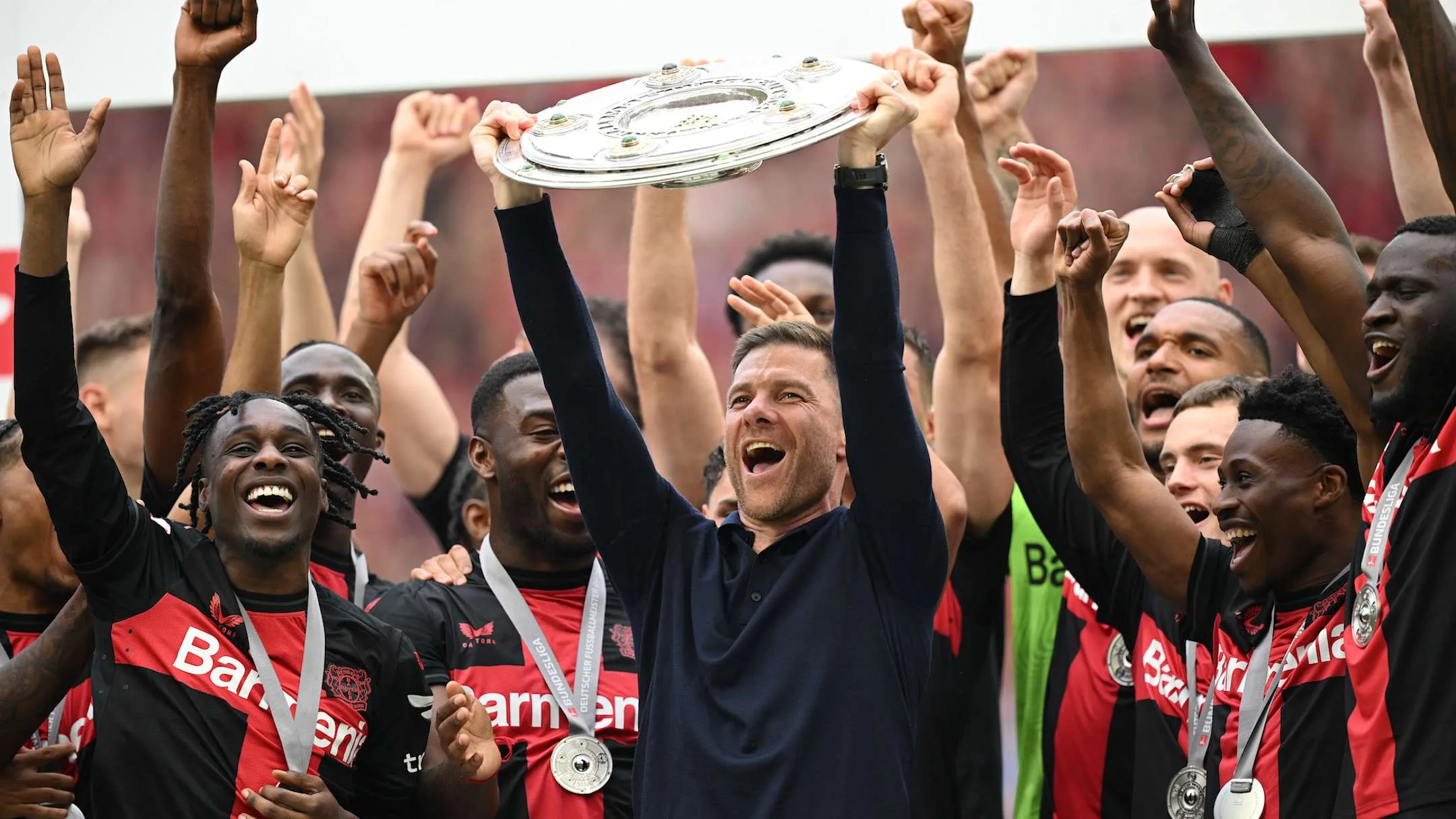
Union Saint-Gilloise produced a pre-war 60-game run of 44 wins and 16 draws, which ended on 3 February 1935. In 2023-24, Bayer Leverkusen achieved a 51-game unbeaten run under Xabi Alonso, finishing the Bundesliga season unbeaten before a 3-0 loss to Atalanta in the Europa League final ended the sequence.
Other notable invincible seasons in recent decades include Arsenal (2003-04), Porto (2010-11 and 2012-13) and Rangers (2020-21). Beyond Europe, Al Ahly have completed seven unbeaten league seasons since the 1960s, while Johor D.T. completed back-to-back unbeaten domestic campaigns in 2022 and 2023, each a 22-game league season with domestic trebles.




Arsenal
Money Talks: CIES Ranks the World’s Most Valuable Squads
CIES values nine squads over $1bn; Real Madrid leads at $1.78bn while Tottenham exceed $1bn. Values.
The surge in transfer prices and squad valuations has reshaped how clubs are measured. The CIES Football Observatory produces those estimates by weighing a player’s quality, age, position and length of contract, and those individual valuations are then summed to give each squad a market value.
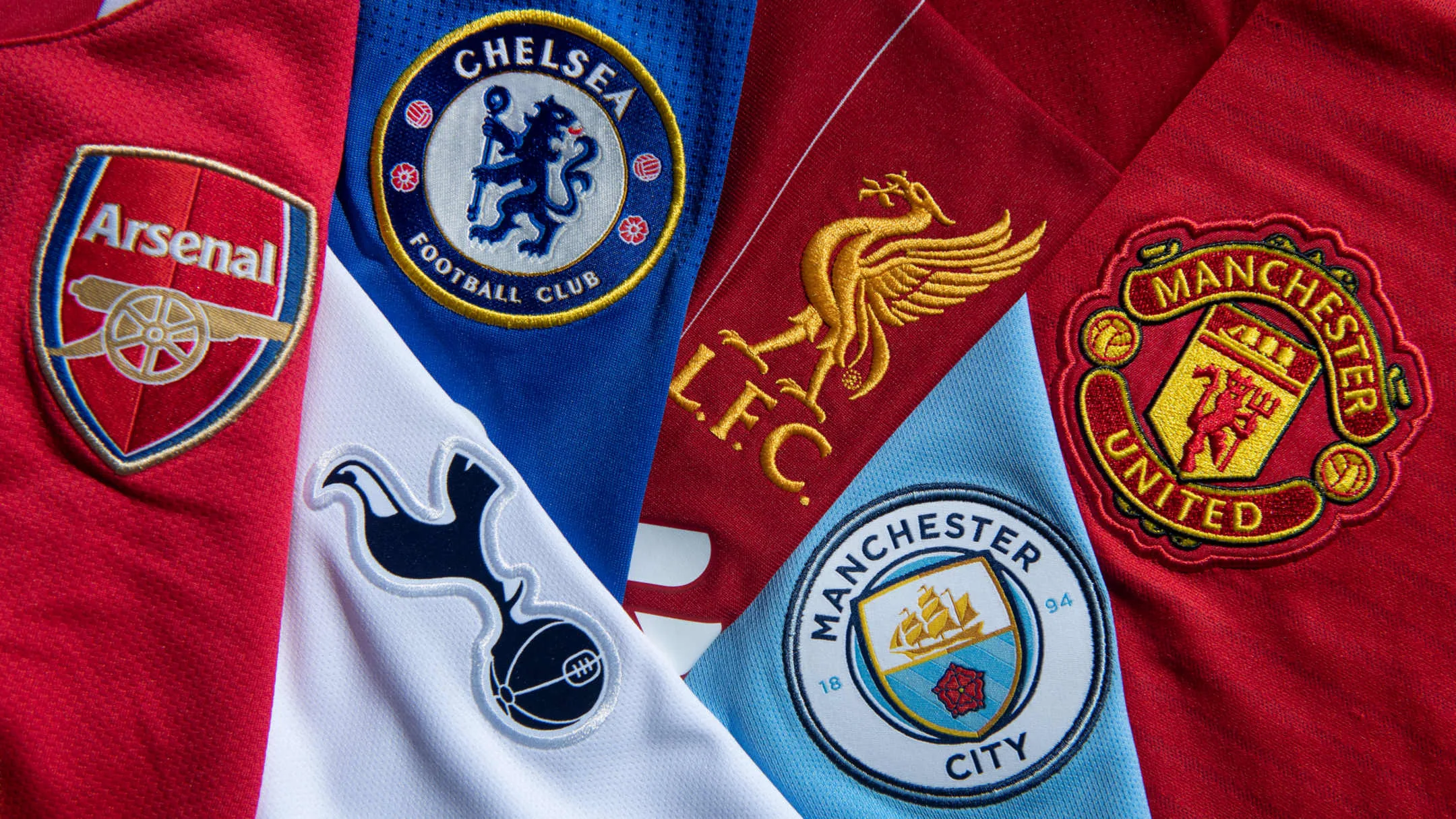
The scale is striking. There are nine clubs with squads valued above $1 billion. At the top is Real Madrid with a squad valuation of $1.78 billion and Kylian Mbappé listed as the most valuable player at $221 million. Barcelona follow with $1.60 billion, Lamine Yamal accounting for $403.9 million of that total. Arsenal and Paris Saint-Germain each sit at $1.55 billion, with Bukayo Saka ($131.5 million) and Désiré Doué ($150.3 million) named as their most valuable players respectively.
Liverpool’s roster is valued at $1.20 billion, most valuable player Florian Wirtz ($149.8 million). Bayern Munich come in at $1.15 billion with Michael Olise ($162.6 million) as their top-rated asset. Tottenham’s squad is valued at $1.03 billion; Xavi Simons is listed as their most valuable player ($98.1 million), despite the club’s current relegation fight and Igor Tudor’s assessment that players “are lacking when we attack, we lack the quality to score the goal. We are lacking in the middle to run and we are lacking behind to stay there to suffer and not concede the goal.”
The list also includes Manchester United ($953 million, Benjamin Šeško $100.3 million) and Inter ($942 million, Lautaro Martínez $117 million). Earlier-positioned squads under $1 billion include Atlético Madrid ($903 million, Julián Álvarez $136.5 million), Juventus ($896 million, Kenan Yıldız $152.5 million) and Brighton ($894 million, Diego Gómez $86.4 million).
Several voices in the game have reflected on the market changes. Karl-Heinz Rumminegge said, “There are some players who do not come with a price tag.” Robert Lewandowski complained, “You are young, you score 10 goals in six months and some club will pay 60 or 70 million,” adding, “Before, you had to achieve something.” Vincent Kompany warned players about hype: “I always tell my players, ‘When there’s hype please don’t believe it, you’re not that good.’”
Whether the valuations mirror on-field quality or the inflation of a transfer market remains the central question CIES data brings into focus.
Bayern Munich
Bayern Join a Packed Race for Nottingham Forest Midfielder Elliot Anderson
Bayern step up for Elliot Anderson as Man City, Man Utd and others pursue midfield options in 2026 .
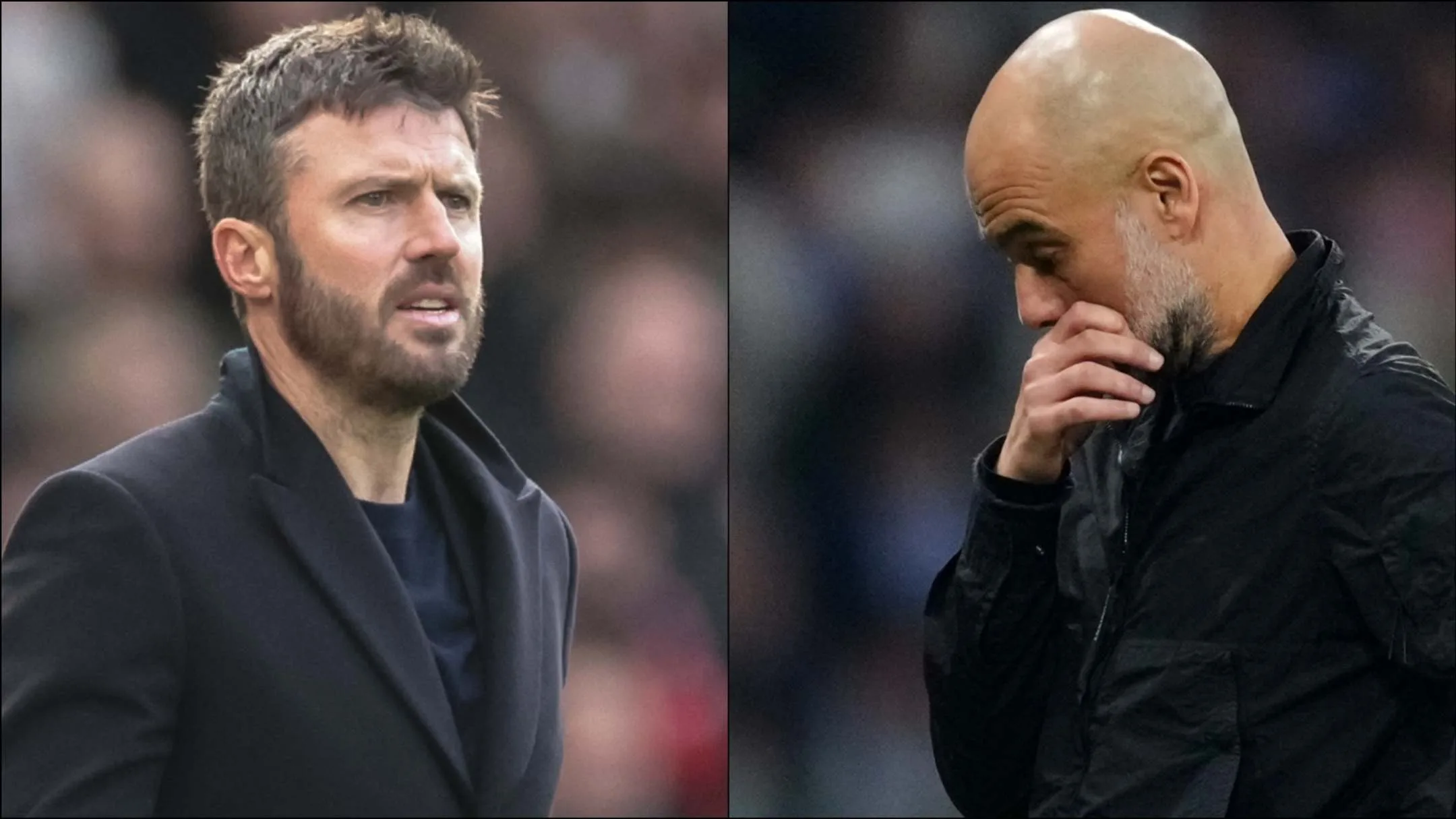
Bayern Munich are reportedly intensifying interest in Nottingham Forest midfielder Elliot Anderson, entering a transfer picture already crowded with top clubs. The German side are said to be “stepping up” their plans to sign Anderson, who could be tempted by the prospect of joining up with international teammate Harry Kane.
Last summer was the year of the striker. Alexander Isak, Hugo Ekitiké, Viktor Gyökeres, Benjamin Šeško, João Pedro, Liam Delap … all the big teams wanted a new goalscorer and bid against themselves to try find them. Now, in 2026, the narrative has turned to midfielders and Anderson sits near the top of multiple wish lists.
Manchester United and Manchester City are both named among the interested parties, alongside Liverpool, Chelsea, Real Madrid and Tottenham Hotspur. The article adds that Arsenal, Newcastle United, Barcelona and Paris Saint-Germain could also be drawn into the market depending on how the window develops.
That overlap matters because many clubs are watching the same targets. There is, however, only one Anderson. Clubs that see the 23-year-old as their dream pick-up will need alternatives if he moves elsewhere this summer.
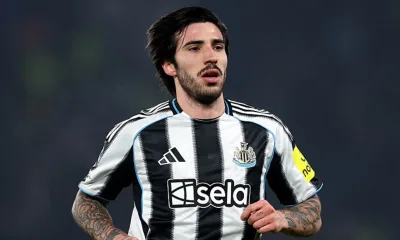
Potential replacements already being considered include Adam Wharton of Crystal Palace, while the agent of Newcastle’s Sandro Tonali has done an excellent job of injecting his client into the market . Magpies teammate Bruno Guimarães has also been tipped for a costly exit. Brighton & Hove Albion’s Carlos Baleba still has plenty of admirers despite a failed approach from United last summer, and Bournemouth’s Tyler Adams and Wolverhampton Wanderers’ João Gomes are both named as players likely to move on this year.
As the window unfolds, clubs facing the prospect of missing out on Anderson will be forced to broaden their lists. For now, the race to sign him looks set to be a defining early storyline of the 2026 transfer window.
Barcelona
The 25 Attacking Midfielders Defining Modern Football
25 elite attacking midfielders examined for 2025/26: roles, strengths and standout traits. Insights.
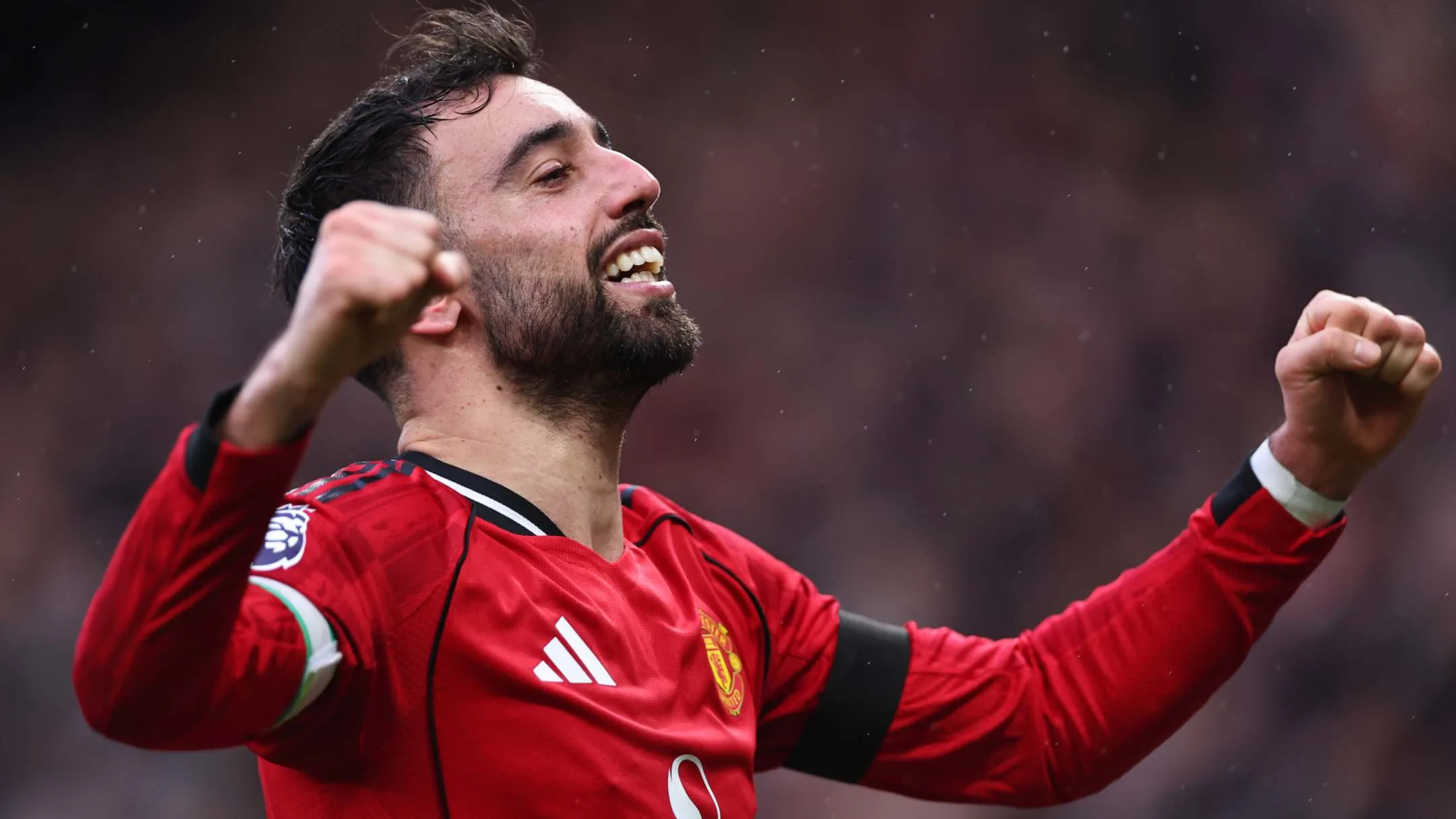
Attacking midfielders with genuine No.10 instincts remain scarce at the elite level. This survey distils the core reasons a selection of those players matter now: creativity, goalscoring, tactical intelligence and adaptability across competitions and systems.
Charles De Ketelaere arrived at Atalanta in 2023 after a difficult season at AC Milan. Gasperini’s setup revived him: he scored 14 league goals and provided 11 assists in his debut campaign while playing a central role in Atalanta’s Europa League triumph. In 2024/25 he followed that with 13 goals and 13 assists, standing out for silky footwork, clever movement and elite off-ball positioning.
Xavi Simons rebuilt his trajectory at PSV in 2022, scoring 22 times and earning Player of the Year before PSG triggered a buy-back clause and later loaned him to RB Leipzig. Now a permanent Leipzig player, Simons has become one of the Bundesliga’s most electric attacking forces.
Pedro Gonçalves has been Sporting’s creative metronome since 2020. Up until the end of 2024/25, despite missing significant time through injury, Gonçalves had scored 87 goals and provided 57 assists for the club. His quiet persona and a brief, uneventful spell at Wolves have obscured his sustained output.
Giorgian de Arrascaeta continues to flourish at Flamengo, winning the 2025 Copa Libertadores. On his level, Filipe Luís said: “The whole world knows and sees that he could perfectly be in Barcelona, Real Madrid, Atlético, Chelsea … he is high above many’s standard,” Luís once gushed. “He makes the difference.”
Bayern’s Lennart Karl, signed from Eintracht Frankfurt’s academy at 14, became the club’s youngest Champions League scorer with a goal against Club Brugge. “I’m aware of it, of course, but I don’t let it influence me,” he shrugged.
Other profiles charted here include established creators and rising stars: Antoine Griezmann, Morgan Gibbs-White, Eberechi Eze (whose FA Cup final winner against Manchester City earned a move to Arsenal), Christoph Baumgartner—“He’s an incredibly important player for us and organizes a lot, both on and off the pitch,” Ole Werner said—and a string of continental talents earning fresh recognition.
This group illustrates how varied the modern No.10 role is: goal threat, orchestrator, press initiator and game finisher. The mix of proven output and emergent potential explains why these midfielders are so highly prized in 2025/26.