Arsenal
Evaluating the Premier League’s Best Midfielders
Assessment of the Premier League’s leading midfielders: roles, form, transfers and impact. Season 25.


The Premier League currently fields an unusually deep pool of midfield talent, spread across the traditional powers and beyond. Below is a concise assessment of the players outlined in the original draft, concentrating on roles, recent form and defining attributes.
Xavi Simons arrived at Tottenham Hotspur last summer from RB Leipzig and is still adapting to English football. The Netherlands international has shown glimpses of his creative brilliance. A versatile attacking midfielder, Simons excels in small spaces, using a low centre of gravity and a quick turn of pace to influence play around the penalty area.
Martin Ødegaard remains one of the division’s top midfielders despite a dip in stock over the past year due to injuries and questions over his long-term role. The Arsenal captain is often deployed into the wide right space by the system, but he has built a strong relationship with Bukayo Saka. He may be better suited to a traditional attacking midfield role where his playmaking and left foot are most threatening.
Bruno Guimarães has been a model of consistency since joining Newcastle United in 2022. An all-action presence, he combines tackles, accurate diagonals and timely goals with a tireless work rate, forming a central trio with Sandro Tonali and Joelinton.
Martín Zubimendi turned down Liverpool in summer 2024 before joining Arsenal. The Spaniard has adapted quickly, offering defensive midfield control through a blend of ferocity and finesse.
Sandro Tonali returned from a 10-month ban for breaching betting rules and has repaid Newcastle’s faith since early in the 2024–25 season. He contributes goals, tempo, ball carrying and accurate distribution, backed by tenacity.
Dominik Szoboszlai impressed Liverpool supporters with spectacular strikes on arrival but has been noted for his work ethic. Used across midfield and even at right back, he is valued for stamina, clean ball striking and passing range.
Enzo Fernández required time to settle at Chelsea but now matches the expectations of his £107 million transfer fee, offering box-crashing runs and chances from both deeper and more advanced positions.
Rodri, the 2024 Ballon d’Or winner, has been hampered by injuries and missed nearly all of 2024–25. On form he remains one of the best defensive midfielders, a calming, intelligent presence essential to Manchester City.
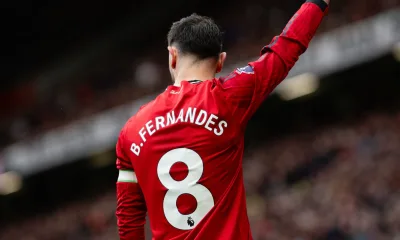
Bruno Fernandes has been Manchester United’s standout player in recent years, producing double-digit goals and assists in each of his five full seasons at the club with exceptional touch and vision.
Alexis Mac Allister rose to prominence at Brighton & Hove Albion, claimed the World Cup while representing the Seagulls, and has since become Liverpool’s deep-lying playmaker.
Cole Palmer, a Manchester City academy product, emerged at Chelsea as a talisman after a breakthrough debut season in 2023–24 and is described as a generational talent.
Florian Wirtz has had a subdued start since his £116 million move to Liverpool but previously spearheaded Bayer Leverkusen to the Bundesliga and DFB Pokal double in 2023–24 and is expected to improve.
Ryan Gravenberch was redeployed into a combative defensive midfield role under Arne Slot in 2024–25, playing a key part in Liverpool’s title and winning the Premier League Young Player of the Season award.
Declan Rice, acquired for £105 million, has transformed Arsenal’s midfield. Effective as a holding player and in a box-to-box role, he contributes goals, assists and set-piece delivery and is viewed as a complete midfielder.




Arsenal
Midwinter Market: Big-money valuations and loan manoeuvres dominate the rumour mill
Transfers: Leão to Arsenal; Bellingham priced; Pepi medical booked; loan interest grows. Many clubs.
The transfer chatter remains dominated by high fees and pragmatic loan options as clubs across Europe prepare for significant summer moves. Arsenal have been linked with AC Milan forward Rafael Leão, a target reported to command $92.3 million (£69.1 million, €80 million) as the Gunners weigh reinforcement options amid speculation over Gabriel Martinelli.
Manchester United’s interest in Joshua Zirkzee has cooled as the striker plots a return to Serie A. His likely Italian suitors, including Juventus, Milan and Napoli, are reportedly only interested in a loan deal.
Manchester City have pursued Barcelona center back Pau Cubarsí with what has been described as an “obsession.” City are understood to have proposed a swap involving Omar Marmoush as a potential makeweight in the negotiations.
Arsenal are also the centre of a different story, with Crystal Palace, Everton and West Ham United all exploring a loan move for Arsenal’s “frustrated” left back Myles Lewis-Skelly.
Chelsea are active on several fronts. They have submitted offers for Borussia Dortmund’s Serhou Guirassy, while also being linked to Inter target Alessandro Bastoni. Inter rejected an initial Barcelona approach of up to $75 million (€65 million) and are reported to be asking closer to $92.3 million. Guirassy has been floated as a replacement option and could be available for $69.2 million (€60 million), with Chelsea and Inter among those said to have made offers.
Chelsea are also said to be close to signing Valentín Barco from Strasbourg, a move described as at an “advanced stage.” Meanwhile, Aston Villa are demanding a club-record fee in excess of $133.5 million (£100 million) for Morgan Rogers amid Chelsea interest.
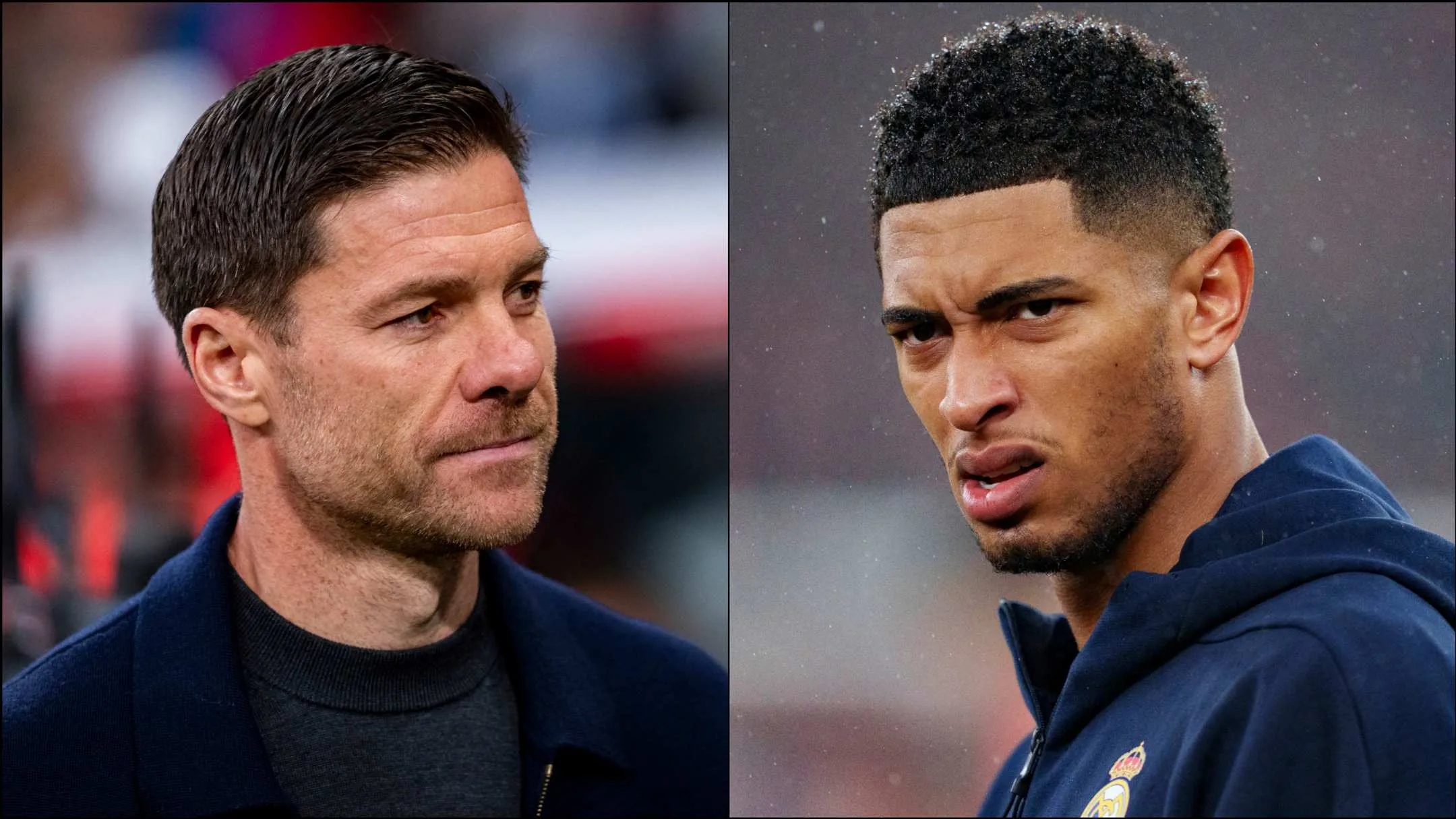
On the wider market, Real Madrid are willing to listen to offers for Jude Bellingham, who has been valued at $173 million (£129.6 million, €150 million) and is attracting reported interest from Manchester United and Chelsea. Borussia Dortmund remain confident they can secure a permanent return for Jadon Sancho once his contract at Manchester United expires, with the club “confident” of a deal. Fulham have lined up a medical for Ricardo Pepi in a deal set to be worth $38 million (£28.5 million), and Newcastle United have scouted Lens goalkeeper Robin Risser, valued at $46.1 million (£34.6 million, €40 million).
Arsenal
Henry Urges Caution After Max Dowman’s Record Goal
Thierry Henry: protect Max Dowman after record goal. Rooney’s rise and Vaughan’s decline warning. NB
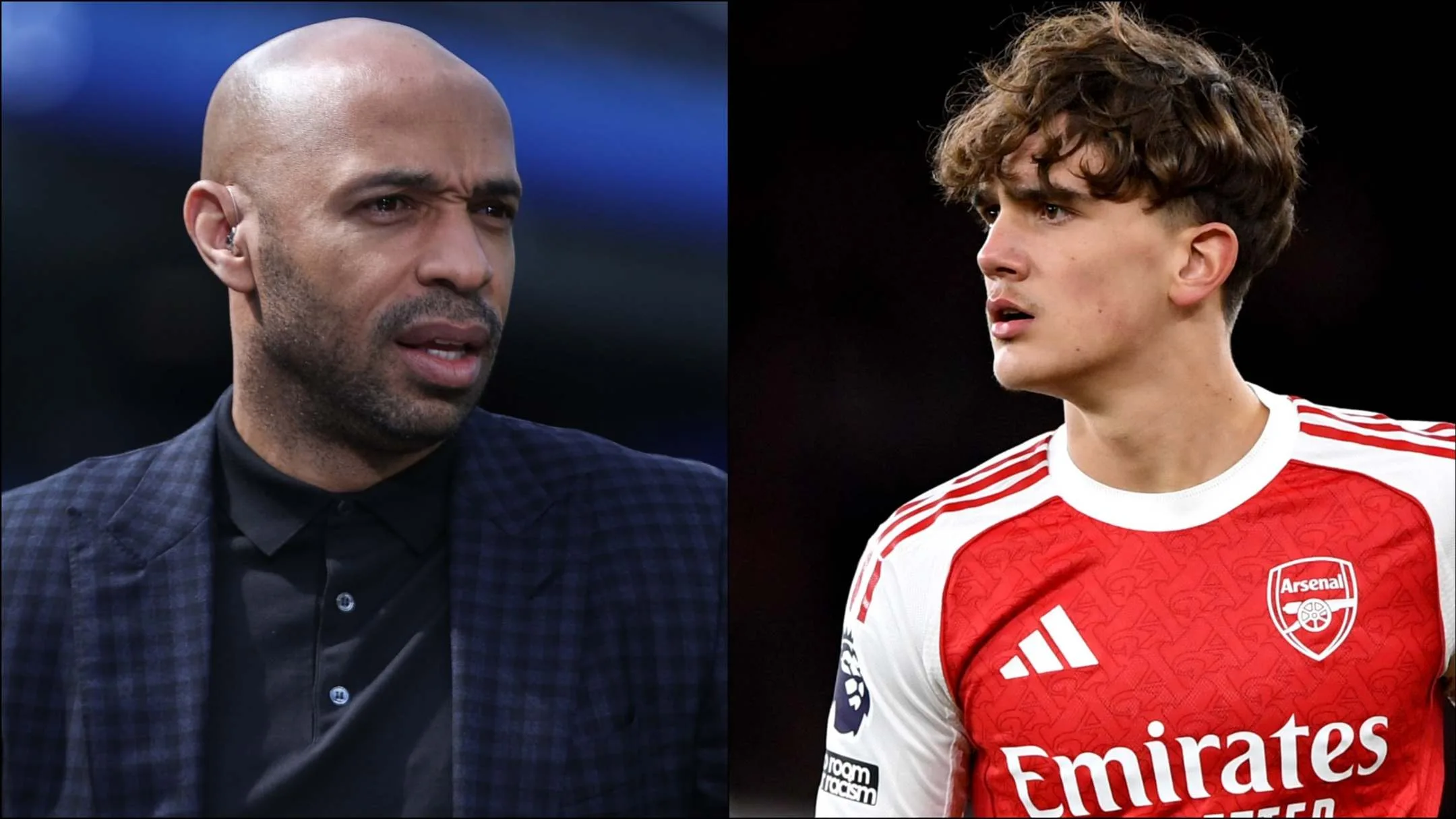
Thierry Henry has urged restraint from supporters after Max Dowman’s record goal, saying the teenager must be handled carefully if his potential is to be realised. Henry made his comments on Sky Sports Monday Night Football following the moment that prompted widespread reaction.
“I had goosebumps, I’ll be honest with you,” Henry said. “I don’t often get goosebumps watching a game, but I had goosebumps because I remember my first goal, my first moment. Even if you are not an Arsenal fan, at the particular moment I think everyone could relate and was happy for him and put the Arsenal thing on the side.”
The programme also revisited the context of the Premier League youngest goalscorer mark. Wayne Rooney was a previous holder of the Premier League’s youngest goalscorer crown, having scored a stunner against Arsenal in 2002. This week, the retired legend revealed that his weekly salary at the time was just $100 because he was too young to even sign a professional contract. Rooney later went on to become one of the greatest players in English soccer history, winning numerous trophies, captaining Manchester United, the England national and breaking decades-old goalscoring records for both.
Henry used those contrasting career trajectories to make a plea for perspective. He pointed to examples of players who fulfilled early promise and those whose careers were curtailed by circumstance. One such case was Vaughan, who came from the same Everton academy as others mentioned on the show; Vaughan made only 52 Premier League appearances in a career limited by injuries and finished in League Two in 2021. The best season of his career was a 24-goal campaign for Bury in League One in 2016–17.
If Dowman is to follow in Rooney’s footsteps and realise the superstar potential that has been apparent for years now, Henry challenged fans to be patient and protect the teenager at this early stage of his career.
Arsenal
Money Talks: CIES Ranks the World’s Most Valuable Squads
CIES values nine squads over $1bn; Real Madrid leads at $1.78bn while Tottenham exceed $1bn. Values.
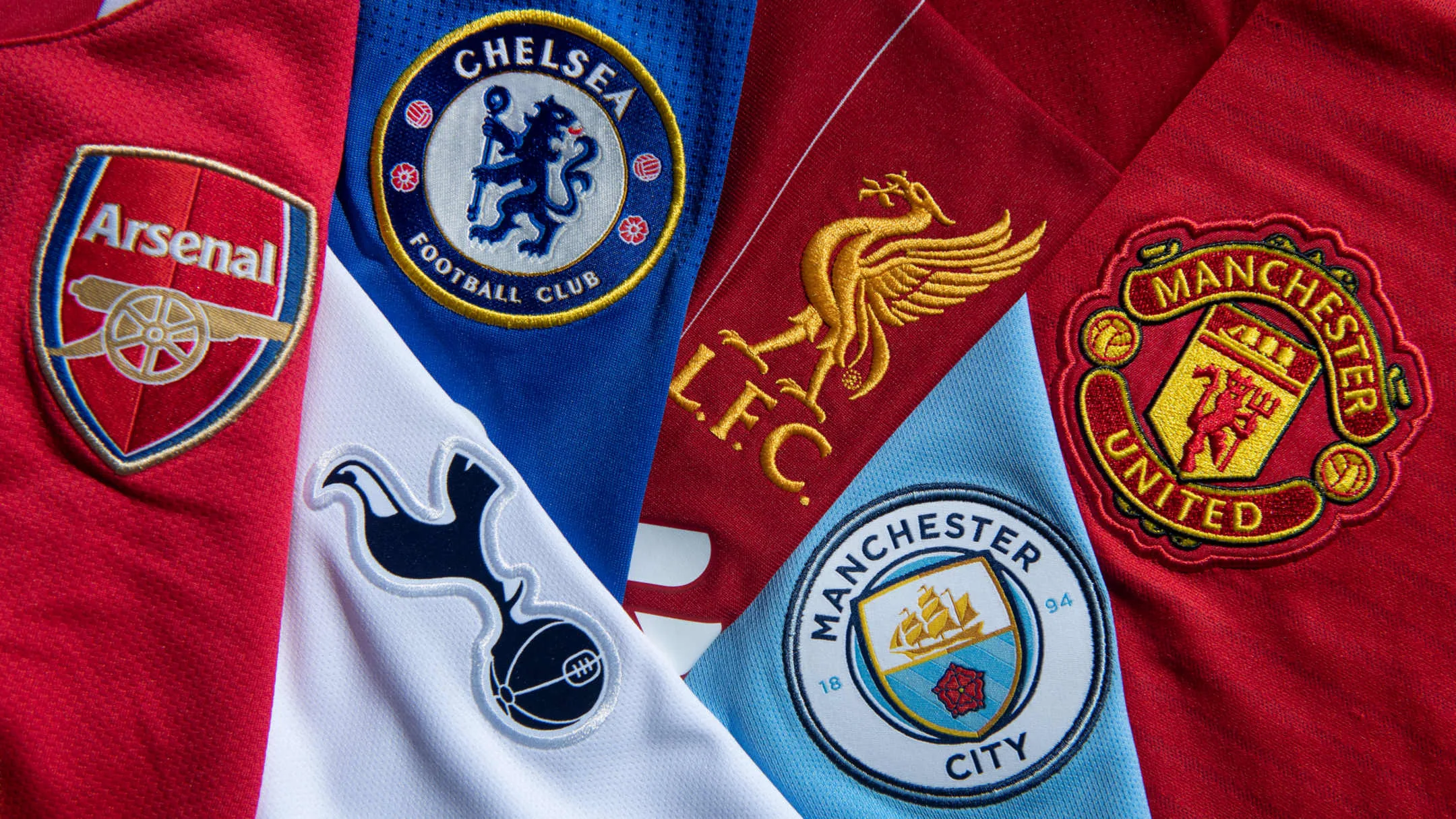
The surge in transfer prices and squad valuations has reshaped how clubs are measured. The CIES Football Observatory produces those estimates by weighing a player’s quality, age, position and length of contract, and those individual valuations are then summed to give each squad a market value.
The scale is striking. There are nine clubs with squads valued above $1 billion. At the top is Real Madrid with a squad valuation of $1.78 billion and Kylian Mbappé listed as the most valuable player at $221 million. Barcelona follow with $1.60 billion, Lamine Yamal accounting for $403.9 million of that total. Arsenal and Paris Saint-Germain each sit at $1.55 billion, with Bukayo Saka ($131.5 million) and Désiré Doué ($150.3 million) named as their most valuable players respectively.
Liverpool’s roster is valued at $1.20 billion, most valuable player Florian Wirtz ($149.8 million). Bayern Munich come in at $1.15 billion with Michael Olise ($162.6 million) as their top-rated asset. Tottenham’s squad is valued at $1.03 billion; Xavi Simons is listed as their most valuable player ($98.1 million), despite the club’s current relegation fight and Igor Tudor’s assessment that players “are lacking when we attack, we lack the quality to score the goal. We are lacking in the middle to run and we are lacking behind to stay there to suffer and not concede the goal.”
The list also includes Manchester United ($953 million, Benjamin Šeško $100.3 million) and Inter ($942 million, Lautaro Martínez $117 million). Earlier-positioned squads under $1 billion include Atlético Madrid ($903 million, Julián Álvarez $136.5 million), Juventus ($896 million, Kenan Yıldız $152.5 million) and Brighton ($894 million, Diego Gómez $86.4 million).
Several voices in the game have reflected on the market changes. Karl-Heinz Rumminegge said, “There are some players who do not come with a price tag.” Robert Lewandowski complained, “You are young, you score 10 goals in six months and some club will pay 60 or 70 million,” adding, “Before, you had to achieve something.” Vincent Kompany warned players about hype: “I always tell my players, ‘When there’s hype please don’t believe it, you’re not that good.’”
Whether the valuations mirror on-field quality or the inflation of a transfer market remains the central question CIES data brings into focus.