Trophy
An In-Depth Look at the 2025 Kopa Trophy Nominees
Profiling the promising 2025 Kopa Trophy nominees marking their rise in European football.

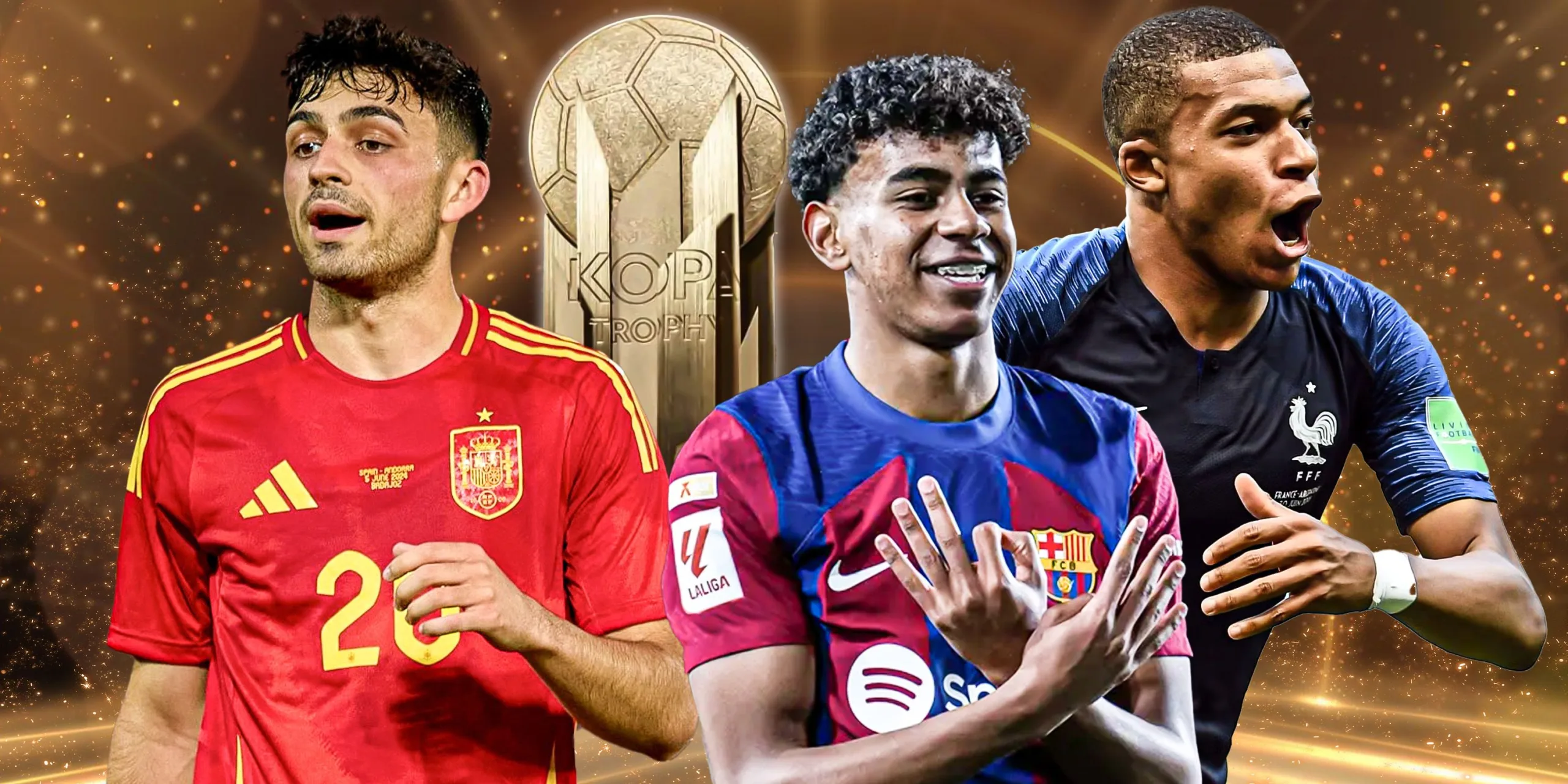
The nominees for the 2025 Kopa Trophy have been revealed ahead of the prestigious Ballon d’Or ceremony in Paris this September. Among these young talents, one will claim the accolade previously won by stars such as Kylian Mbappé, Jude Bellingham, and Pedri. This year, one candidate aims to make history by becoming the first to win the prize twice.
Seventeen-year-old Ayyoub Bouaddi has stepped into the spotlight with Lille, making 36 appearances in all competitions during the 2024–25 season, including nine in the Champions League. His composure and defensive skills have earned him recognition as a promising future star, even if he is not yet a frontrunner for the Kopa Trophy.
Rodrigo Mora, an 18-year-old attacking midfielder, made a striking impression at Porto last season with 11 goals and four assists across 35 appearances. Known for his technical skill and creativity, Mora is likely to develop further at Porto before potentially challenging for the award in the future.
Brazilian winger Estêvão impressed during his breakthrough at Palmeiras, registering 17 goal contributions before officially joining Chelsea in 2024. His performances at the FIFA Club World Cup showcased glimpses of the talent expected at Stamford Bridge.
Arsenal’s Myles Lewis Skelly has been pivotal in resolving the club’s left back concerns. Originally a midfielder, Lewis Skelly has thrived in defense, using his ability to invert and step into midfield to break opposing presses. With three senior England caps and a goal, his potential is vast.
Kenan Yıldız, a forward with 84 appearances for Juventus by age 20, has boosted his goal tally significantly and impressed for Turkey at the European Championship. Despite his talents, several peers are currently seen as stronger contenders.
Dean Huijsen, a central defender who left Juventus for Bournemouth, quickly established himself as a dominant force in the Premier League, earning a nomination for Young Player of the Season and securing a transfer to Real Madrid, who recognized his calibre.
Pau Cubarsí’s rise at Barcelona has been remarkable, featuring in 56 matches during 2024–25 and leading the club to a domestic treble through his defensive prowess and composure at just 18 years old.
Paris Saint-Germain’s João Neves, part of a formidable midfield trio, impressed in his debut season with 17 goal contributions, demonstrating extraordinary technical ability and tactical intelligence.
Finally, Désiré Doué made a memorable impact in the 2024–25 Champions League final with two goals and an assist. He has since displaced Bradley Barcola in PSG’s lineup, earning nominations for both the Ballon d’Or and Kopa Trophy, although the former is less likely.

Arsenal
How Close Are Arsenal to Football’s True Quadruple?
Arsenal are well positioned across four competitions; a genuine quadruple remains exceptionally rare.
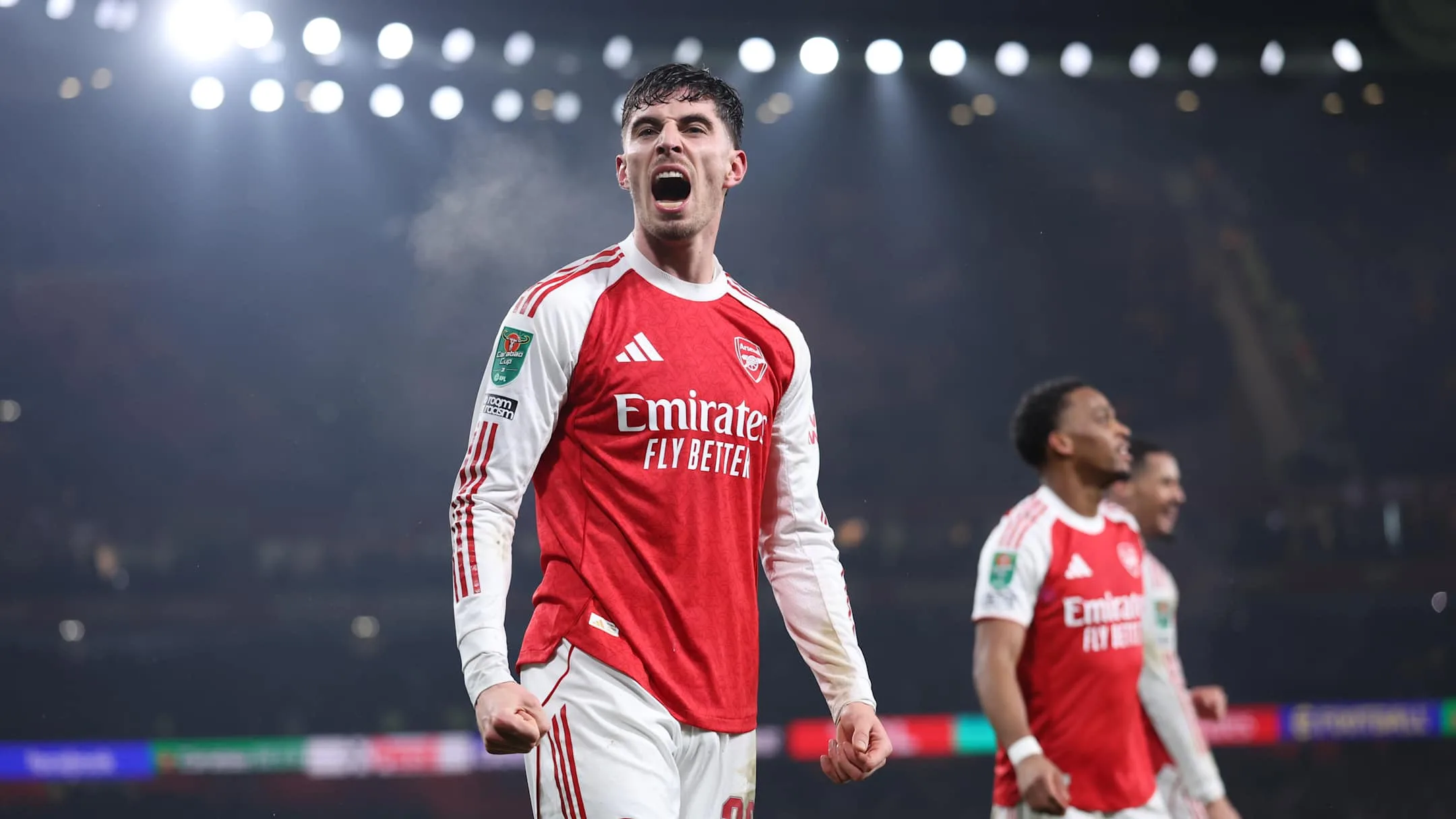
The concept of a true quadruple in football is narrowly defined and, by that measure, exceptionally rare. To qualify a campaign must deliver a club’s top continental trophy, the domestic league, the primary domestic cup and the secondary domestic cup in the same season. In England that would mean winning the Champions League, Premier League, FA Cup and EFL Cup. One-off honours such as the Community Shield or Supercopa de España are excluded, as are tournaments like the FIFA Club World Cup and secondary continental competitions including the Europa League and Europa Conference League.
Arsenal’s season has produced significant progress across those four competitions. In the Champions League, Mikel Arteta’s side have already booked their place in the last 16, finishing first in their league phase after winning all eight matches. Domestically, Arsenal remain alive in the FA Cup while also reaching the EFL Cup final after seeing off Chelsea 4–2 on aggregate in the semifinals.
Those results leave Arsenal well positioned, but history underlines how difficult the task remains. Only one European team has ever completed the strict quadruple: Celtic in 1966–67, when Jock Stein’s Lisbon Lions won the European Cup, Scottish First Division, Scottish Cup and Scottish League Cup, their European campaign capped by a 2–1 victory over Inter Milan in the European Cup final at Lisbon’s Estádio Nacional. Outside Europe, Santos in 1962, led by Pelé, completed a recognised quadruple with the Campeonato Paulista, Campeonato Brasileiro Série A, Copa Libertadores and the Intercontinental Cup.
There are many examples of clubs winning four or more trophies in a season without meeting the strict definition. Paris Saint-Germain secured domestic trebles in 2014–15, 2015–16, 2017–18 and 2019–20 and added the Trophée des Champions in those years. When PSG won the Champions League in 2024–25 they also won Ligue 1 and the Coupe de France, but the Coupe de la Ligue had already been scrapped. Clubs such as Barcelona, Real Madrid, Bayern Munich and Porto, and teams in South America and Asia including River Plate, São Paulo, Peñarol, Al-Muharraq and Al-Wehdat, have enjoyed trophy-laden seasons that still fell short of a true quadruple.
Napoli
Højlund’s Napoli Move Vindicated After Supercoppa Success
Højlund celebrates Supercoppa win at Napoli and defends his summer move with pointed Instagram post.
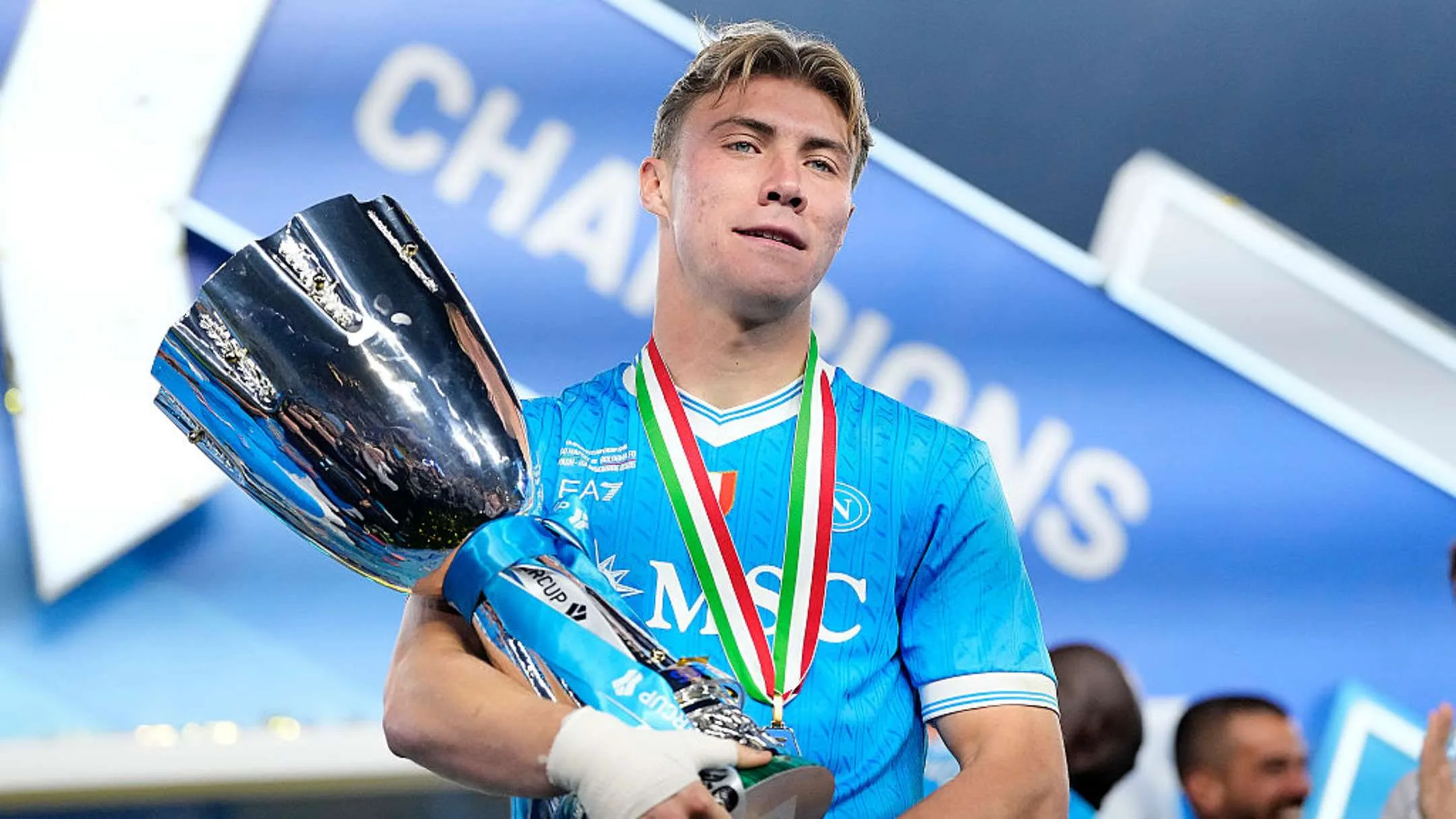
Rasmus Højlund has used a Supercoppa triumph to underline the decision that took him out of England and back to Italy. After posting a picture of himself holding the trophy, he wrote: “What a great decision looks like.” Many supporters read the message as a deliberate barb aimed at his former club.
The sequence that led here was public. Højlund had an encouraging debut season at Old Trafford, scoring 16 goals, but he struggled for form last term and saw his confidence ebb. United’s investment in Benjamin Šeško ended Højlund’s time there, despite his initial wish to stay.
Napoli paid the equivalent of €50 million for the 22-year-old, a figure below the €75 million plus add-ons United had paid to Atalanta in 2023. While that represents a loss on the original outlay, it still delivered a significant transfer fee and cleared the way for both player and club to move on.
On the pitch, Højlund has found a sharper rhythm in Serie A. He has scored four league goals in 11 appearances, matching his Premier League return from 2025–26 in 21 fewer games. Across all competitions he has seven in 19, including a goal in the Supercoppa semifinal against AC Milan. Napoli completed the competition by beating Bologna at the King Saud University Stadium in Riyadh, Saudi Arabia, and the trophy is the third of his career.
Observers argue Højlund looks better suited to Italian football and has often shown stronger returns in European competition than he did in the Premier League. Manchester United, meanwhile, have boosted their attacking output after bringing in Matheus Cunha and Bryan Mbeumo.
At Napoli he has been reunited with former United teammate Scott McTominay, the reigning Serie A Footballer of the Year. Asked if leaving Old Trafford automatically improves a player, McTominay declined to denigrate his boyhood club. “It’s just too easy of an excuse,” he told CBS Sports last week. “In my last year [at United], I did well. I scored 10 goals and we won [the FA Cup].” On Marcus Rashford and last season he added, “With Marcus, there was different issues which might have transpired which we won’t go into. However, Marcus is a top player and has always been a top player, he’s one of the club legends, scored so many goals for Man Utd, did so many great things,”
International
AFCON 2025 Preview: Nigeria, Algeria, Egypt and Senegal Head the Betting
AFCON 2025 begins Dec. 21 in Morocco; Nigeria, Algeria, Egypt and Senegal lead the favorites. Watch.
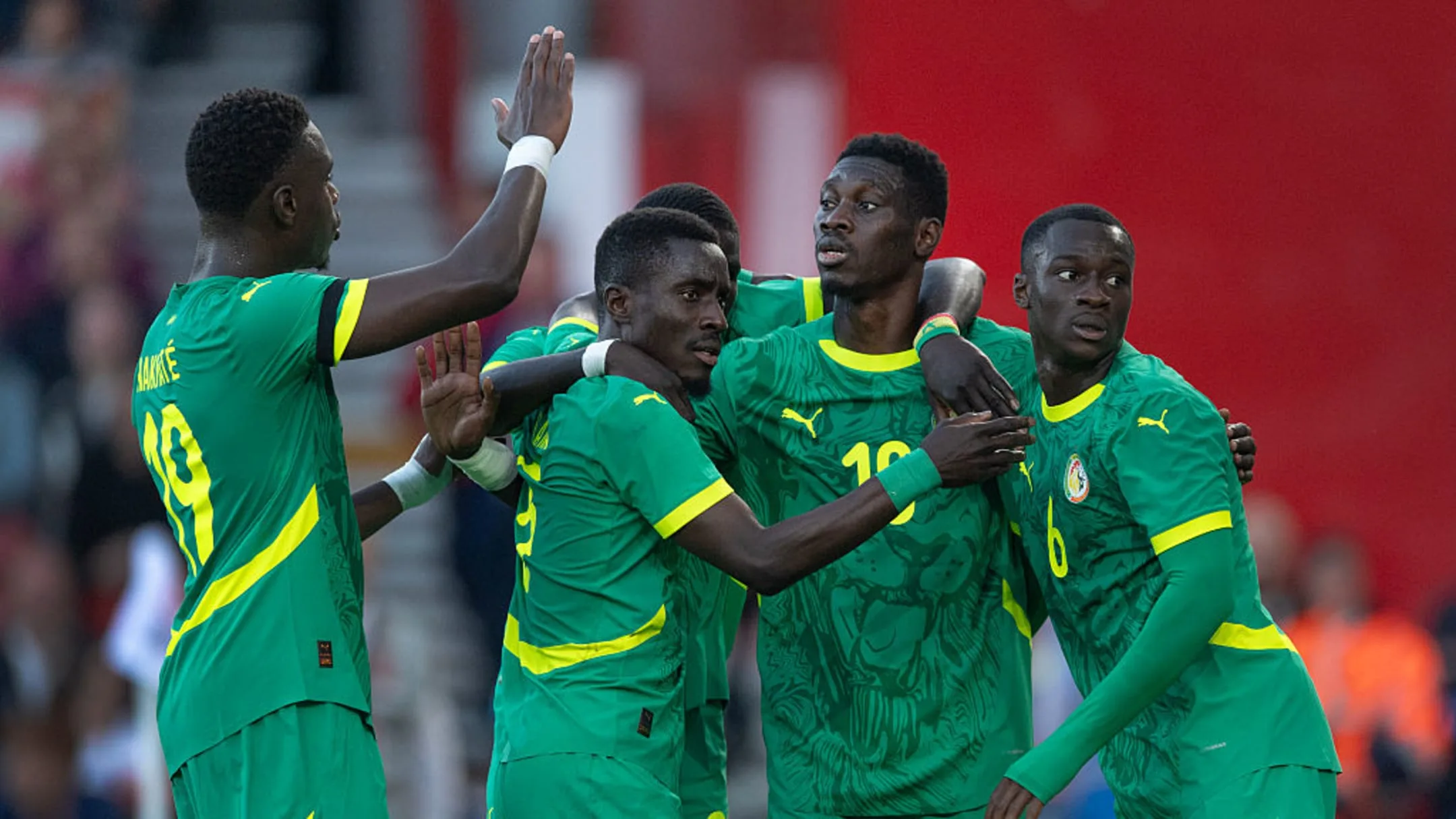
The 2025 Africa Cup of Nations opens on Dec. 21 in Morocco, with 24 nations contesting the continent’s premier international prize. Seven different winners since 2010 underline how open the competition remains and why identifying a single favourite before kick-off is difficult.
Nigeria arrive as one of the most talked-about attacking teams. With Victor Osimhen, Ademola Lookman, Alex Iwobi and Samuel Chukwueze, the Super Eagles possess game-changing forwards and a vibrant offensive profile. Éric Chelle’s side can rely on a strong supporting cast in midfield, but defensive concerns persist. Fulham’s Calvin Bassey and Porto’s Zaidu Sanusi are the clearest options at the back, while a rearguard that includes three English Championship defenders will be tested. Stanley Nwabali is not viewed as an elite goalkeeper and Nigeria’s failure to qualify for the 2026 FIFA World Cup adds pressure and incentive for redemption.
Algeria retain status among the contenders despite inconsistent recent tournaments. The 2019 champions failed to progress from the group stage in both 2021 and 2023 and have not won a match at three of the last four editions. Riyad Mahrez remains the squad’s creative fulcrum; the 34-year-old has slowed since leaving Manchester City for Al Ahli but still offers quality. Wolfsburg’s Mohamed Amoura led CAF World Cup qualifying with ten goals and averages a goal every two international appearances. Rayan Aït-Nouri and Ramy Bensebaini anchor an unspectacular defence, but Vladimir Petković brings experienced coaching that could carry Algeria deep into the event.
Egypt depend heavily on Mohamed Salah, who will aim to deliver the country’s first title since 2010. Egypt were beaten finalists in 2017 and lost to Senegal on penalties in 2021, experiences that will motivate Hossam Hassan’s side. Omar Marmoush has shared attacking duties and the squad benefits from cohesion: eight players represent Al Ahly and a further nine play for Pyramids or Zamalek.
Senegal arrive as recent winners and remain a potent force. Pape Thiaw has helped revive the Lions of Teranga after a disappointing 2023. Senegal went unbeaten in 2026 World Cup qualifying and secured a place in a group with France and Norway. A summer 3–1 victory over England at Wembley and a competitive defeat to Brazil in November signalled form. Twenty of the 27-man roster play in Europe’s top five leagues; Kalidou Koulibaly, Édouard Mendy and Sadio Mané provide experience despite moves to the Saudi Pro League. Iliman Ndiaye, Ismaïla Sarr and Nicolas Jackson lead the attack while Idrissa Gueye and Pape Matar Sarr offer midfield balance. These four nations are obvious candidates, but the tournament’s history suggests surprises remain possible.