Liverpool
Liverpool’s Summer Transfer Strategy Following Luis Díaz Departure
Liverpool’s post-Luis Díaz sale plan revolves around strategic reinforcements and key departures this summer.

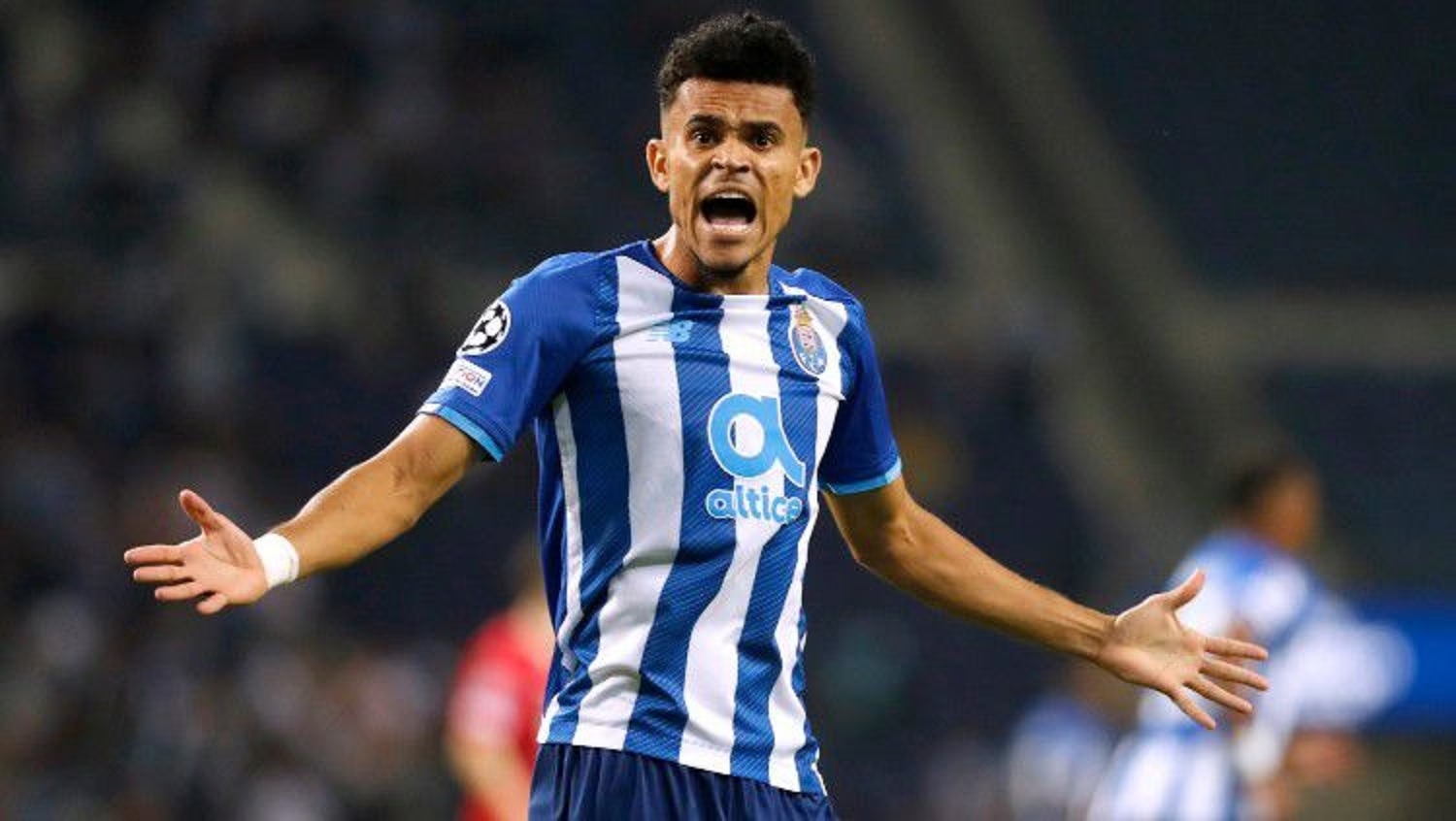
Liverpool’s transfer activity this summer has taken a defining turn with the sale of winger Luis Díaz to Bayern Munich. The transfer, reportedly worth £65.5 million ($87.9 million), marks a significant profit for the Reds and provides impetus for further moves in the ongoing transfer window.
Díaz’s switch to Bayern places him in the footsteps of fellow former Liverpool standout Sadio Mané, with hopes that his spell at the German club will be more productive. Meanwhile, Liverpool are eyeing several important transactions to reinforce their squad.
Darwin Núñez, a signing who has struggled to deliver on expectations, has been linked with a move away from Anfield. Despite his frustrating inconsistencies and limited role last season, Liverpool are holding out for a substantial fee near £45 million ($60.4 million). Although Napoli initially appeared a contender, their recent signing of Lorenzo Lucca has ruled them out, leaving potential suitors in the Saudi Pro League as probable destinations.
Liverpool have made notable additions with the record signing of Florian Wirtz from Bayer Leverkusen and the capture of Hugo Ekitiké from Eintracht Frankfurt. Interest in Newcastle United’s Alexander Isak has re-emerged, despite the club’s reluctance to sell and a hefty price tag estimated around £150 million ($201.3 million). Such a transfer would cement Liverpool’s 2025 summer window as the most expensive in history, aided by the funds from asset sales including Díaz and Núñez.
Harvey Elliott’s future is also under review. The young midfielder, hindered by injury and limited opportunities, appears ready to seek regular first-team football elsewhere. His performances for England U21s and potential value have attracted interest from clubs like Tottenham Hotspur.
Defensive concerns persist at Anfield following the departure of Trent Alexander-Arnold to Real Madrid. Central defender Ibrahima Konaté’s contract situation remains unsettled with his current deal running out next summer. While he has declined initial offers, his preference seems to be staying at Liverpool if contract terms can be improved. Adding to this, Liverpool are short on centre-back depth after selling Jarell Quansah and may pursue Crystal Palace captain Marc Guehi, depending on the financial demands.
At left-back, Milos Kerkez has been introduced as long-term cover succeeding Andy Robertson, which relegates Kostas Tsimikas to a minor role. Tsimikas’ future looks uncertain as he struggles to make a significant impact this season.
In summary, Liverpool’s strategy post-Díaz sale involves a mix of major investment and key sales as they aim to balance the squad, maintain competitiveness, and secure long-term stability.





Liverpool
Liverpool at a Crossroads: Slot’s Short-Term Future Hinges on Champions League Result
Slot’s future at Liverpool hinges on Wednesday’s Champions League tie as criticism and doubts grow..
A run of unsettling reports has placed intense scrutiny on Arne Slot’s position at Liverpool, with Wednesday’s Champions League last-16 second leg against Galatasaray framed as a potential turning point. The Reds travel to the tie trailing 1–0 on aggregate and return to Anfield needing to overturn that deficit.
The line of argument running through recent coverage assumes Slot holds the same reservoir of goodwill at the club as his predecessor. While both men share the same tally of Premier League titles, the German’s teams were celebrated as much for their high-energy style as their trophies. Slot himself has conceded this iteration of the team are “boring.” Supporters made their displeasure heard with boos after Sunday’s 1–1 draw with relegation-battling Tottenham Hotspur.
At present Slot is not thought to be in immediate danger of being sacked. Still, The Athletic’s James Pearce warned he must “turn this around” and that “the clocking is ticking” on finding a solution. Those alarm bells could start ringing as soon as Wednesday night.
Liverpool created a notable number of chances in Istanbul, a fact that offers hope of a comeback, but chronic defensive problems continue to compromise any sense of security at the back. Slot reportedly retains the faith of the club hierarchy, yet The Athletic’s Simon Hughes warned “it will be really, really hard for Slot to rescue back that trust” should Liverpool again exit in the round of 16.
Slot’s appointment as Liverpool’s “head coach” in the summer of 2024 coincided with the arrival of Richard Hughes as sporting director. The pair presided over the largest single-window spend by any club last summer. Hughes has been linked with a role at Al Hilal, according to The Telegraph, though no official contact is thought to have been made. Both Slot and Hughes have contracts running until 2027.
The potential loss of a close ally would only weaken Slot’s standing. Meanwhile former players continue to offer forthright assessments; Jamie Carragher labelled Liverpool a “team of individuals” after the Spurs draw. The Dutch coach has offered a different view, but the coming week will be decisive for perceptions of his stewardship.
Arsenal
Money Talks: CIES Ranks the World’s Most Valuable Squads
CIES values nine squads over $1bn; Real Madrid leads at $1.78bn while Tottenham exceed $1bn. Values.
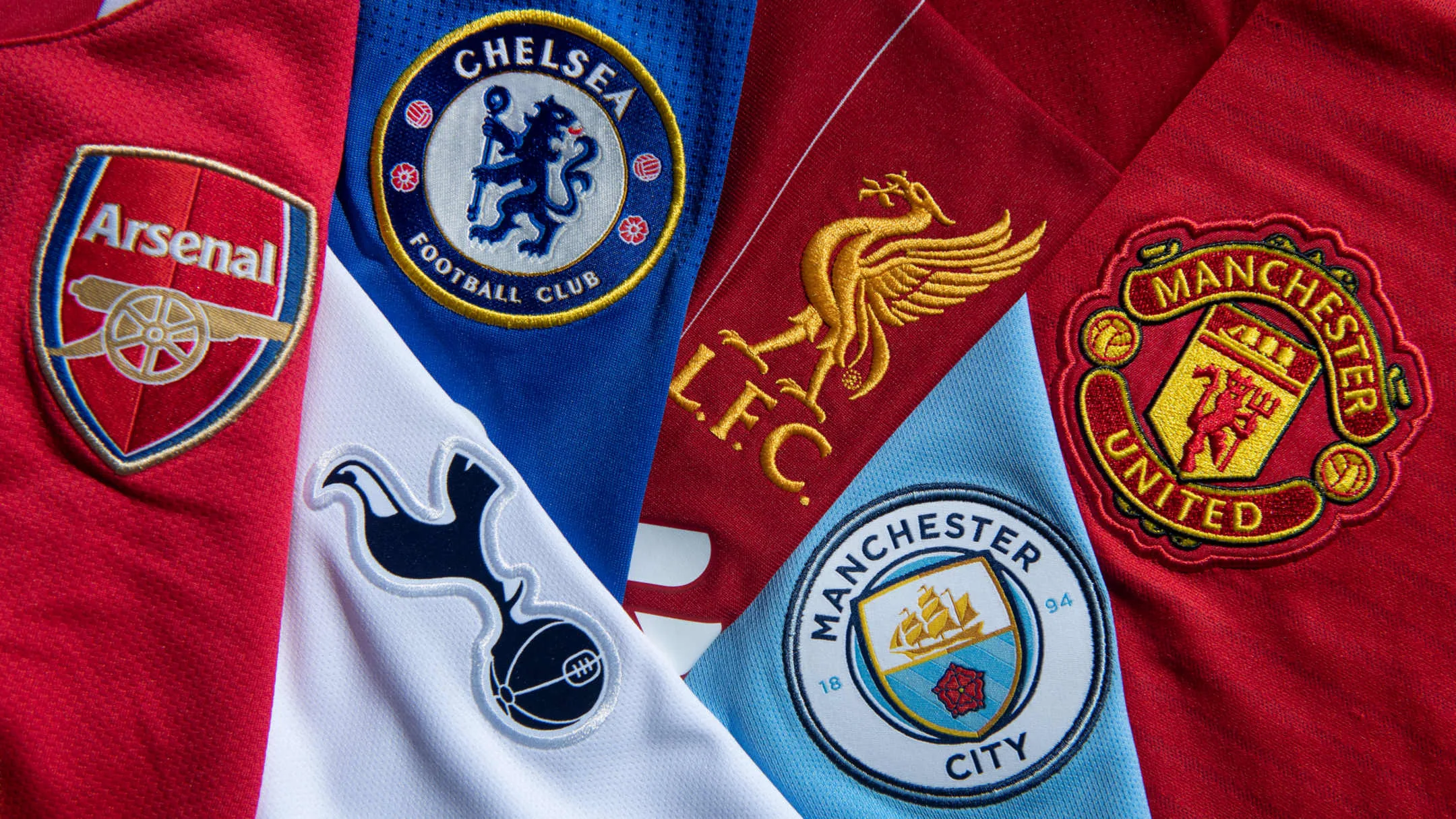
The surge in transfer prices and squad valuations has reshaped how clubs are measured. The CIES Football Observatory produces those estimates by weighing a player’s quality, age, position and length of contract, and those individual valuations are then summed to give each squad a market value.
The scale is striking. There are nine clubs with squads valued above $1 billion. At the top is Real Madrid with a squad valuation of $1.78 billion and Kylian Mbappé listed as the most valuable player at $221 million. Barcelona follow with $1.60 billion, Lamine Yamal accounting for $403.9 million of that total. Arsenal and Paris Saint-Germain each sit at $1.55 billion, with Bukayo Saka ($131.5 million) and Désiré Doué ($150.3 million) named as their most valuable players respectively.
Liverpool’s roster is valued at $1.20 billion, most valuable player Florian Wirtz ($149.8 million). Bayern Munich come in at $1.15 billion with Michael Olise ($162.6 million) as their top-rated asset. Tottenham’s squad is valued at $1.03 billion; Xavi Simons is listed as their most valuable player ($98.1 million), despite the club’s current relegation fight and Igor Tudor’s assessment that players “are lacking when we attack, we lack the quality to score the goal. We are lacking in the middle to run and we are lacking behind to stay there to suffer and not concede the goal.”
The list also includes Manchester United ($953 million, Benjamin Šeško $100.3 million) and Inter ($942 million, Lautaro Martínez $117 million). Earlier-positioned squads under $1 billion include Atlético Madrid ($903 million, Julián Álvarez $136.5 million), Juventus ($896 million, Kenan Yıldız $152.5 million) and Brighton ($894 million, Diego Gómez $86.4 million).
Several voices in the game have reflected on the market changes. Karl-Heinz Rumminegge said, “There are some players who do not come with a price tag.” Robert Lewandowski complained, “You are young, you score 10 goals in six months and some club will pay 60 or 70 million,” adding, “Before, you had to achieve something.” Vincent Kompany warned players about hype: “I always tell my players, ‘When there’s hype please don’t believe it, you’re not that good.’”
Whether the valuations mirror on-field quality or the inflation of a transfer market remains the central question CIES data brings into focus.
Analytics & Stats
Szoboszlai’s Conference League Comment Underlines Liverpool’s Finishing and Late-Goal Problems
Szoboszlai warned Liverpool must wake up; finishing inefficiency and late concessions persist. Today
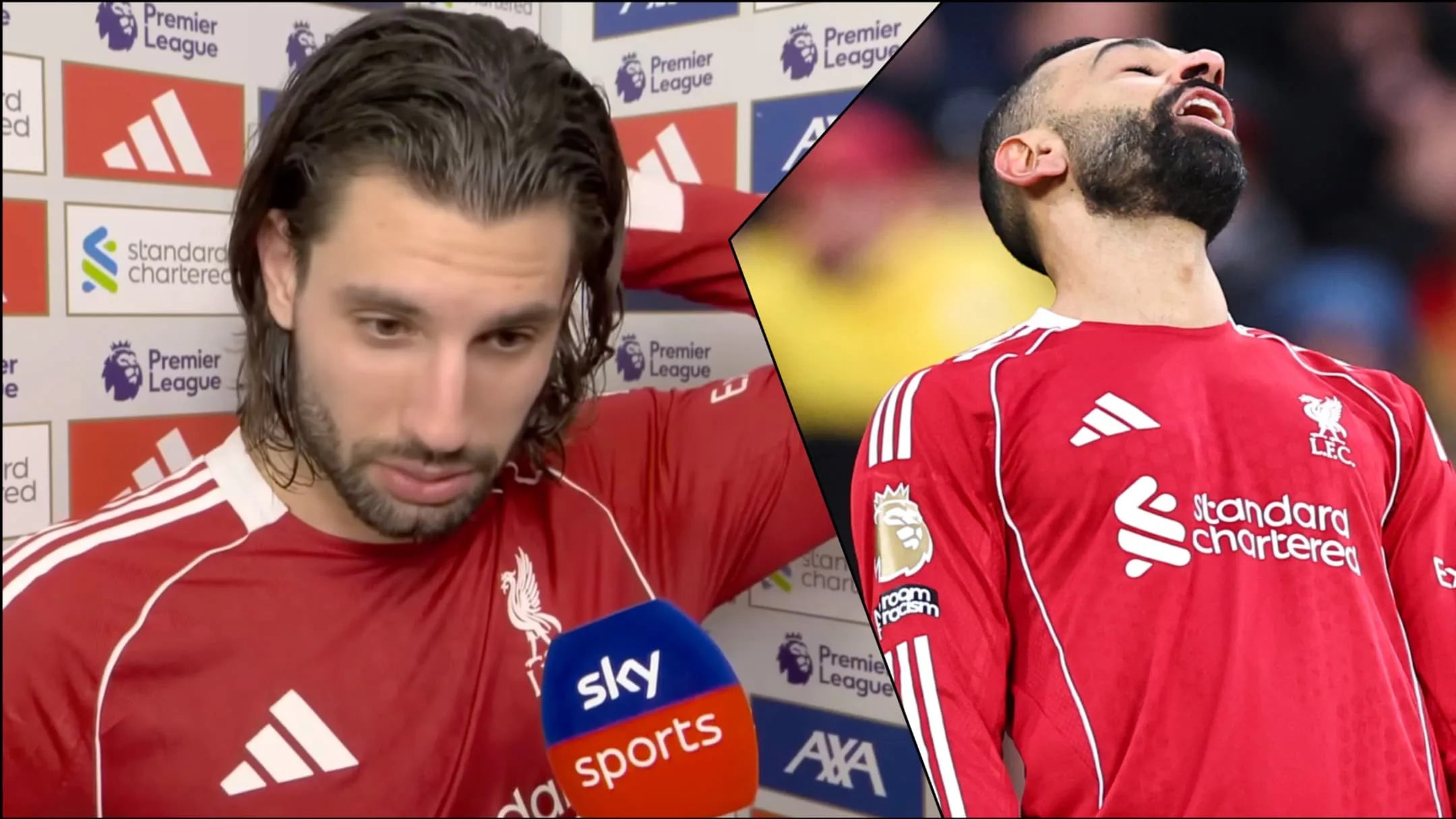
Dominik Szoboszlai opened the scoring with his fourth Premier League free kick of the season, the most any Liverpool player has ever amassed in the competition’s history, but the lead did not hold. Richarlison salvaged a 90th-minute equaliser as Liverpool again dropped points late.
“I feel flat,” Szoboszlai told Sky Sports, barely raising his voice above a whisper. “We have to wake up because if we carry on like this, we should be happy with the Conference League.” Asked for an explanation behind this painfully familiar collapse — it was the eighth goal Liverpool have conceded in the 90th minute or later this season — Szoboszlai delivered a concerning response: “I don’t know why this is happening, I honestly don’t know.
“I think in the first half we played very well, we controlled the whole game and they hardly created chances apart from one or two headers. Second half we just didn’t so the same things.”
There was a clear sense of complacency after the opener: between that free kick and Richarlison’s equaliser, Tottenham registered twice as many shots on target as their hosts (six to three). Manager Arne Slot was less focused on attitude and more on finishing. “I think we are completely underperforming in terms of the chances we create and the amount of goals we score,” he said. “That’s quite a surprise if you look at how much attacking quality we have.”
Slot added: “If you’re not able to score enough, then you have to be able to keep a clean sheet, and that’s something we find really hard this season.”
The numbers underline the problem. “Liverpool have racked up 49 Premier League goals this season from an expected goals (xG) of 50.0, per FotMob.” That one-goal difference which Slot has bemoaned is almost exactly the Premier League average. Ten teams have a larger negative differential between their xG and actual goals scored, while nine different sides have been more efficient than Liverpool this season. Liverpool scored 86 goals from an xG of 83.5 last term, and nine clubs out-performed their predicted goal tally by a larger margin than the Reds.
Opta define a “big chance” as “a situation where a player is reasonably expected to score” and it is these opportunities Liverpool have frequently squandered. The side have converted 32% of their “big chances” this season—only three clubs have a lower rate. Big chances created fell from 150 (1st) in 2024–25 to 81 (6th) this season, while big chances missed moved from 92 (1st) to 55 (4th).