Manchester United
The Complex Journey of Marcus Rashford at Manchester United
Marcus Rashford’s journey at Manchester United reveals challenges on and off the pitch amid changing club dynamics.

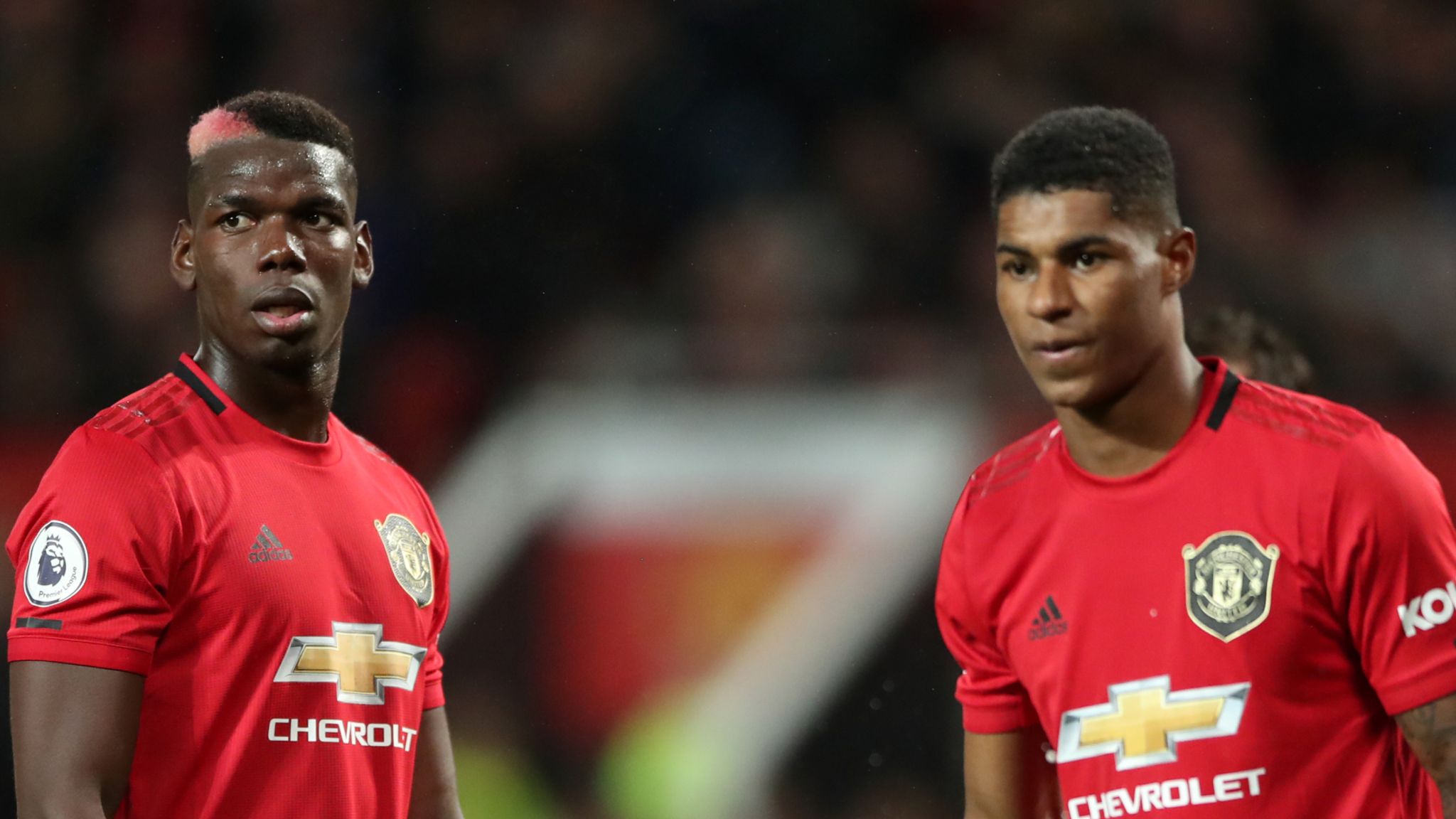
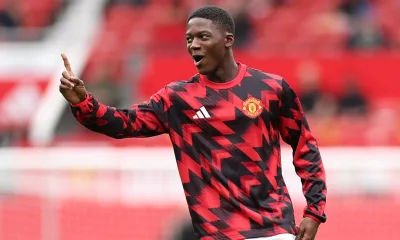
When Manchester United secured Marcus Rashford on a five-year contract two summers ago, it felt like a reaffirmation of homecoming, with the club stating he was exactly where he belonged. However, Rashford’s trajectory since then has taken an unfortunate turn. By last December, Rashford himself acknowledged readiness for a new challenge, framing departure from his boyhood club as inevitable. Since then, he has yet to play for United and has spent consecutive seasons on loan away from Old Trafford.
Rashford once described himself as “a seven-year-old boy with a dream.” What unfolded reads more like a professional struggle than a dream realised.
Incoming head coach Ruben Amorim claimed responsibility for Rashford’s exit after renegotiating his role. Despite a promising start and quickly scoring for Amorim’s team, tensions over training attitudes and tactical fit led to a prolonged sidelining. Amorim criticized Rashford’s approach: “I couldn’t get Marcus to see the way you’re supposed to play football and to train the way I see it.” The discord culminated in Rashford’s loan to Aston Villa.
This discord was shadowed by ongoing questions about Rashford’s off-field conduct. A nightclub incident after a Manchester derby under Erik ten Hag’s management was labeled “unacceptable.” Later, Rashford faced media scrutiny over late nights in Northern Irish clubs combined with missed training days.
Rashford’s intermittent bursts of form mirror Manchester United’s fluctuating fortunes. Only twice in ten Premier League seasons did he surpass 20 goal contributions, coinciding with counter-attacking styles that complemented his skill set. For instance, during Ole Gunnar Solskjær’s regime, Rashford scored 17 goals as United embraced a more direct style, though that approach was ultimately deemed unrealistic by Solskjær himself.
Ten Hag initially aimed for a grander style but eventually adopted a counter-attacking stance, yielding United a third-place finish in 2022–23 and Rashford delivering a third of the team’s counter goals. Yet, predictability and decline followed, restricting Rashford’s impact.
Rashford has openly discussed the mental toll, confessing to Sir Andy Murray how challenging the off-pitch attention has been. “I probably wasn’t as prepared for that bit as I was the actual going on the pitch and playing.” His journey underscores the complex pressures facing footballers born in the spotlight and the difficulty of sustaining peak performance amid changing club dynamics.




Arsenal
Money Talks: CIES Ranks the World’s Most Valuable Squads
CIES values nine squads over $1bn; Real Madrid leads at $1.78bn while Tottenham exceed $1bn. Values.
The surge in transfer prices and squad valuations has reshaped how clubs are measured. The CIES Football Observatory produces those estimates by weighing a player’s quality, age, position and length of contract, and those individual valuations are then summed to give each squad a market value.
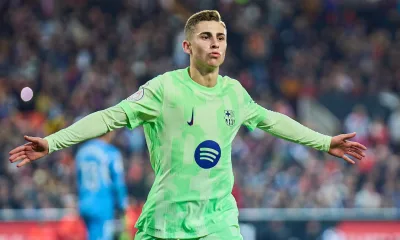
The scale is striking. There are nine clubs with squads valued above $1 billion. At the top is Real Madrid with a squad valuation of $1.78 billion and Kylian Mbappé listed as the most valuable player at $221 million. Barcelona follow with $1.60 billion, Lamine Yamal accounting for $403.9 million of that total. Arsenal and Paris Saint-Germain each sit at $1.55 billion, with Bukayo Saka ($131.5 million) and Désiré Doué ($150.3 million) named as their most valuable players respectively.
Liverpool’s roster is valued at $1.20 billion, most valuable player Florian Wirtz ($149.8 million). Bayern Munich come in at $1.15 billion with Michael Olise ($162.6 million) as their top-rated asset. Tottenham’s squad is valued at $1.03 billion; Xavi Simons is listed as their most valuable player ($98.1 million), despite the club’s current relegation fight and Igor Tudor’s assessment that players “are lacking when we attack, we lack the quality to score the goal. We are lacking in the middle to run and we are lacking behind to stay there to suffer and not concede the goal.”
The list also includes Manchester United ($953 million, Benjamin Šeško $100.3 million) and Inter ($942 million, Lautaro Martínez $117 million). Earlier-positioned squads under $1 billion include Atlético Madrid ($903 million, Julián Álvarez $136.5 million), Juventus ($896 million, Kenan Yıldız $152.5 million) and Brighton ($894 million, Diego Gómez $86.4 million).
Several voices in the game have reflected on the market changes. Karl-Heinz Rumminegge said, “There are some players who do not come with a price tag.” Robert Lewandowski complained, “You are young, you score 10 goals in six months and some club will pay 60 or 70 million,” adding, “Before, you had to achieve something.” Vincent Kompany warned players about hype: “I always tell my players, ‘When there’s hype please don’t believe it, you’re not that good.’”
Whether the valuations mirror on-field quality or the inflation of a transfer market remains the central question CIES data brings into focus.
Man Utd Transfer News
Carrick signals United could seek a different profile to succeed Casemiro
Carrick says United may pursue a different profile to replace Casemiro and addresses Fernandes. plus
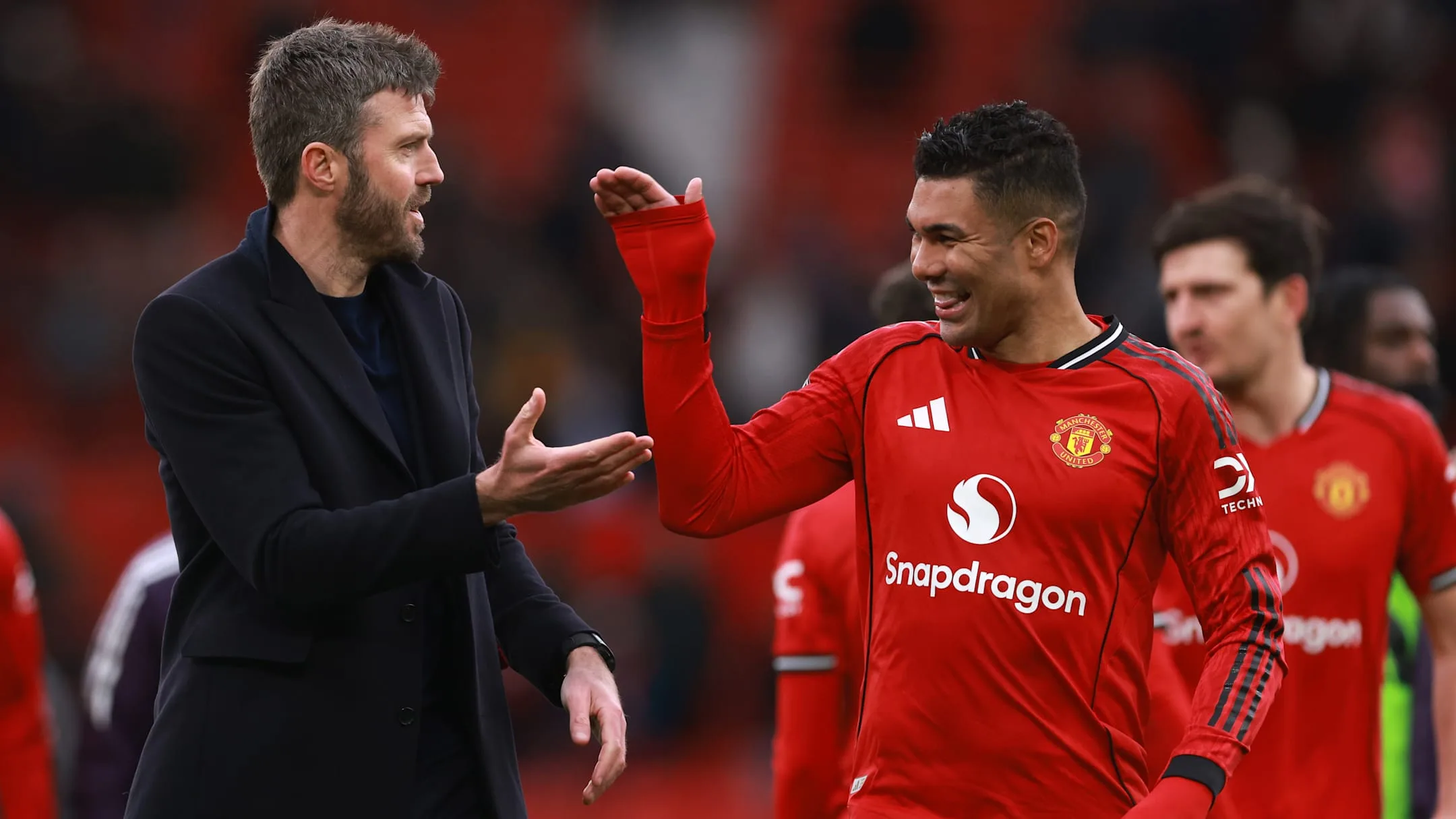
Michael Carrick suggested Manchester United may not try to find a direct like-for-like successor to Casemiro this summer, saying the club could take a different approach to the midfield role that has been occupied by the Brazilian.
“Listen, this is totally no disrespect to Case, he’s been fantastic, he’s been a player for us and he’s been important in the dressing room and one that I’ve spoke to and connected with really well,” Carrick said. “But as a club and as a team, players come and go, some are bigger, some are maybe more important than others at different times.
“I don’t think it’s ever really about replacing like for like,” he continued. “I think you can go in a different direction, you understand what the balance of the squad needs, whether that’s on the pitch, off the pitch, leadership, positionally—there’s all sorts of different things going into it.”
At his best, Casemiro combines physicality and technical control, contributing defensively while also offering a threat in attack. His tally of seven Premier League goals this season is more than Amad Diallo, Kobbie Mainoo and Mason Mount have been able to muster between themselves. The piece also notes a vulnerability: an ageing Casemiro can see his positional discipline dip, particularly when fixtures arrive without a clear week of rest.
Finding a player with that blend of attributes would be challenging and expensive, Carrick implied, which is one reason the club might consider a different profile rather than a straight replacement.
Carrick is serving as interim manager and his reign is expected to conclude before the summer transfer window fully opens. He has worked under the assumption his remit remains limited to the current season and transfer discussion under his watch has been minimal.
On Bruno Fernandes, the background remains complex. Back in December, Fernandes revealed that it took the intervention of then-manager Ruben Amorim to prevent his Manchester United exit in the summer of 2025. There were concrete talks over a move to the Saudi Pro League, and his contract reportedly contains a release clause of an undisclosed value.
Manchester United
Rooney and Keane at Odds Over Carrick’s Case for the United Job
Rooney urges United to keep Carrick; Keane doubts his long-term fit but concedes the job is earned.
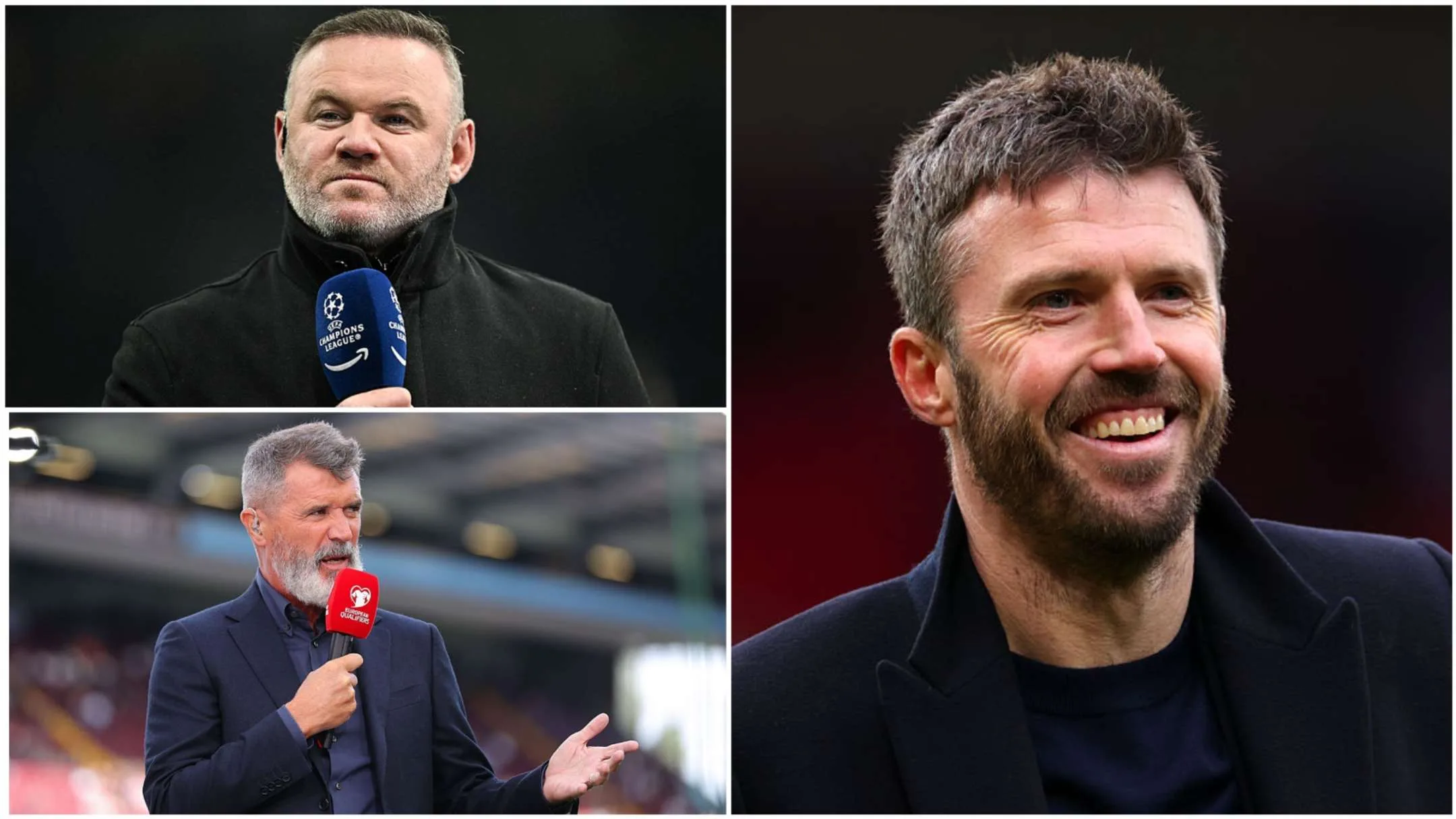
Two of Manchester United’s most prominent voices have offered sharply different views on Michael Carrick’s prospects of moving from interim to permanent manager. The debate intensified after United’s win over Villa at Old Trafford, where Carrick’s run as caretaker drew praise and scepticism in equal measure.
Wayne Rooney was unequivocal in his backing, saying he “knew” a turnaround was coming when Carrick took charge and insisting the former midfielder “100 per cent” deserves a contract for next season. “I know him very well. I know his character and his personality. It needed a calm head, but someone who knows the place. The players needed some love, and he has given them that,” Rooney said. “We have seen the players play with more quality, more together as a team, and they look like a very strong team. Why would you change?”
The evidence Rooney pointed to includes immediate improvements in performances against Manchester City and Arsenal in January, and a clearer, simpler approach that many associate with the club’s traditional style. Not every display has matched that early standard, but results have largely followed, a practical measure of success at elite level.
Roy Keane offered a contrasting view. The outspoken former captain, openly criticized by Carrick’s wife more than a decade ago prompting surprise beef that seemingly continues to this day, acknowledged Carrick’s progress but would not personally hand him the job. “I would’ve thought [Carrick will become permanent manager] but I wouldn’t [give him the job],” Keane said. “I think there’s better options out there. I think the games where he’s come in and in terms of winning football matches, he’s done a very good job. He’s obviously simplified things but there’s been no jeopardy in those games.”
Keane highlighted Carrick’s lack of experience in European competition and trophy-winning management as a potential drawback. “I think to manage Manchester United, you need someone a lot more experienced in terms of winning trophies, competing in Europe and he hasn’t got that. He might have that in a few years, and he might be in the mix then. But the fact he’s winning football matches at the moment of course gives him a great chance [of getting hired now].”
Keane listed Diego Simeone, Luis Enrique and Thomas Tuchel when asked about alternatives. Tuchel, who was a consideration in the summer of 2024 when United decided to keep faith in Erik ten Hag, might have been an option until recently extending his contract as England manager.