Man City
Guardiola: Haaland’s Decade-Long Deal and the Case Against a Move
Guardiola believes Haaland’s long contract signals commitment despite persistent Barcelona interest.

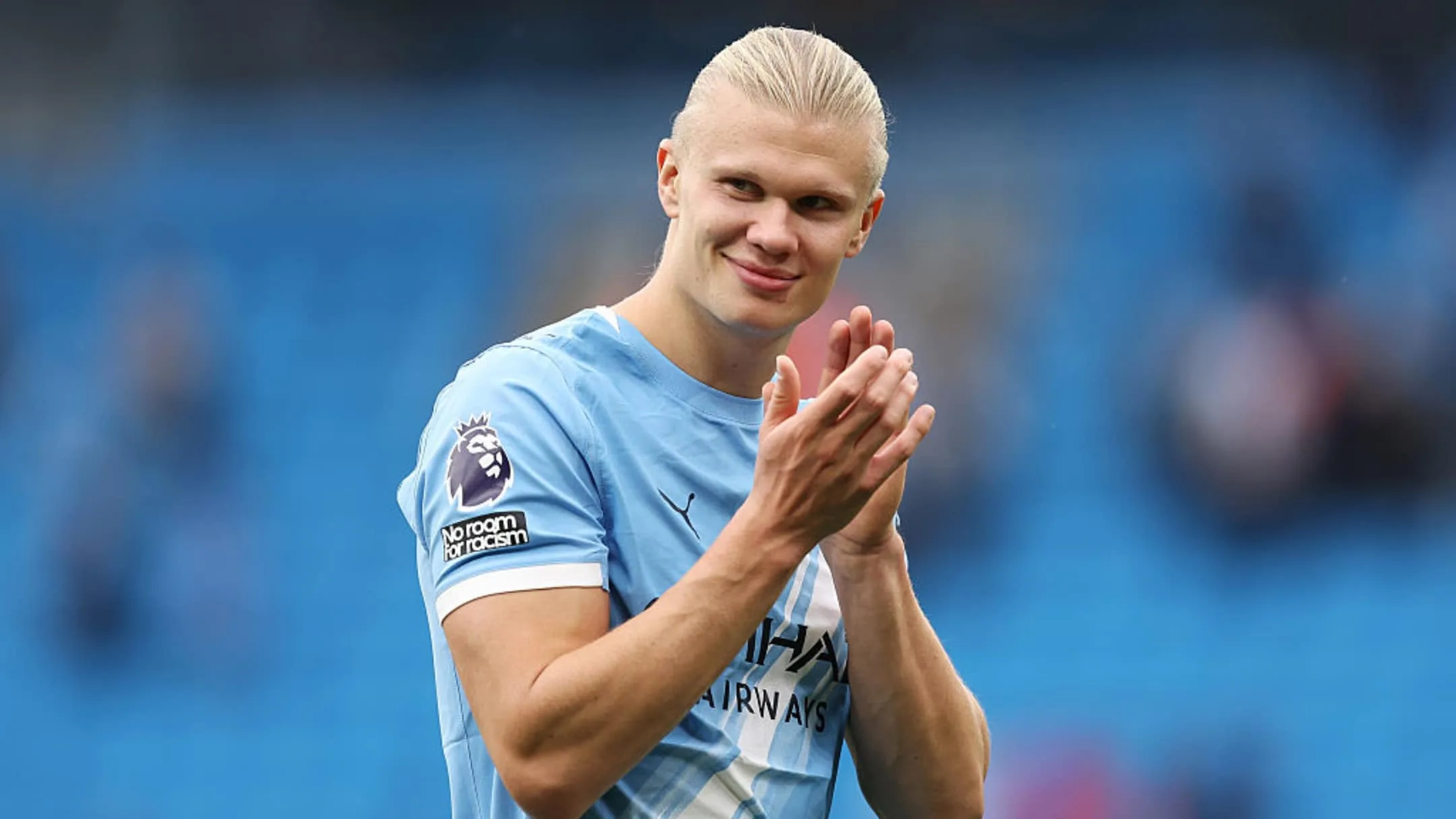
Pep Guardiola has remained unequivocal about Erling Haaland’s future at Manchester City amid ongoing speculation linking the striker with Barcelona.
City’s position is strengthened by the decade-long contract announced last season that ties Haaland to the club until the summer of 2034. The manager suggested that the length of that deal is a clear signal of intent from the player and from the club.
“Can you tell me one club that wouldn’t dream of Erling Haaland?” Guardiola responded when the transfer links were put to him. “I understand Barcelona dream of Erling, and all the clubs in the world. If Erling would not be with us, it would be a dream for Man City to have Erling.”
Guardiola was candid about the limits of certainty but reiterated the practical weight of the contract.
“What is going to happen, honestly, I don’t know. I know he has a long contract here and I think he’s doing really well and scoring a lot of goals. I had the feeling the team helps him a lot and gives him a lot of actions where he is able to score a goal,” the City manager explained.
“I think Erling isn’t stupid enough to sign something he doesn’t want to accomplish, that is for sure. But football, who knows what is going to happen in the next time. Nobody knows.”
Haaland’s record to date underlines why he is a target for so many clubs. By the age of 25 he had scored 318 senior career goals for club and country. His return since joining City has been prolific: 52 goals in 2022–23, 38 in 2023–24 and 34 in 2024–25. He has started the current campaign strongly with 11 goals in his first eight appearances.
Haaland also expressed his own satisfaction when he signed the new deal, reinforcing the sense of mutual commitment.
“I am really happy to have signed my new contract and to be able to look forward to spending even more time at this great club,” Haaland offered at time.
“Manchester City is a special club, full of fantastic people with amazing supporters and it’s the type of environment that helps bring the best out of everybody.”

Man City
City turn to Fernandes as Rodri stance hardens
City reject Barcelona’s first Rodri bid and keep Enzo Fernández in view as a possible replacement.
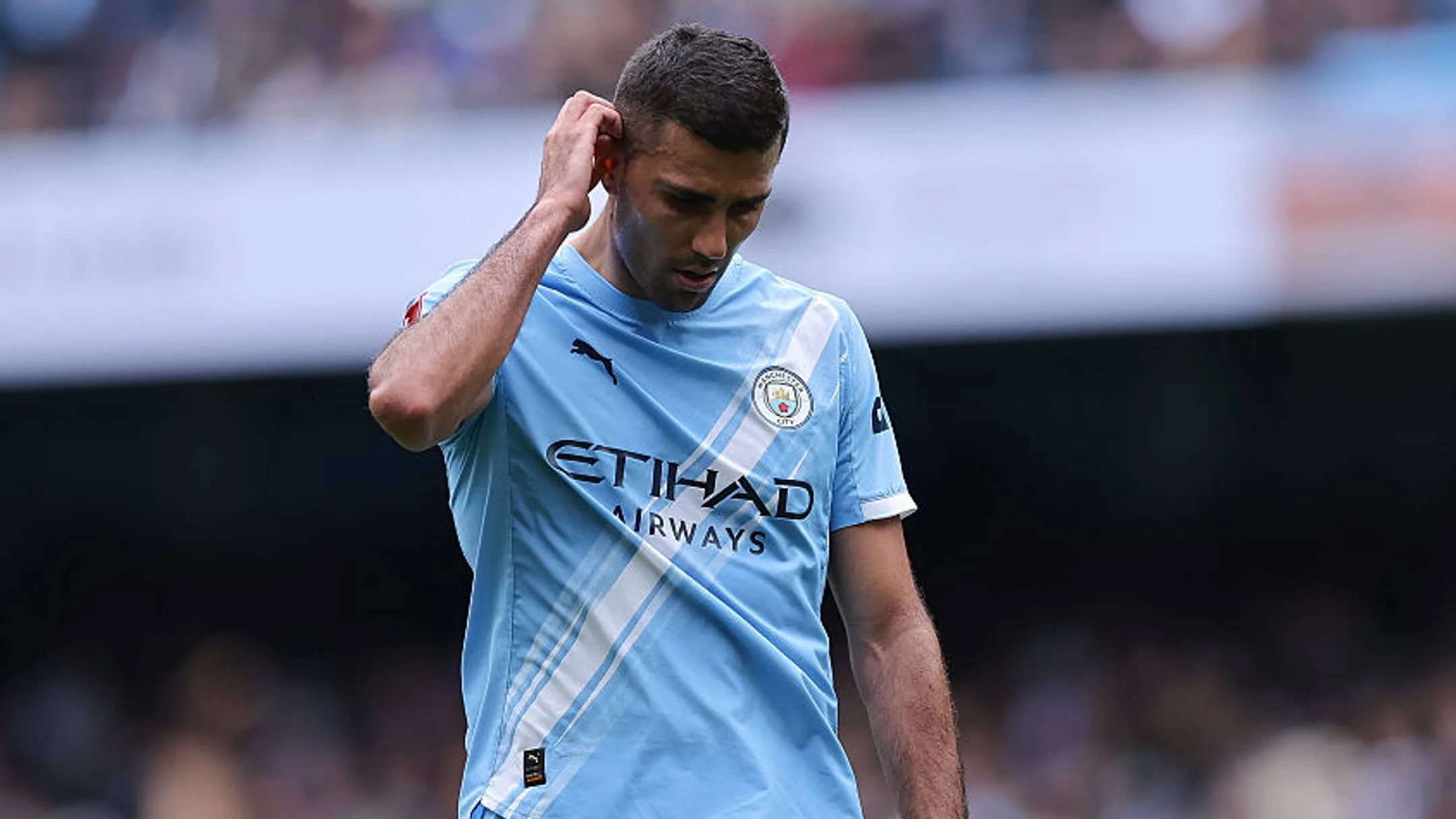
Manchester City are not planning to treat Ayyoub Bouaddi as the sole answer if Rodri leaves, even after already setting a new club record to bring in Elliot Anderson from Nottingham Forest. The club could still go after another major target, with Enzo Fernández now identified as the preferred option.
The possibility of reviving interest in Fernández, first reported before the end of last season, would push City’s summer spending beyond $400 million if Rodri were also sold. In that scenario, Barcelona may be the likeliest destination, especially after a Catalan move to intervene in the race began.
According to the Manchester Evening News, City intend to use a replacement policy for anyone who departs during the rest of the window. That does not apply only to Rodri. Tijjani Reijnders is also being strongly linked with Nottingham Forest, while another exit would trigger another signing. Savinho is one example of a player who would also be replaced if he went.
For the moment, Rodri is still at the club. BBC Sport report that City are “open to selling” the 2024 Ballon d’Or winner, but have already rejected Barcelona’s opening bid. That offer was worth $52 million (£38.5 million), well below a valuation that is close to double. City want more than $81 million (£60 million) before agreeing to a sale.
Although he has previously spoken up about a move to Real Madrid and was born in the city, Rodri is said to have approved talks with Barcelona. The same report adds that discussions with Real Madrid have now stopped completely.
Gianluca Di Marzio says Enzo Maresca’s “dream” replacement has “a specific name.” That name is Enzo Fernández. The link is straightforward: the pair spent 18 months together at Chelsea, ending in January after City approached Maresca about possibly replacing Pep Guardiola. Maresca had made Fernández one of Chelsea’s vice-captains in 2024.
Fernández had seemed short of options to leave Stamford Bridge this summer. He had openly pined for Real Madrid more than once last season without encouragement from Spain, while a move to Paris Saint-Germain never looked especially likely. City’s interest, which first emerged in late April, briefly gained traction before fading, and no approach was expected this year.
Arsenal
Man City Reportedly Move for Leicester Teen Jeremy Monga as Arsenal Step Back
Man City are “working to complete a deal” for 16-year-old Jeremy Monga as Arsenal step back.

Manchester City are reported to be pursuing Jeremy Monga, a 16-year-old winger who primarily operates on the left flank. The Athletic says City are “working to complete a deal” for the teenager. Leicester will be able to offer Monga a first professional contract on his 17th birthday next week, which will allow the Foxes to command a transfer fee.
That fee is thought to be in the region of £10 million ($13.4 million). That figure is claimed to be too high for Arsenal, and sources suggest the price has left the door open for Manchester City to move in. The Gunners had been in “club-to-club contact” with Leicester, but are now described by Fabrizio Romano as being “definitely out of the race.”
The report credits Manchester City’s new boss Enzo Maresca with “driving” interest in Monga. Maresca was reportedly aware of the youngster from his time in charge at Leicester. Monga did not make a first-team appearance while Maresca was manager during the 2023–24 season, but he apparently left an impression on the Italian coach.
How Monga would fit into Manchester City’s plans next season is unclear. Jérémy Doku is established on the left wing, and City have a group of versatile attackers who have been used to fill in across the front line. Omar Marmoush and Phil Foden are named among those capable of covering wide positions, which leaves uncertainty over an immediate path to regular first-team minutes for the youngster.
The situation centres on Leicester’s ability to demand a fee once Monga signs his first pro contract and whether Manchester City will be prepared to meet that valuation. Arsenal’s earlier interest, their club-level contact with Leicester, and City’s reported drive to conclude a deal are the key developments in this transfer story.
Man City
Manchester City agree £116m transfer for Elliot Anderson, setting British record
Manchester City have agreed a £116m deal for Elliot Anderson, the most expensive British player 2026

Manchester City have confirmed an agreement to sign Nottingham Forest midfielder Elliot Anderson in a transfer that establishes a new British record.
City said: “The formalities of the move will be finalized upon his return to England,” City confirmed in a statement. “In the meantime, everyone at Manchester City wishes Elliot and the England squad the very best of luck in their World Cup campaign and we look forward to welcoming him to Manchester in due course. “
City are understood to have agreed to pay Forest a fee of $153.9 million (£116 million). The club negotiated the transfer to include no add-ons, a structure that places the deal above Florian Wirtz’s switch to Liverpool, which required bonuses to reach the £116 million valuation.
Although the fee falls short of the Premier League transfer record of £125 million set by Alexander Isak’s move to Liverpool, the structure of Anderson’s transfer makes him the most expensive British player on record. The sum is also £1 million higher than Real Madrid’s acquisition of Jude Bellingham, whose initial fee was £88.5 million with add-ons that could take the total to £115 million.
Previous benchmarks for British transfers have been debated. Arsenal paid a total of £105 million for Declan Rice, structured as £100 million plus £5 million in bonuses. Harry Kane’s move to Bayern Munich in 2023 was reported as an initial £82 million with a total package thought to be worth as much as £104 million, which placed him ahead of Jack Grealish’s £100 million transfer to City in 2021. Grealish and Anderson would be teammates at Manchester City next season unless Grealish leaves during the final year of his contract.
The new British record ends an eight-year run since Gareth Bale’s £85.3 million transfer to Real Madrid in 2013 and represents another significant chapter in recent high-value moves within the sport.