Liverpool
When Transfer Requests Tore at the Seams: Five Career‑defining Exits and Near‑exits
Gerrard’s 2005 request to Isak’s exile: five transfer demands that unsettled major clubs. and others

Transfer requests and public declarations have long been a fault line between players and clubs. These five episodes show how contract rows, public interventions and outright exile reshaped careers and club decisions.
Steven Gerrard stunned Liverpool supporters in July 2005 by lodging a transfer request amid a contract standoff. Chelsea submitted a £32 million bid for the 25-year-old, which Liverpool rejected. Under pressure from fans and the club, Gerrard ultimately withdrew his request and signed a new deal that kept his legacy at Anfield intact.
William Gallas’s relationship with Chelsea deteriorated after he demanded an improved contract in the summer of 2006. He struck in an effort to force a move and pursued a transfer to Arsenal. Chelsea later issued a statement claiming Gallas had threatened to score an own goal or get a red card if forced to play. Gallas denied those accusations. He represented Arsenal for four years, then left for Tottenham Hotspur in 2010 on a free transfer. The club’s chairman described his demands as “quite extravagant”.
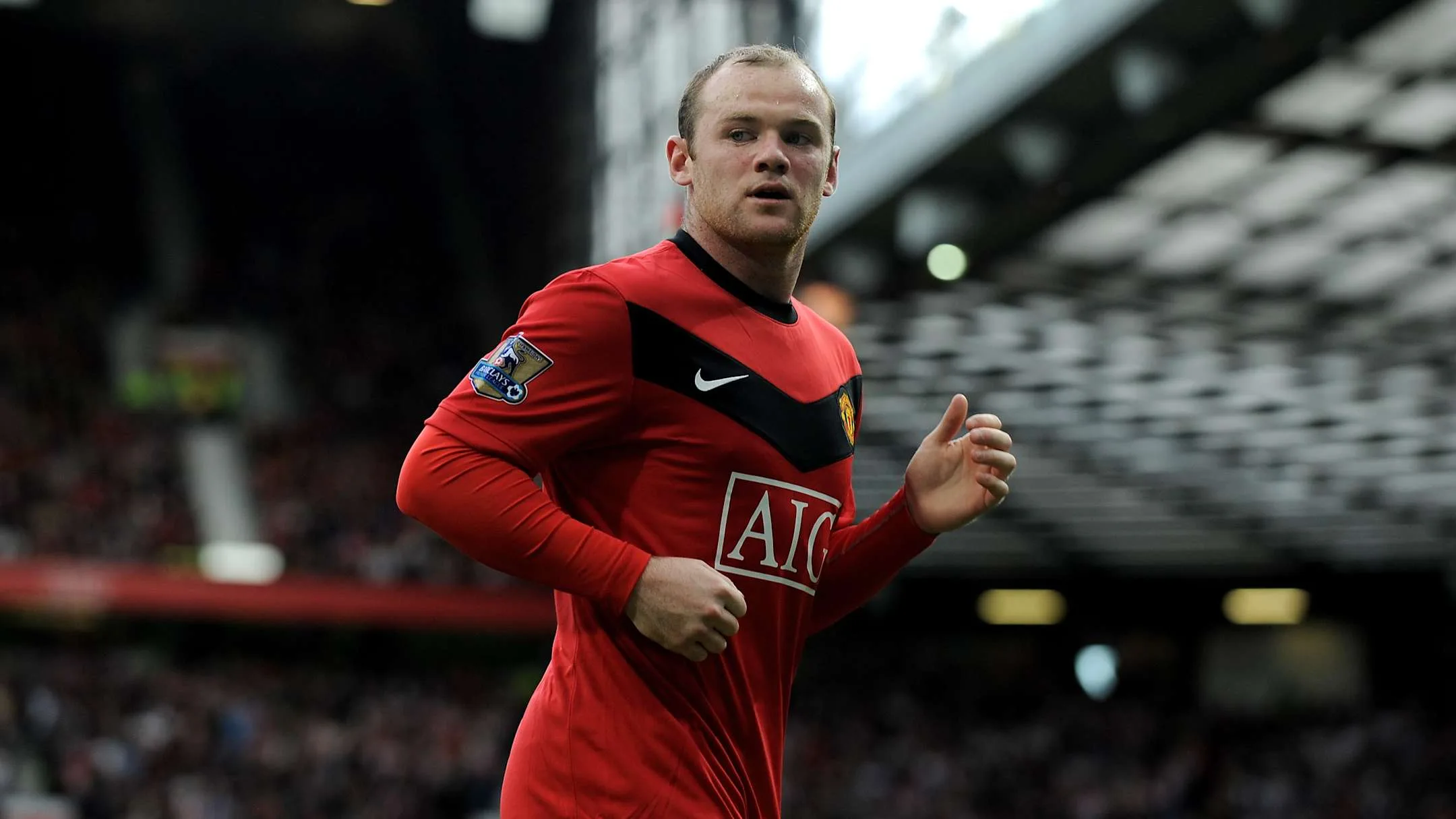
Wayne Rooney publicly criticised Manchester United’s transfer ambitions in 2010 and said he would not sign a new contract. He then signed a five-year extension and helped United win the Premier League in two of the next three seasons. After a falling out with Sir Alex Ferguson in 2013, Rooney again sought to leave; Chelsea made a £20 million offer that was rejected, with Arsenal and Real Madrid also linked. David Moyes insisted Rooney was not for sale; Rooney remained at Old Trafford for another four years before returning to Everton.
Raheem Sterling left Liverpool after a turbulent 2015 summer. He gave a 27-minute BBC interview without the club’s permission, said he had turned down a new contract and was flattered by interest from Arsenal. His agent stated that no amount of money would keep him at Anfield. Sterling was left out of Liverpool’s pre-season tour of Asia and eventually joined Manchester City for just shy of £50 million, ending his Liverpool chapter.
Alexander Isak’s summer saga began when Liverpool made an informal mid-July approach. Newcastle United insisted he was not for sale; Liverpool then signed Hugo Ekitiké for £79 million. Isak made clear he wanted to leave and that Liverpool were his only destination. Newcastle rejected his claims, he went into exile and released a statement accusing the club of breaking promises. The club rejected the 25-year-old’s comments and refused his exit.

Aston Villa
Matchday 8: A Weekend of Rain, Errors and Narrow Margins Across the Premier League
Stormy conditions, missed chances and decisive errors shaped a Matchday 8 full of fine margins.

There was little sunshine to be found on Matchday 8, as Storm Boelo lashed English grounds with rain and wind. For all the bad weather, only one fixture finished goalless, and the round still produced a sharp series of swings in tone, quality and consequence.
Manchester United’s latest setback stood out for all the wrong reasons. Without Bruno Fernandes, they looked short of attacking life again, while Bournemouth made the most of what they created in a 3-0 win. Elsewhere, Tottenham Hotspur earned a notable victory at Stamford Bridge after Mike Penders handed them the opening goal, with Cole Palmer adding to Chelsea’s problems by picking up two unnecessary yellow cards.
Several matches were defined more by frustration than fluency. Fulham struggled to trouble Coventry, managing just two shots on target, while Crystal Palace surrendered control against Newcastle after leading the shot count at the break. Everton were pushed back by Arsenal and rarely threatened after falling behind early. Ipswich and Nottingham Forest finished level after a match in which neither side found much rhythm, even if the visitors were able to make more of the contest than their hosts.
Brentford’s draw away to newly promoted opposition drew a blunt response from Keith Andrews and Michael Kayode, who both said, “We have to be better.” Sunderland also shared the points in a contest shaped by the conditions, with Régis Le Bris pleased enough to say, “We were Sunderland today.” At the Stadium of Light, the wind played a major role in a game where both teams completed only 73% of their passes.
There were also decisive moments at Anfield and Villa Park. Liverpool saw Brighton’s recent momentum halted as early goals changed the shape of the match, while Villa took control through Nicolas Jackson’s sharp finishing and a commanding display from Zion Suzuki, who produced six saves and 12 line-breaking passes. In another tight contest, Hull and their opponents could not be separated, and Sergej Jakirović called it “a fair result.”
The weekend’s final judgement was not about one storyline alone, but about a league round where weather, missed chances and single moments repeatedly decided the outcome.
Arsenal
Villa’s Win Over City Triggers Another Opta Refresh
Villa beat City, Arsenal stay close, and Opta updates the title, Europe and relegation outlooks.
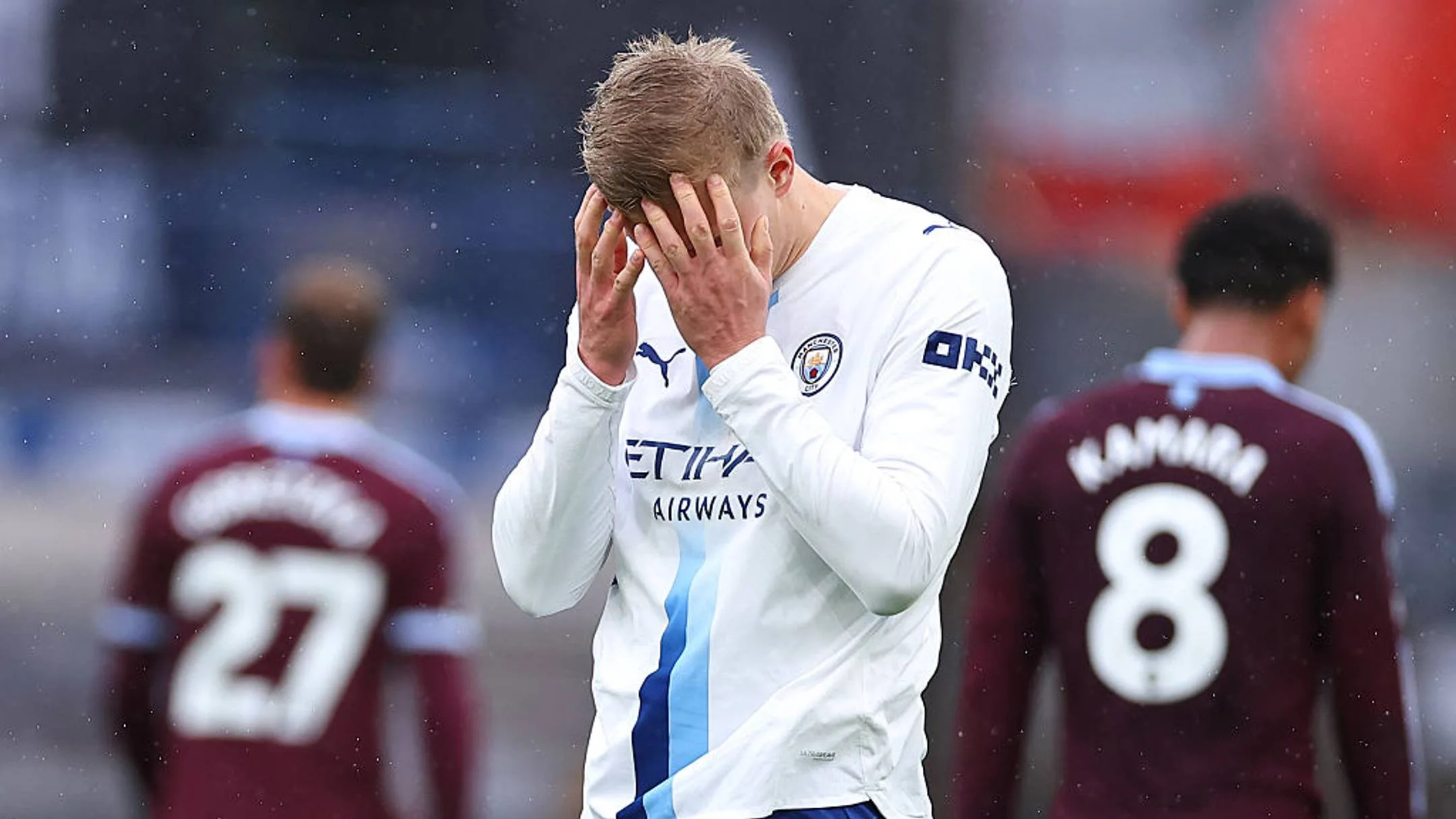
Aston Villa have delivered the Premier League’s first defeat of Manchester City this season, and they are also the first side to take points from them. Unai Emery’s team earned that landmark result at Villa Park, where City were below their best and paid for it. Gianluigi Donnarumma and Marc Guéhi were both singled out for especially poor showings, Nicolas Jackson struck on loan to make the difference, and Zion Suzuki contributed six saves across the 90 minutes.
City remain top of the current Premier League standings, but the performance offered the first domestic indication that they are not untouchable. Arsenal followed by matching them on points after beating Everton, leaving the title race level at the summit and Arsenal second only on goal difference.
That Arsenal victory came with Bukayo Saka unavailable and possibly out until Christmas. The Gunners were short of natural creativity, but they compensated by rediscovering the set-piece strength that served them so well last season.
With those results, and two others on Saturday, Opta’s supercomputer updated its predictions again.
The title model now has Arsenal first with 79.55 predicted points and a 53.82% chance of finishing champions. Manchester City are second on 76.11 points and 34.39%. Brighton remain the only other side above 5%, while Liverpool are at 3.29% and Chelsea at 1.42%.
The Champions League outlook keeps Arsenal and City well clear, with both above 90% to qualify. Brighton stand at 58.37%, Liverpool at 46.70%, Chelsea at 31.28% and Aston Villa at 21.66%. Brentford, Leeds and Everton are further back, and Manchester United’s five-match winless run has left them below 6%.
At the lower end, Tottenham have made a notable move in the right direction. Two wins in a row have cut their relegation chance to 14%, and the model now projects them to finish 13th. That is not especially strong, but it is a considerable improvement on consecutive 17th-place finishes in the last two seasons.
Aston Villa
Premier League Gameweek 8 calls: Chelsea host Spurs as Liverpool face Brighton
Chelsea host Spurs as Liverpool meet Brighton in a weekend of tight Premier League predictions.
The Premier League returns after another midweek round of continental action involving nine English clubs, and Gameweek 8 arrives with little room for recovery. Several of the league’s biggest sides are back in action quickly, while a number of awkward fixtures could shape the standings before the weekend is over.
Friday’s opener at Portman Road looks finely balanced. Ipswich Town have collected nine points from seven matches and have taken two-thirds of that tally at home, with wins over Sunderland and Fulham lifting them to 10th. Nottingham Forest, however, arrive with their own issues, and goals have been difficult to come by for the Tricky Trees. A draw feels the likeliest outcome.
Aston Villa’s meeting with Man City is one of the standout fixtures on Saturday. Villa have won five of their last six, while City have maintained a perfect Premier League run, though their domestic record remains surrounded by uncertainty off the pitch. Even so, their form under Pep Guardiola has been efficient, and with Erling Haaland, Rayan Cherki and Phil Foden in encouraging touch, they are tipped to edge it.
Arsenal are expected to keep pace at the top with a home win over Everton. The Gunners remain defensively solid, even if their attack will be without Bukayo Saka, while Everton are likely to sit deep and counter through Thierno Barry, Kiernan Dewsbury-Hall and Jack Grealish.
Chelsea’s clash with Tottenham Hotspur closes Saturday and the home side look strong favourites. Spurs have won only once at Stamford Bridge in 25 years, while Chelsea have scored 17 goals in seven matches under Xabi Alonso. João Pedro, Cole Palmer and Morgan Rogers have all been in form.
Elsewhere, Liverpool’s meeting with Brighton has the feel of a high-scoring draw, Man Utd are predicted to share the points with Bournemouth, and Sunderland’s test against Leeds United could be decided by fatigue after their trip to Poland.